
How To
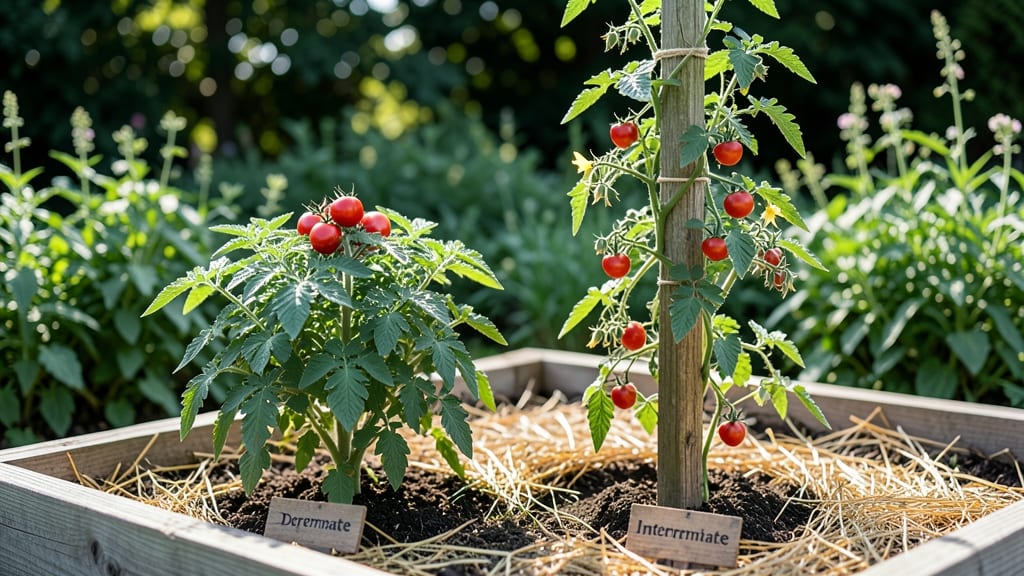
The Big Beef tomato is an indeterminate variety, meaning it grows continuously throughout the season with sprawling vines that produce fruit until frost. Unlike determinate types that stop growing after reaching maturity, these vigorous plants require sturdy support like stakes or trellises to manage their height and weight, often yielding larger harvests over time.
The Big Beef tomato's indeterminate growth habit sets it apart from its determinate cousins in key ways. 🌱 Instead of producing a single flush of fruit at once, indeterminate varieties like Big Beef keep growing and fruiting until cold weather stops them—sometimes producing for months.
This continuous production makes them ideal for gardeners who want steady harvests rather than one big yield. The trade-off? Their sprawling vines can reach 6-10 feet tall without proper support, which is why staking or trellising isn't optional but essential for healthy growth and easy harvesting.
What's interesting is how this growth pattern affects your garden planning. Determinate tomatoes are like the neat, compact neighbors—easy to contain and perfect for containers or small spaces.
But Big Beef's indeterminate nature means you'll need to dedicate more space vertically, whether through tall cages, sturdy stakes, or even overhead trellises. The payoff?
You'll often get heavier yields per plant over a longer season, making them a favorite for serious gardeners or those who love fresh tomatoes straight from the vine.
💡 In This Article
- How Indeterminate Big Beef Tomato Vines Grow Differently
- Best Practices for Planting and Supporting Indeterminate Big Beef Tomatoes
How indeterminate Big Beef tomato vines grow differently
At the botanical level, the difference between determinate and indeterminate tomatoes lies in their apical dominance—the plant's ability to control where new growth occurs. Determinate varieties have a strong apical bud that stops growing once it reaches maturity, causing the plant to produce a single main stem with limited branching.
This creates a bushy, compact shape that tops out around 3-5 feet tall. In contrast, indeterminate varieties like Big Beef lack this growth inhibitor, allowing their main stem to keep elongating throughout the season—often reaching 6-10 feet or more without intervention.
The continuous growth of indeterminate vines creates a fundamentally different fruiting pattern. While determinate plants produce all their fruit at once (a single "flush"), Big Beef tomatoes develop new flowers and fruit clusters along the entire length of the vine as it grows.
This happens because indeterminate varieties produce suckers (side shoots) from leaf axils continuously, each capable of forming new fruit.
The plant's hormonal balance favors this lateral growth, which is why you'll see tomatoes appearing at different stages of ripeness along the vine simultaneously—some green, some breaking color, and others fully red.
This growth habit has practical implications for gardeners. The sprawling nature of indeterminate vines means they need vertical support to prevent fruit from touching the soil (which causes rot) and to make harvesting easier.
Without proper staking or trellising, the heavy fruit load can cause vines to collapse under their own weight, leading to broken stems or split tomatoes.
The continuous fruiting also means you'll need to monitor for pests and diseases more frequently, as each new flower cluster represents a potential entry point for issues like blight or aphids.
Another key difference is how indeterminate varieties respond to pruning. While determinate plants benefit from minimal pruning (to improve airflow), Big Beef tomatoes often require regular suckering to direct energy toward fruit production rather than excessive foliage.
Removing suckers below the first flower cluster helps channel nutrients to developing fruit while maintaining an open canopy that reduces humidity-related diseases. The trade-off? More maintenance—but the reward is a longer harvest season with larger, meatier tomatoes like Big Beef's signature 12-16 ounce fruits.
Consider the environmental factors that influence this growth. Indeterminate vines thrive in warm climates where the growing season extends late into fall, allowing them to produce fruit until frost. In cooler regions, gardeners often use row covers or cold frames to extend the season.
The vine's ability to keep growing also means it can recover from damage better than determinate varieties—if a storm breaks a branch, new growth can often compensate, whereas determinate plants have limited regenerative capacity.
For visual learners, imagine two tomato plants side by side: one determinate, bushy and self-contained; the other indeterminate, climbing a trellis like a vine, with tomatoes appearing at different heights along its length. The indeterminate plant looks more like a living ladder, while the determinate resembles a neatly pruned shrub.
This structural difference is why Big Beef tomatoes often produce 20-30 pounds per plant in ideal conditions—far exceeding the 5-10 pounds typical of determinate varieties.