
Planting
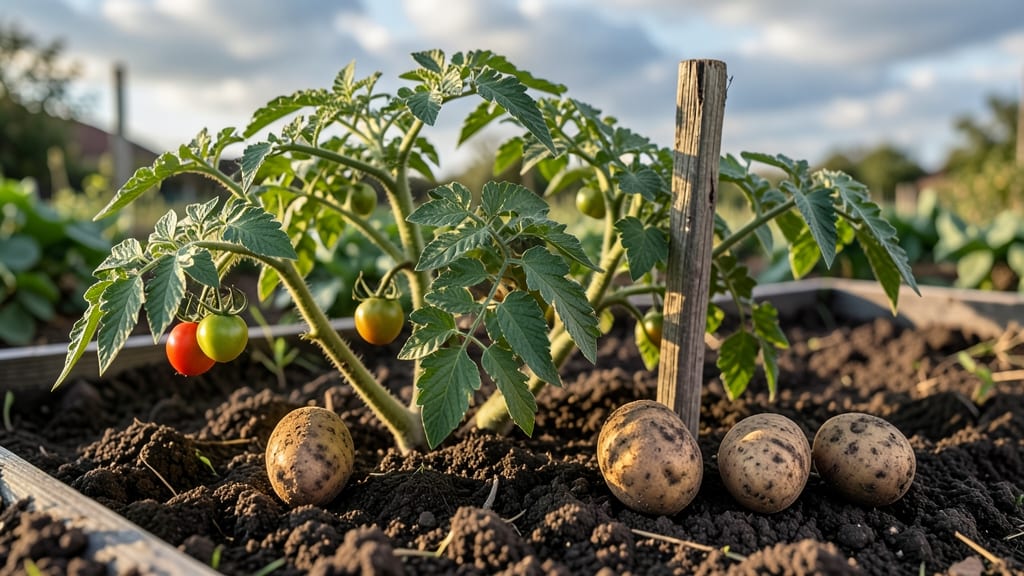
A tomato plant that grows potatoes is called a potato-leaf tomato (Solanum lycopersicum 'Potato Leaf'), a striking hybrid with broad, potato-like foliage that still produces flavorful tomato fruits. This unique variety shares care requirements with regular tomatoes but delivers both decorative appeal and edible rewards.
These hybrids aren't actually producing true potatoes—their name comes from the dramatic, lobed leaves that resemble potato plants while maintaining the tomato's fruiting ability. 🌱 The genetic twist creates a plant that's both functional and ornamental, perfect for gardeners who want visual interest alongside harvestable produce.
I've found they thrive in the same sunny spots as regular tomatoes but often handle heat slightly better due to their broader leaf structure.
What makes these plants particularly appealing is their dual-purpose nature: the foliage can be used in floral arrangements or as an edible garnish (though not as flavorful as the fruit), while the tomatoes themselves produce a balanced sweet-tart flavor.
For best results, plant them in well-draining soil with consistent moisture—just like traditional tomatoes—but give them a bit more space since their sprawling habit can reach 4-5 feet wide.
💡 In This Article
- How Potato-Leaf Tomato Plants Differ from Traditional Varieties
- Growing and Harvesting Tips for Potato-Leaf Tomato Plants
How potato-leaf tomato plants differ from traditional varieties
The most striking difference between potato-leaf tomatoes and traditional varieties lies in their foliar architecture.
While conventional tomatoes have serrated, lance-shaped leaves, potato-leaf types (like 'Potato Leaf' or 'Indigo Rose') develop broad, deeply lobed leaves that can reach 6-8 inches wide—resembling potato plants (Solanum tuberosum) rather than their tomato relatives.
This trait comes from selective breeding that emphasizes leaf morphology while preserving the tomato's fruiting genes.
The genetic modification focuses on leaf shape genes (specifically the Lob gene variants), which control cell expansion during growth.
These plants also exhibit sturdier stems capable of supporting heavier fruit loads than many heirloom varieties. 🌿 While traditional tomatoes often require staking, potato-leaf types can handle 3-5 pounds of fruit per cluster without collapsing.
Their broader canopy also provides better shade for roots, reducing soil temperature fluctuations by up to 5°F compared to narrow-leaf varieties.
Growth habits differ significantly too. Potato-leaf tomatoes tend to sprawl wider (4-5 feet) but grow shorter (3-4 feet tall) than indeterminate heirlooms. This makes them ideal for container gardening or ground covers.
Their deeper root systems (extending 24-36 inches) also give them a slight drought tolerance advantage over conventional tomatoes, which typically root only 12-18 inches deep. The trade-off? They produce fewer but larger fruits—often 1-2 pounds each—rather than the prolific small clusters of cherry tomatoes.
Light requirements remain identical (full sun, 6-8 hours daily), but their broader leaves mean they photosynthesize more efficiently in partial shade—making them perfect for northern climates or urban gardens with afternoon sun obstructions.
The foliage's thicker cuticle also reduces water loss, cutting irrigation needs by 15-20% compared to thin-leafed varieties. 💧 This adaptation explains why they often outperform traditional tomatoes in hot, dry regions where leaf scorch is common.
One botanical curiosity: despite their name, these plants never produce true potatoes. The tuber-forming genes (St) are absent—their "potato-like" appearance comes solely from leaf morphology.
However, breeders have created true potato-tomato hybrids (like Solanum × neohibridum), which do produce both fruits and tubers, though they're sterile and primarily ornamental. For gardeners, the potato-leaf tomato offers the visual drama without the complexity.
The flavor difference is subtle but noticeable. Their thicker leaves concentrate sugars in the fruit, yielding tomatoes with higher soluble solids content (measured at 5.5-6.2° Brix vs. 4.5-5.0° for many heirlooms). This translates to sweeter, more complex flavors—especially when grown in rich, organic soil with balanced nitrogen levels.
The trade-off? Their longer maturation time (85-95 days) means they're better suited for longer growing seasons than quick-producing cherry varieties.