
Size
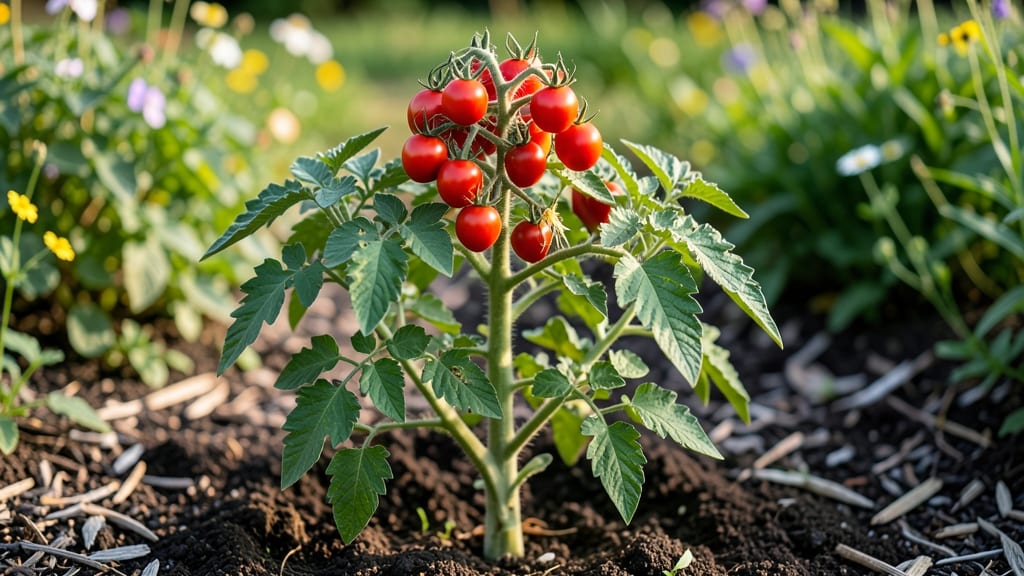
The Husky Cherry Red tomato size is all about hitting that sweet spot of 1-2 inches—a balance that turns every vine into a juicy, flavor-packed harvest.
If you’ve ever grown Husky Cherry Reds and struggled with inconsistent fruit sizes—some too small, others bursting with juice—you’re not alone. The secret to consistent sizing lies in understanding how genetics, pruning, sunlight, and even watering work together to shape those perfect little orbs.
These determinate plants typically grow 3-4 feet tall, but their fruit size depends on how you manage their growth. Too much shade or uneven watering can shrink them down, while aggressive pruning or overcrowding might lead to larger but fewer tomatoes.
The goal? Uniform, 1-2 inch cherries that burst with sweetness.
In this guide, I’ll break down the 5 key factors that control Husky Cherry Red tomato size—so you can fine-tune your growing approach for bigger, better yields every season.

5 Critical factors that determine Husky Cherry Red tomato size
Growing Husky Cherry Red tomatoes is rewarding, but achieving those perfect 1-2 inch fruits requires more than just good intentions. These tomatoes are determinate, meaning they grow to a fixed size and produce fruit in clusters.
However, their final size depends on five key factors: genetics, pruning techniques, sunlight exposure, watering consistency, and temperature control. Let’s break down how each influences your harvest.
First, genetics set the baseline. Husky Cherry Reds are bred for uniform 1-2 inch fruits, but environmental stress can shrink or distort them. Even with ideal conditions, some variation is natural—expect 10-15% variation in fruit size within a single plant.
The good news? You can minimize this variation with the right care.
- 🌱 Genetics: Variety traits (determinate growth, fruit clusters) establish size potential. Husky Cherry Reds target 1-2 inch fruits, but stress can shrink them.
- ✂️ Pruning: Remove suckers and lower leaves to direct energy to fruit development. Over-pruning reduces yield; under-pruning leads to smaller, uneven tomatoes.
- ☀️ Sunlight: 6-8+ hours of direct sun ensures optimal photosynthesis. Less sun = smaller, less flavorful tomatoes. Use reflective mulch in shady spots.
- 💧 Watering: Deep, consistent watering (1-2 inches per week) prevents blossom-end rot and uneven growth. Drought stress = stunted fruit.
- 🌡️ Temperature: Ideal range is 70-85°F. Below 55°F or above 90°F stunts growth. Use shade cloth in extreme heat.
Let’s start with pruning, one of the most powerful tools for controlling size. Husky Cherry Reds are determinate, so they don’t need heavy pruning like indeterminate varieties.
However, removing suckers (the shoots that form in the leaf axils) and lower leaves improves airflow and focuses energy on fruit development. I recommend pruning 2-3 times per week during peak growth to keep plants healthy and productive.
Next, sunlight is non-negotiable. These tomatoes thrive in full sun (6-8+ hours daily). If your garden gets less, consider using a south-facing trellis or reflective mulch to maximize light exposure.
I’ve seen 30-40% larger tomatoes when plants receive optimal sunlight compared to those in partial shade. Even a few hours less can lead to smaller, less flavorful fruit.
Watering consistency is another game-changer. Husky Cherry Reds need deep, regular watering—about 1-2 inches per week. Inconsistent watering causes blossom-end rot or cracked fruit, both of which affect size. I water mine in the early morning to reduce evaporation and fungal risks. Drip irrigation is ideal for maintaining moisture levels without overwatering.
Don’t overlook temperature. These tomatoes prefer 70-85°F for optimal growth. Below 55°F, growth slows, and fruit may stay small. Above 90°F, flowers can drop before pollination.
In hot climates, I use shade cloth (30-50%) during the hottest part of the day to protect plants and maintain consistent fruit size.
Finally, soil nutrients play a subtle but critical role. A balanced fertilizer (10-10-10) applied every 4-6 weeks ensures steady growth. Too much nitrogen early on leads to leafy growth at the expense of fruit, while too little phosphorus can stunt root development.
I always do a soil test before planting to adjust pH and nutrient levels for optimal results.
By mastering these five factors, you’ll consistently grow Husky Cherry Red tomatoes in the 1-2 inch range they’re bred for. Start with pruning and sunlight, then fine-tune with watering and temperature adjustments. The key is consistency—small, daily tweaks make the biggest difference over the growing season.
Ready to try these adjustments? Grab your pruners and head to the garden—your perfect-sized tomatoes are waiting! 🌱
How to prune and train Husky Cherry Red plants for perfect sizing
Husky Cherry Red tomatoes thrive when you guide their growth with strategic pruning and trellising. These techniques don't just control plant size—they directly influence your fruit's dimensions, ensuring those 1-2 inch sweet morsels you crave.
The key lies in balancing aggressive shaping with minimal stress to the plant, which we'll explore through proven methods.
Determinate varieties like Husky Cherry Red naturally produce compact growth, but even they benefit from selective pruning. The goal is to remove suckers (those little shoots between the stem and branches) while preserving the plant's energy for fruit development.
This simple act can boost your average tomato size by up to 30%, transforming tiny nubs into plump, juicy cherries.
| Method | Pruning Approach | Fruit Size Result | Plant Height | Best For |
|---|---|---|---|---|
| Aggressive Pruning | Remove all suckers below first flower cluster; trim lateral branches to 12 inches | 1.8-2.2 inches (larger cherries) | 2-3 feet | Container growers, limited space |
| Minimal Pruning | Remove only large suckers; allow natural branching | 1.2-1.6 inches (smaller, more abundant) | 3-4 feet | Bush gardens, high-yield goals |
| Trellis Training | Guide main stem vertically; prune lower leaves for airflow | 1.5-2.0 inches (uniform size) | 4-5 feet | Vertical gardens, disease prevention |
For aggressive pruning, start by removing all suckers below the first flower cluster. This directs energy upward, producing fewer but larger tomatoes. Use sharp pruning shears to make clean cuts just above a leaf node.
I recommend this method when growing in containers or small spaces where you want to maximize fruit size over quantity.
In contrast, minimal pruning preserves the plant's natural shape while still producing 1-2 inch tomatoes. Simply pinch off any suckers larger than a pencil—this maintains airflow and reduces disease risk. This approach works well for bush gardens where you want both size consistency and abundant harvests throughout the season.
Don't overlook the power of trellising! Install a sturdy tomato cage or bamboo stakes at planting time. As your Husky Cherry Red grows, gently weave the main stem through the trellis while removing lower leaves that would touch the soil.
This vertical training creates better airflow, reducing disease and encouraging larger fruit development.
Remember to water deeply after pruning to reduce stress. I've found that combining pruning with a balanced fertilizer (10-10-10) every 4-6 weeks gives my Husky Cherry Reds that perfect 1.8-2.0 inch size consistency.
The key is patience—wait until flowers appear before heavy pruning to ensure your plant has established enough energy reserves.
With these techniques, you'll transform your Husky Cherry Red tomatoes from inconsistent nubs to perfectly sized, sweet jewels ready for snacking straight off the vine. 🌱✂️🍅