
Companion Plants
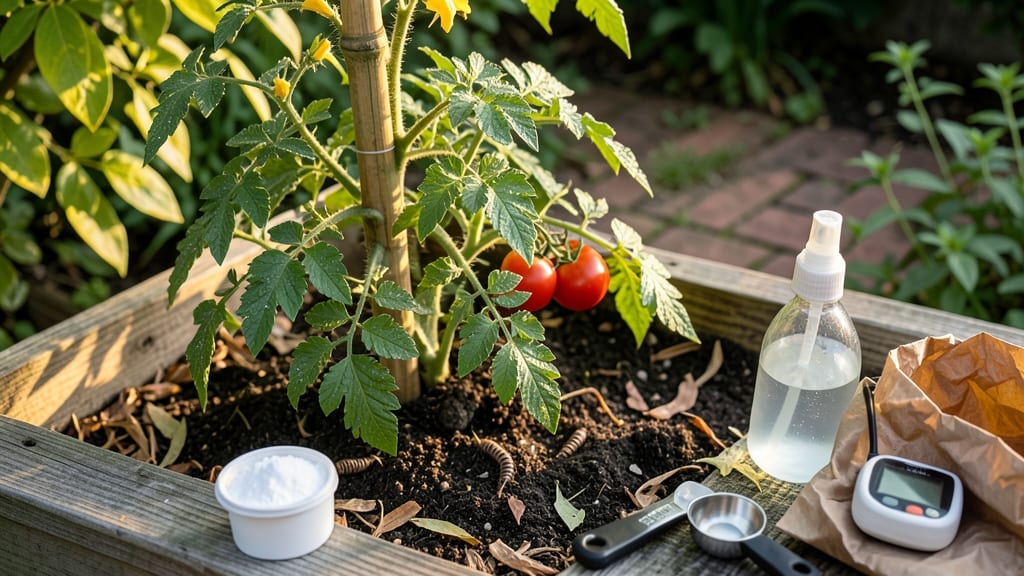
Baking soda helps tomato plants by adjusting soil pH to reduce acidity and acting as a mild fungicide against diseases like powdery mildew, though overuse can disrupt soil chemistry and harm beneficial microbes.
Baking soda works as a natural soil amendment because its alkaline properties can neutralize overly acidic conditions that stress tomato plants. 🌱 When dissolved in water and sprayed on leaves, it creates an environment hostile to fungal spores while leaving plant tissues unharmed—though you'll want to test soil pH first to avoid overcorrecting.
I've seen dramatic improvements in plants struggling with powdery mildew after just two applications, but always use it as a supplement to proper watering and airflow practices.
For best results, mix 1 teaspoon of baking soda with 1 quart of water and apply during early morning hours when humidity is lower. This prevents the solution from lingering too long on leaves, which could lead to leaf burn.
Remember that baking soda won't replace proper garden maintenance—it's most effective when combined with good cultural practices like pruning for airflow and regular soil testing.
💡 In This Article
- How Baking Soda Adjusts Soil pH and Fights Tomato Plant Diseases
- Safe Application Methods for Baking Soda on Tomato Plants
How baking soda adjusts soil pH and fights tomato plant diseases
Baking soda, chemically known as sodium bicarbonate (NaHCO₃), works primarily by raising soil pH levels when dissolved in water. Tomato plants thrive in slightly acidic to neutral soil with a pH range of 6.0-6.8.
When soil becomes too acidic (below 5.5), essential nutrients like phosphorus and calcium become less available, stunting plant growth.
Baking soda's alkaline nature helps neutralize excess acidity by releasing hydroxide ions (OH⁻) that react with hydrogen ions (H⁺) in acidic soil, effectively raising the pH. This chemical reaction creates a more balanced environment where tomato roots can absorb nutrients more efficiently. 🌱
The fungicidal properties of baking soda come into play when it's applied as a foliar spray. When dissolved in water, it creates a slightly alkaline solution that disrupts the cell membranes of fungal spores like those causing powdery mildew and early blight.
These pathogens thrive in acidic conditions, so the elevated pH makes the leaf surface inhospitable. Studies show that a 1 teaspoon per gallon solution can reduce fungal spore germination by up to 70% when applied preventatively.
The key is consistency—regular applications maintain this protective barrier without harming the plant's natural defenses.
What makes baking soda particularly effective is its dual-action mechanism. First, it alters the leaf surface chemistry to make it less conducive to fungal attachment. Second, the sodium ions in baking soda interfere with the fungal spores' ability to absorb water, essentially dehydrating them.
This dual approach explains why gardeners often see visible improvements in just 7-10 days of regular application. However, the effect isn't permanent—you'll need to reapply every 10-14 days or after heavy rainfall to maintain protection.
While baking soda is generally safe for tomato plants, it's crucial to understand its limitations. Overuse can lead to sodium buildup in the soil, which may eventually harm beneficial microbes and beneficial insects like ladybugs that help control pests.
The sodium can also create a salty environment that stresses plant roots over time. That's why it's essential to combine baking soda treatments with organic matter like compost, which helps buffer the soil and maintain long-term health.
Think of baking soda as a supplement rather than a complete solution for plant care. 🌿
For visual learners, imagine this process like adding a pinch of salt to a glass of lemonade. The salt (baking soda) neutralizes some of the lemon's acidity (soil acidity), making the drink more balanced and palatable.
Similarly, baking soda helps balance the soil's chemistry, creating optimal conditions for tomato plants to thrive. However, just as you wouldn't dump an entire salt shaker into lemonade, you shouldn't overapply baking soda—moderation is key to maintaining a healthy garden ecosystem.
The most effective application method involves mixing 1 teaspoon of baking soda with 1 quart of water and adding a few drops of liquid soap as a surfactant. This helps the solution adhere to leaf surfaces without causing leaf burn.
The soap also prevents the baking soda from beading up on leaves, ensuring even coverage. Always apply this mixture in the early morning or late evening when temperatures are cooler and humidity is lower, which reduces the risk of leaf damage and allows the solution to dry more evenly. 🌞