
Planting
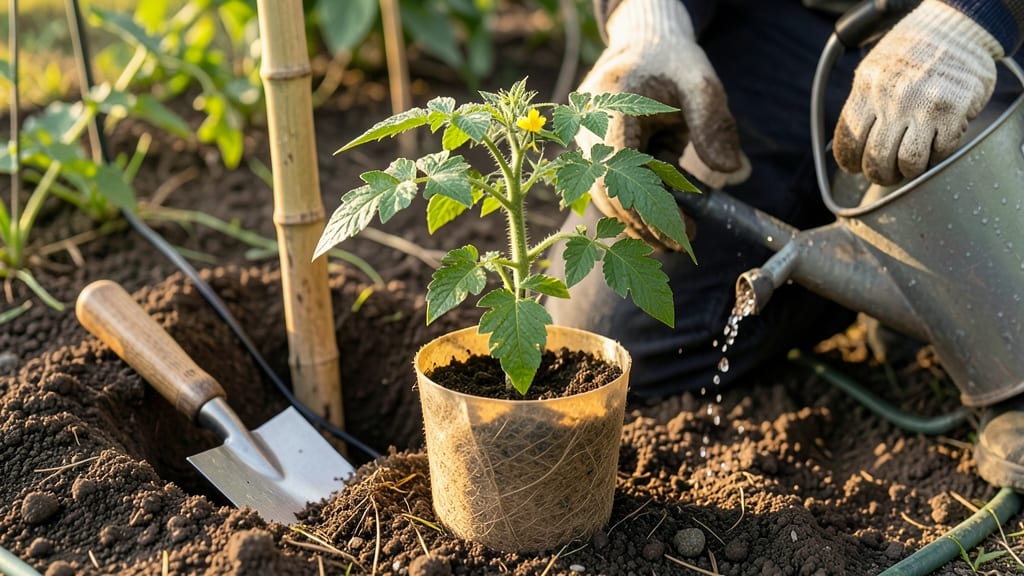
Planting tomato plants outside means the difference between a 20-pound harvest and a sad, leggy failure—it all starts with the right spot and timing. 🌱 I’ve learned the hard way that tomatoes need full sun (at least 6-8 hours daily) and soil that warms up fast, or they’ll just sit there looking miserable.
The key is waiting until nighttime temps stay above 55°F, usually after your last frost date, then getting them in the ground before the heat of summer hits. Most beginners overlook soil prep, but tomatoes thrive in loose, well-draining soil mixed with compost.
I dig in a 2-inch layer of compost and a handful of balanced fertilizer at the bottom of each hole—this jumpstarts their growth. If your soil is heavy clay, amend it with sand or coconut coir to keep roots happy.
And here’s a pro tip: bury the stem deeper than the pot, up to the first leaves. Tomatoes will root along that buried stem, creating a stronger plant. Once planted, water deeply right away to settle the soil, then keep it consistently moist (about 1 inch per week).
Mulch with straw or grass clippings to lock in moisture and keep soil temps steady. Within 2-3 weeks, you’ll see new growth shooting up—proof you’ve done it right. The first blooms will appear in 4-6 weeks, and if all goes well, you’ll be picking tomatoes by midsummer.
This method works for both in-ground and container gardens—just adjust spacing (18-24 inches apart for plants, 3 feet for indeterminate varieties). And if you’re in a hot climate, opt for early-morning planting to avoid transplant shock. Now grab those transplants and let’s get growing!
📚 In This Guide
- What you need
- Instructions
- Tips and common mistakes
- Wrapping up and next steps
What you need
- ● Tomato plants: 3–6 healthy seedlings (start indoors 6–8 weeks before last frost or buy transplants from a nursery). Choose disease-resistant varieties like Celebrity or Sungold.
- ● Garden space: A sunny spot (6+ hours of sunlight daily) with well-draining soil. Raised beds or containers (5+ gallons per plant) work too!
- ● Soil amendments: 5–10 lbs of compost or aged manure per planting area.
- ● 1–2 cups of balanced fertilizer (10-10-10) or tomato-specific mix per hole.
- ● Support structures: Cages (5–6 ft tall) or stakes (6+ ft long) for indeterminate varieties.
- ● Trellis or string for vining types.
- ○ Mulch: Straw, grass clippings, or black plastic (optional but recommended to retain moisture and suppress weeds).
- ● Watering tools: Watering can or hose with a gentle spray nozzle.
- ○ Drip irrigation kit (optional for consistent moisture).
- ● Pruning shears: Sharp, clean pair for trimming suckers and dead leaves.
- ● Soil test kit: Check pH (ideal: 6.0–6.8) and nutrient levels before planting.
- ● Epsom salt: 1 tbsp per plant (every 2–3 weeks) for magnesium boost.
- ● Row covers: Lightweight fabric to protect young plants from pests or frost.
- ● Plant markers: Labels to track varieties and planting dates.
- ● Gloves & knee pads: For comfort during planting and maintenance.
Step-by-step instructions for planting tomato plants outside
Here’s how to get your tomato plants thriving in the garden—no guesswork, just proven results.
🌱 Step 1: Choose the Perfect Sunny Spot and Prepare the Soil
Tomatoes need at least 6-8 hours of direct sunlight daily, so pick a location where they’ll get full sun. Avoid low spots where cold air settles—tomatoes hate chilly roots. I like to test the spot by observing other sun-loving plants like peppers or eggplants already growing there.
Loosen the soil to a depth of 12-18 inches with a garden fork or tiller. Tomatoes hate compacted soil, which restricts root growth. Mix in 2-3 inches of compost or well-rotted manure to enrich the soil naturally. The goal is loose, crumbly soil that drains well but holds moisture—think of it as giving your plants a fluffy bed to stretch their roots.
🪴 Step 2: Harden Off Your Seedlings Before Planting
If you started your tomatoes indoors, they need 7-10 days of hardening off before going outside. Move them to a sheltered spot like a porch or patio for 1-2 hours the first day, gradually increasing their outdoor time by 1 hour daily. This toughens their stems and leaves so they don’t get shocked by wind or temperature swings.
Watch for wilting or yellowing leaves—that’s a sign they’re not ready yet. By the last day, they should be outside all day without stress. I always plant on an overcast day or late afternoon to give them a gentler introduction to full sun.
☀️ Step 3: Plant Deeply and Support for Strong Growth
Dig a hole twice as wide as the root ball but only as deep as the first set of true leaves. Tomatoes grow roots along their buried stems, so the deeper you plant, the stronger the plant. Gently remove the plant from its container, loosen the roots if they’re circling, and place it in the hole so the top of the root ball sits 1 inch below soil level. This encourages more root growth.
Fill the hole with soil, pressing lightly to remove air pockets. Immediately water deeply to settle the soil and encourage root contact. If you’re planting multiple tomatoes, space them 18-24 inches apart in rows 3-4 feet apart to allow airflow and easy harvesting. Add a stake or cage now—waiting until later can damage the roots.
💧 Step 4: Mulch and Water to Encourage Establishment
Spread 2-3 inches of mulch around each plant, leaving a gap near the stem to prevent rot. Mulch keeps soil moist, suppresses weeds, and regulates temperature—critical for tomatoes. I use straw or shredded leaves because they break down slowly and add organic matter as they decompose.
Water deeply 2-3 times per week, aiming for 1-1.5 inches of water total. The soil should be moist 2-3 inches down—stick your finger in to check. Avoid wetting the leaves, especially in the evening, to prevent fungal diseases like blight. A soaker hose or drip irrigation makes this easy and keeps foliage dry.
✂️ Step 5: Prune and Monitor for a Healthy Harvest
Once your plants are 12-18 inches tall, start pruning suckers—the little shoots that grow in the leaf axils. Pinch these off early to direct energy to fruit production. Remove any yellow or diseased leaves immediately to keep the plant healthy. I also trim back any leaves touching the soil to prevent rot and improve airflow.
Watch for early signs of pests like aphids or hornworms—handpick them off or spray with neem oil if needed. Tomatoes are heavy feeders, so side-dress with compost or fertilizer every 3-4 weeks once flowers appear. You’ll know you’re on the right track when your plants are vibrant green, sturdy, and producing blossoms within 4-6 weeks of planting.
Tips & tricks for planting tomato plants outside
Here's what nobody tells you about planting tomatoes that'll make all the difference between a decent harvest and a bountiful one.
Sunlight Secret: Those 6-8 hours of direct sunlight are non-negotiable, but here's the thing: morning sun is your best friend. Position your plants to get that golden morning light first—it helps prevent sunburn on the fruits later in the day. I've noticed my tomatoes develop fewer splotches when they're not getting the harsh afternoon sun directly.
Soil Prep Game-Changer: When loosening that 12-18 inches of soil, don't just scratch the surface—dig deep! I use a garden fork to break up any compacted layers below. Think of it like fluffing a pillow for your tomato roots to spread out comfortably. The 2-3 inches of compost should be mixed in thoroughly, not just sprinkled on top. This creates a nutrient-rich zone where roots can thrive.
Harden Off Like a Pro: The 7-10 days of hardening off might seem long, but trust me on this: rushing this step is how you end up with wilted plants. Start with just 1-2 hours on day one in a sheltered spot. I like to place mine near a south-facing wall where they get indirect light. Watch for those wilting leaves—they're your early warning system. If you see them, your plants aren't ready yet.
Planting Depth Trick: Burying your tomatoes deeper than you think is actually a good thing. That 1 inch below soil level recommendation isn't just about roots—it's about creating a stronger stem. I've seen plants that were planted deeper develop thicker stems that can support more fruit. Just make sure you're planting at the first set of true leaves, not the stem base.
Pro Tips for Plant Tomato Plants Outside
- Here's what nobody tells you about planting tomatoes that'll make all the difference between a decent harvest and a bountiful one.
- Sunlight Secret: Those 6-8 hours of direct sunlight are non-negotiable, but here's the thing: morning sun is your best friend.
- Soil Prep Game-Changer: When loosening that 12-18 inches of soil, don't just scratch the surface—dig deep!
Frequently asked questions
Got questions about planting tomatoes outside?
You’re not alone! Here are answers to the most common queries to help you grow like a pro.
When is the best time to plant tomato plants outside?
Plant after the last frost when soil temps reach at least 60°F (15°C). For most regions, this is late spring (May-June). Use a frost cloth if early planting is tempting—just remove it when daytime temps warm up!
How deep should I plant tomato seedlings?
Dig a hole deep enough to bury 2/3 of the stem (up to the first leaves). This encourages strong root growth. If the plant looks top-heavy, stake it immediately to prevent flopping.
Can I plant tomatoes in containers instead of the ground?
Use pots at least 5 gallons per plant with drainage holes. Dwarf varieties (like ‘Tiny Tim’) thrive in containers, while larger types need bigger space. Just ensure they get 6+ hours of sun daily.
Why are my tomato leaves turning yellow after planting?
Yellowing leaves often signal overwatering, poor drainage, or nutrient deficiency. Check soil moisture (top inch should dry between waterings) and amend soil with compost. If older leaves yellow first, it’s likely nitrogen-rich soil—balance with phosphorus/potassium.
How often should I water newly planted tomatoes?
Water deeply 1–2 times per week (more in heatwaves) to encourage roots to grow down. Avoid wetting leaves to prevent disease. Mulch with straw to retain moisture and keep soil cool.
Wrapping up and next steps
Planting tomato plants outside is a rewarding journey that leads to juicy, homegrown harvests—and you’ve got all the tools to succeed! 🌱 From choosing the perfect spot to nurturing your plants through every stage, these steps ensure your tomatoes thrive.
With patience and care, you’ll soon be enjoying the taste of sun-ripened fruit straight from your garden.
Now that you’re ready to dig in, take the next step: mark your calendar for planting day and gather your supplies. Happy gardening—your future tomato feast starts with a single seedling! 🍅✨