
Pruning
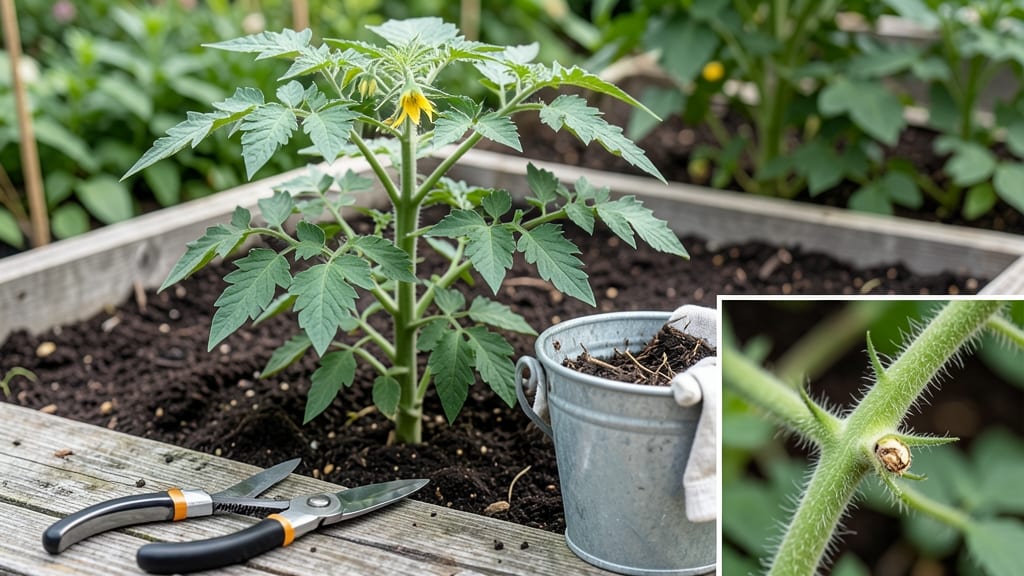
Pruning young tomato plants isn't just trimming—it's the secret to bushier growth and more tomatoes on your vine. 🌱 I learned the hard way that skipping this step means leggy plants with fewer fruits, but once I mastered the technique, my harvest doubled in just one season.
The key is removing those little side shoots—called suckers—that grow between the main stem and branches. Use clean pruners to snip them off just above the leaf joint, and always leave the first few suckers below the first flower cluster to encourage early fruit.
You'll need sharp pruners, gloves, and about 10 minutes per plant every week or two during the growing season.
What you end up with is a sturdy plant that puts energy into fruit production instead of extra foliage. Airflow improves, reducing disease risk, and the plant supports more weight without sagging. The first harvest will taste sweeter too—pruning concentrates the plant's energy where it matters most.
Even if you've never pruned tomatoes before, this method works for both determinate (bush) and indeterminate (vining) varieties. Start early in the season, and by midsummer, you'll wonder how you ever grew tomatoes any other way.
📚 In This Guide
- What you need
- Instructions
- Tips and common mistakes
- Wrapping up and next steps
What you need
- ● Pruning shears or sharp bypass pruners – Choose sterilized, sharp ones (avoid dull tools—they crush stems instead of cleanly cutting). A 5-inch blade works best for young plants.
- ● Gloves – Garden or work gloves (nitrile-coated for grip) to protect your hands from thorns and dirt.
- ○ Disinfectant (optional but recommended) – 70% isopropyl alcohol or a 10% bleach solution to sterilize tools between cuts and prevent disease spread.
- ● Small bucket or bag – For collecting pruned debris (a 5-gallon bucket or compost bag works well).
- ● Hand pruners (for tiny cuts) – If your tomato plants have very delicate stems, a small, precision pruner (like Felco’s F-2) can help.
- ● Rubbing alcohol wipes – Quick cleanup for tools mid-pruning.
- ● Garden twine or stakes – If your plants need support after pruning (e.g., for indeterminate varieties).
- ○ Plant growth regulator (optional) – A diluted seaweed extract or kelp-based fertilizer to encourage faster recovery post-pruning.
Step-by-Step guide to pruning young tomato plants
Here’s the method I use to encourage sturdy plants and bigger harvests—no guesswork, just strategic cuts.
🌱 Step 1: Wait Until Plants Reach 12 Inches Tall
Hold off on pruning until your tomato plants hit 12 inches—this is when they’ve developed 3-4 sets of true leaves (the second set after the initial seed leaves). Pruning too early stresses young plants and slows growth. You’ll know they’re ready when the main stem is thick as a pencil and the leaves are a deep, vibrant green.
I always check for suckers (those little shoots growing in the leaf axils) before I touch the plant. If you see them now, they’re tiny and easy to remove. Wait any longer, and those suckers will grow into thick stems that are a pain to prune later.
✂️ Step 2: Remove Only the Lower Suckers First
Start by pinching off the bottom two suckers—these are the shoots growing where the stem meets the first few leaves. Use your fingers or clean pruners to twist or snip them off at the base, not just break them. You want a clean cut to prevent disease from entering the wound.
Here’s the thing—don’t go overboard. You’re not trying to shape the plant yet, just encourage energy to flow upward into the main stem. If you remove too many suckers at once, the plant will focus on leaf growth instead of root and stem development, which weakens it.
☀️ Step 3: Prune for Airflow and Light Penetration
Once your plant has 5-6 sets of leaves, it’s time to prune more aggressively. Remove any yellowing or diseased leaves first—they’re just stealing energy. Then, focus on suckers larger than 2 inches and any leaves shading the lower stem.
I like to leave one strong sucker near the top of the plant to encourage branching. This creates a bushier structure that supports more fruit. Just remember: never remove more than 1/3 of the plant’s foliage at once, or you’ll shock it into dropping flowers or fruit.
⏰ Step 4: Prune in the Morning on Dry Days
Always prune early in the morning when the plant is turgid (full of water) and the air is still cool. This gives the wounds time to dry before evening humidity sets in, which helps prevent fungal infections like early blight.
Use sharp pruners (or your fingers for small suckers) and sterilize them with rubbing alcohol between cuts. I also avoid pruning when the forecast calls for rain—wet conditions turn cuts into entry points for disease. If you must prune after rain, wait until the leaves are completely dry.
🌿 Step 5: Monitor and Adjust as the Plant Grows
Every 7-10 days, check for new suckers and prune them before they grow larger than 1 inch. The goal is to balance growth—too much pruning redirects energy away from fruit production, but too little leads to crowded branches that spread disease.
Watch for flower clusters forming. Once they appear, stop pruning above them—you want the plant to focus on setting fruit, not growing more leaves. If you see a sucker growing near a flower cluster, leave it. It’ll become a new branch that can support more tomatoes later in the season.
Tips & tricks for strategic tomato plant pruning
These simple strategies will help you avoid common mistakes and get the most out of your tomato plants.
Timing is Everything: The 12-inch height guideline in Step 1 is non-negotiable. I learned this the hard way—pruning too early stresses young plants and actually stunts growth. Wait until you see that pencil-thick stem and those 3-4 sets of true leaves before touching your pruners. This timing ensures the plant has developed enough energy reserves to bounce back quickly from the pruning.
Sucker Removal Technique: When you're pinching off those bottom two suckers in Step 2, use your fingers for the tiny ones and clean pruners for anything larger. The key is to make a clean cut at the base—don't just tear them off. I keep a small bottle of rubbing alcohol handy to sterilize my pruners between cuts. This simple step prevents fungal infections from entering through the wounds, which can be devastating to young plants.
Pruning for Airflow: In Step 3, focus on creating that open structure by removing suckers larger than 2 inches. I like to visualize sunlight streaming through the plant—this is your goal. Leave that one strong sucker near the top to encourage branching, but never remove more than 1/3 of the foliage at once. Think of it like giving your plant a haircut: you want to shape it, not shave it bald. This balance prevents shock and maintains photosynthesis while still improving airflow.
Disease Prevention: The morning pruning rule in Step 4 isn't just about timing—it's about creating the perfect conditions for healing. When you prune in the morning, the wounds have all day to dry and seal before evening humidity sets in. I've seen plants develop early blight just from pruning in damp conditions. If you must prune after rain, wait until the leaves are completely dry, and consider using a fungicide on the cuts as an extra precaution.
Pro Tips for Prune Young Tomato Plants
- These simple strategies will help you avoid common mistakes and get the most out of your tomato plants.
- Timing is Everything: The 12-inch height guideline in Step 1 is non-negotiable.
- Sucker Removal Technique: When you're pinching off those bottom two suckers in Step 2, use your fingers for the tiny ones and clean pruners for anything larger.
Frequently asked questions
Got questions about pruning young tomato plants? You're not alone!
Here are some of the most common concerns—and their answers—to help you grow a thriving, productive tomato garden with confidence.
Do I really need to prune my young tomato plants?
Yes! Pruning young tomato plants encourages stronger stems, better air circulation, and more fruit production. For indeterminate varieties (like cherry tomatoes), pruning helps direct energy toward fruit growth instead of excessive foliage. Even determinate (bush) tomatoes benefit from light pruning to improve airflow and reduce disease risk.
When is the best time to start pruning?
Begin pruning when your tomato plants are 6–12 inches tall and have 4–6 true leaves. Focus on removing the lower leaves (within 12–18 inches of the soil) to prevent soil-borne diseases. Avoid heavy pruning during extreme heat or cold—wait for mild, dry conditions for faster recovery.
What if I accidentally prune too much?
Don’t panic! Tomato plants are resilient. If you’ve over-pruned, stop immediately and let the plant recover. Avoid fertilizing heavily right after—focus on watering and providing support (like stakes or cages). New growth should sprout within 1–2 weeks if the plant’s root system is healthy.
Can I prune tomato plants in containers?
Container-grown tomatoes need pruning just like garden varieties, but be extra cautious. Since root space is limited, avoid removing more than 20–30% of the foliage at once. Use smaller pruners or even clean scissors for precision, and ensure your container has drainage to prevent stress.
Will pruning reduce my tomato yield?
Not if done correctly! Pruning increases yields by improving air flow, reducing disease, and directing energy to fruit production. However, over-pruning (especially late in the season) can stress the plant. For indeterminate varieties, aim to keep 3–4 main stems; determinate types need minimal pruning—just remove suckers and lower leaves.
Wrapping up and next steps
Pruning young tomato plants might seem intimidating at first, but with the right technique, you’ll unlock bushier growth, stronger stems, and a bountiful harvest! 🌱 The key is patience—regularly trimming suckers and lower leaves while keeping an eye on your plant’s health will set you up for success.
Remember, every snip is an investment in future tomatoes!
Now that you’re armed with the know-how, grab those pruners and get growing! Start with your youngest plants, and soon you’ll be reaping the rewards of your hard work. Happy pruning—and may your tomatoes thrive! 🍅✨