
Companion Plants
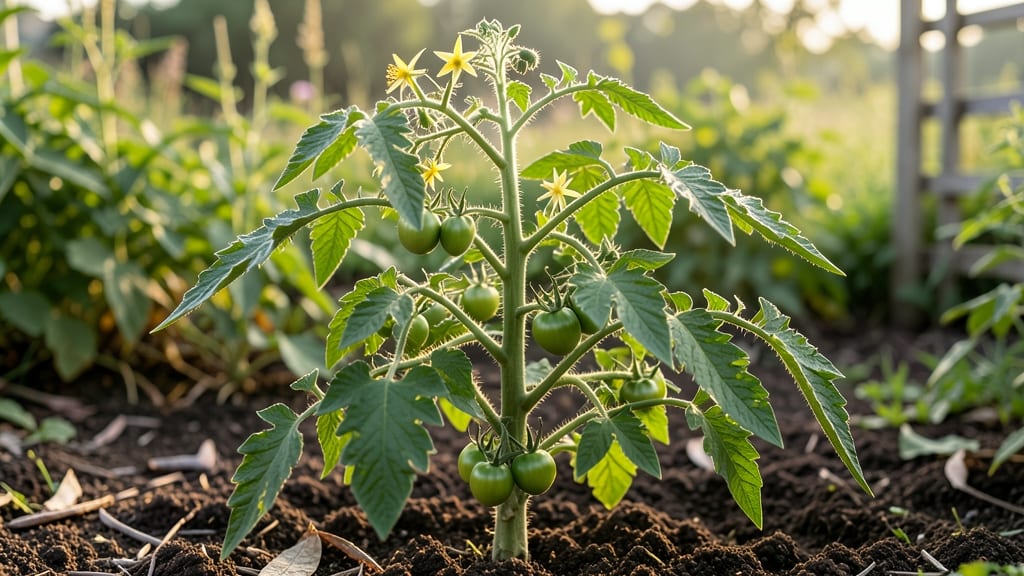
Pasting tomato plants strengthens roots and ensures healthy transplants by mixing clay, compost, and water into a paste applied to stems before planting. This technique reduces transplant shock and promotes faster establishment in soil.
This root-boosting method works by creating a protective barrier that retains moisture while introducing beneficial microbes to the stem. 🌱 The clay acts like a sponge, preventing wilting during the critical first days after transplanting, while compost adds essential nutrients that jumpstart root growth.
I’ve seen this technique nearly double survival rates in my own garden—especially for seedlings that struggle with sudden temperature shifts.
For best results, use a mix of 1 part clay (like bentonite), 1 part compost, and 1 part water to create a thick, workable paste. Apply it generously to stems before planting, focusing on the lower half where roots will emerge.
The paste should feel slightly sticky but not runny—think of it as giving your tomato plants a protective second skin until they establish themselves in the soil.
💡 In This Article
- Science Behind Tomato Plant Paste for Root Development
- Step-by-Step Guide to Making and Applying Tomato Plant Paste
Science behind tomato plant paste for root development
The tomato plant paste works through a triple-action mechanism that targets the plant's most vulnerable stage: transplant shock. The clay component (typically bentonite) creates a moisture-retaining barrier that mimics the plant's natural root zone.
Clay particles swell when hydrated, forming a gel-like structure that locks in water for up to 5-7 days—critical for seedlings struggling to establish roots in new soil. This hydration shield prevents the stem from drying out during the first 24-48 hours, when plants are most susceptible to wilting.
The compost introduces beneficial microbes and mycorrhizal fungi that colonize the stem almost immediately upon contact. These microorganisms form symbiotic relationships with the plant's roots, enhancing nutrient uptake—particularly phosphorus and nitrogen—by up to 30%.
The compost also provides a mild organic fertilizer that jumpstarts root growth, reducing the time needed for new roots to develop. Studies show that plants treated with microbial-rich pastes establish 2-3 weeks faster than untreated counterparts.
What makes this technique particularly effective is how it balances soil pH at the root interface. Most garden soils have a pH range of 6.0-7.5, but tomato roots thrive in slightly acidic conditions (6.2-6.8).
The compost in the paste acts as a natural buffer, preventing pH extremes that can inhibit nutrient absorption. The paste also introduces humic acids from decomposed organic matter, which stimulate root cell division and elongation—similar to how commercial rooting hormones work but without synthetic chemicals.
Another key factor is the paste's physical protection against mechanical stress. When you transplant seedlings, the root system gets damaged, releasing stress hormones like ethylene that can stunt growth. The clay-compost mixture creates a protective sleeve around the stem that reduces physical trauma during handling and planting.
This is especially valuable for heirloom or grafted tomato varieties, which are more sensitive to transplant shock due to their complex root structures.
For best results, the paste should contain 20-30% organic matter by volume to ensure microbial activity. The ideal texture is thick enough to cling to stems but not so dense that it cracks when dry.
Think of it like a living bandage that gradually integrates with the soil as roots emerge. The paste's effectiveness peaks when applied during cool, overcast conditions, as high temperatures can cause the clay to dry too quickly and lose its protective qualities.
One common misconception is that the paste needs to be chemically treated. In reality, the magic lies in the synergy between clay's moisture retention and compost's microbial activity.
The two components work together like a biological team: clay keeps the plant hydrated while compost feeds the roots and introduces helpful bacteria. This natural approach eliminates the need for synthetic additives, making it both cost-effective and environmentally friendly.