
Fertilization
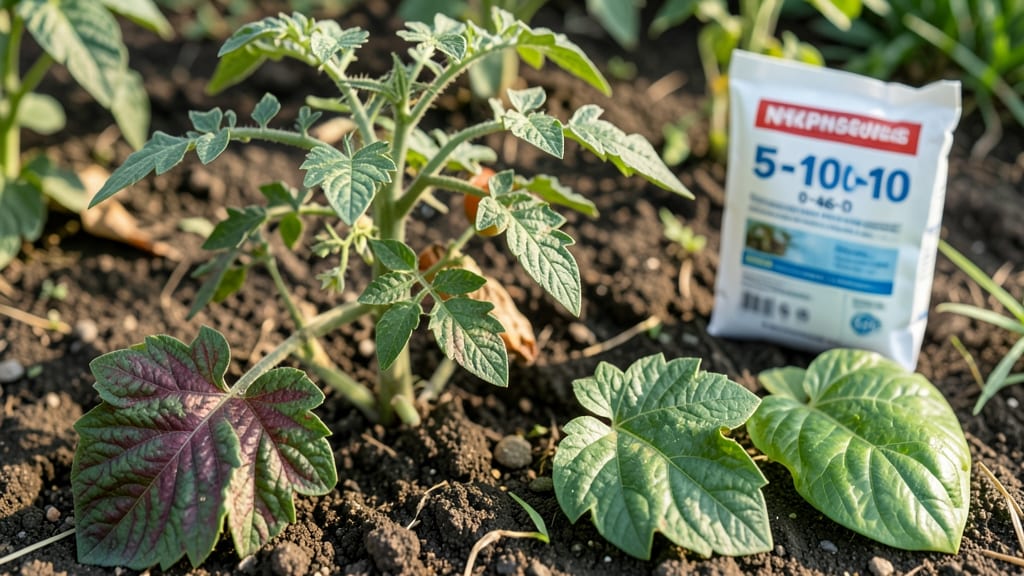
When your tomato plants show phosphorus deficiency, stems turn purple and roots struggle to anchor. 🌱 I’ve seen this exact problem in my own garden—what looks like a dying plant is actually just hungry for the right nutrients.
The good news? This fix is simpler than you’d think, and it starts with understanding why your soil might be failing your tomatoes.
Phosphorus deficiency usually shows up when soil pH is off, organic matter is low, or you’ve been overwatering (yes, even tomatoes can drown their own roots). My first year growing, I thought my plants needed more water—turns out, they needed a phosphorus boost.
The purple stems? That’s your plant’s way of saying, “Feed me!” before it gives up and stops producing fruit.
You’ll fix this in three steps: test your soil (DIY kits work fine), add bone meal or rock phosphate (organic options that last), and adjust your watering to keep roots happy.
Within a few weeks, those purple stems will fade to green, and your plants will start putting energy into blooms instead of struggling to survive.
Prevention is easy once you know the signs: rotate crops, top-dress with compost every season, and avoid overwatering. My garden’s tomatoes now thrive year after year because I learned to listen to what the soil—and the plants—are telling me. Let’s get those roots growing strong again.
Root Causes Of Phosphorus Shortages
Phosphorus deficiency in tomato plants isn’t just random—it’s usually a mix of soil, environmental, and management factors working against your garden. Understanding these causes helps you take precise action to restore balance. Let’s break down the key triggers and why they starve your plants of this critical nutrient.
Phosphorus (P) is often locked up in soil rather than being available to plants. Here’s why:
- High pH (alkaline soil): Phosphorus binds tightly to calcium and iron in alkaline conditions (pH > 7.0), making it inaccessible. Test your soil’s pH—aim for 6.0–6.8 for optimal P availability.
- Low organic matter: Organic material (compost, manure) releases phosphorus slowly over time. Without it, P gets depleted faster than it can be replenished.
- Clay-heavy or sandy soils:
- Clay soils bind phosphorus so tightly that roots can’t extract it.
- Sandy soils drain phosphorus away before plants absorb it.
Actionable fix: Amend soil with composted manure or biochar to improve phosphorus retention. For alkaline soils, add sulfur or peat moss to lower pH gradually.
Ironically, too much nitrogen (N) or potassium (K) can mask phosphorus deficiency while starving roots of P. Here’s how:
- Nitrogen dominance: High N promotes leafy growth but diverts energy away from root development, reducing the plant’s ability to scavenge phosphorus from the soil.
- Potassium competition: Excess K can outcompete phosphorus uptake in roots, especially in young plants.
- Lack of balanced fertilizers: Using only NPK-heavy fertilizers (e.g., 10-10-10) without phosphorus-specific amendments (like bone meal or rock phosphate) leaves a gap.
Actionable fix: Shift to a balanced fertilizer (e.g., 5-10-10 or 3-4-6) and supplement with organic phosphorus sources like:
- Bone meal (3-15-0)
- Rock phosphate (0-3-0, slow-release)
- Fish emulsion (1-5-0)
Phosphorus availability plummets when soil conditions swing to extremes:
- Cold soil: Phosphorus uptake slows dramatically below 50°F (10°C). Young tomato seedlings in spring often suffer because roots can’t access P in chilly soil.
- Waterlogging or drought:
- Too much water: Oxygen deprivation in roots reduces their ability to absorb phosphorus.
- Too little water: Dry soil binds phosphorus tightly, making it physically unavailable to roots.
Actionable fix:
- Use mulch (straw, wood chips) to regulate soil temperature and moisture.
- Water deeply 1–2 times per week (not daily) to encourage root growth into phosphorus-rich lower soil layers.
- For cold soils, plant in raised beds or use black plastic mulch to warm the root zone faster.
Healthy soil microbes unlock phosphorus for plants—but when they’re missing or overworked, P gets trapped. Common culprits:
- Over-farming without rotation: Tomatoes deplete soil phosphorus over time. Without cover crops (like clover or vetch) or crop rotation, P levels drop.
- Fungicides/pesticides: Harsh chemicals kill beneficial microbes (e.g., mycorrhizal fungi) that help roots absorb phosphorus.
- Compacted soil: Poor aeration strangles root growth, limiting the plant’s ability to explore for phosphorus.
Actionable fix:
- Add mycorrhizal inoculant to soil to boost phosphorus uptake by 20–50%.
- Plant legume cover crops (e.g., peas, beans) before tomatoes to fix nitrogen and improve soil structure.
- Aerate compacted soil with a broadfork or add perlite/vermiculite for drainage.
Pro Tip: 🔥 Test your soil every 2–3 years—phosphorus levels can change rapidly with amendments or crop demands. A simple home soil test kit (or lab test) reveals exactly how much P your tomatoes need.
Quick Fixes for Phosphorus-Starved Tomatoes
Reviving phosphorus-deficient tomato plants starts with targeted solutions that address the root cause—whether it’s poor soil health, improper fertilization, or environmental stress. Below, we break down practical fixes for each common trigger, along with prevention tips to keep your plants thriving.
Think of this as your tomato plant’s emergency phosphorus IV drip—fast, effective, and easy to follow.
Cause: Phosphorus locks up in alkaline or overly acidic soil, making it inaccessible to roots. Fix:
- Test your soil (a simple DIY kit or lab test works). Ideal pH for tomatoes: 6.0–7.0.
- Lower pH (if too alkaline):
- Mix sulfur (1–2 lbs per 100 sq ft) into the top 6 inches of soil. Water well.
- Use composted pine needles or peat moss (sparingly) to acidify gradually.
- Raise pH (if too acidic):
- Sprinkle lime (calcium carbonate) at 5–10 lbs per 100 sq ft. Work it into the soil 2–3 weeks before planting.
- Pro Tip: 💡 Avoid quick-lime (calcium oxide)—it can burn roots. Use garden lime instead.
Prevention:
- Monitor soil pH annually, especially if you garden in containers or raised beds (they dry out faster and shift pH quicker).
- Mulch with compost to buffer pH swings naturally.
Cause: Soil lacks available phosphorus, or plants aren’t absorbing it efficiently. Fix:
- Short-term boost (emergency):
- Bone meal (3–4–0 NPK ratio): Sprinkle 1–2 tbsp per plant around the base, then water deeply. Best for root development and flowering.
- Rock phosphate: A slower-release option (0–3–0). Broadcast 1 lb per 100 sq ft and till into the top 6 inches before planting.
- Long-term solution:
- Compost tea: Steep well-aged compost in water (1:5 ratio) for 24–48 hours. Strain and water plants at the base (avoid leaves to prevent fungal issues).
- Fish emulsion (5–1–1 NPK): Dilute to 1 tbsp per gallon of water and apply as a foliar spray or soil drench every 2 weeks.
Pro Tip: ✨ Avoid overdoing it! Too much phosphorus can lead to zinc or iron deficiencies. Stick to quarter-strength applications if your soil already has moderate phosphorus levels.
Cause: Compacted soil, poor drainage, or root damage (from overwatering or pests) starves roots of phosphorus. Fix: - Loosen the soil: - Gently fork or hand-dig around the roots to aerate without damaging them.
Add sand or perlite (20%) to improve drainage if soil is clay-heavy. - Feed the soil microbes: - Mycorrhizal fungi (available as powder or granules) boost phosphorus uptake by up to 50%.
Mix 1 tbsp per plant into the soil at planting. - Compost or worm castings: These teem with microbes that break down phosphorus into plant-available forms. Work 1–2 inches into the topsoil.
Prevention:
- Mulch heavily (2–3 inches of straw or wood chips) to protect roots and encourage microbial activity.
- Avoid walking on garden beds—compacted soil = stunted roots.
Cause: Extreme heat, drought, or cold slows phosphorus absorption. Fix:
- Water deeply but infrequently:
- Phosphorus moves with water, so drench the soil (1–2 inches per week) rather than light, frequent watering. Use drip irrigation to target roots.
- Shade cloth for heat stress:
- If temps hit above 90°F (32°C), provide 30–50% shade during peak sun hours to reduce stress.
- Cold soil? Warm it up:
- Cover beds with black plastic mulch 1–2 weeks before planting to raise soil temps.
Pro Tip: 🌡️ Morning watering is best—it reduces evaporation and gives roots time to absorb nutrients before the heat of the day.
Stop phosphorus deficiency before it starts with these garden habits:
- Build soil organically: Add compost, manure, or green manure crops (like clover) before planting tomatoes.
- Rotate crops: Never plant tomatoes (or other nightshades) in the same spot two years in a row.
Phosphorus depletion happens faster in heavy feeders. 3. Use balanced fertilizers: Aim for a 5–10–10 or 10–20–20 NPK ratio (phosphorus is the middle number). Avoid high-nitrogen fertilizers (like lawn food) during fruiting. 4. Test soil every 2–3 years: Even "good" soil can change.
Adjust amendments based on test results.
If your plants are severely stunted (purple stems, no flowers/fruit), consider:
- Prune aggressively: Remove yellow leaves and weak stems to redirect energy to healthy growth.
- Repot (container gardens): If roots are circling or soil is exhausted, move plants to a larger pot with fresh, amended soil.
- Sacrifice for next season: If plants are beyond saving, compost them (disease-free!) and start fresh with phosphorus-rich soil.
Final Reminder: 📊 Phosphorus deficiency is reversible, but early action is key. Start with soil testing, then feed strategically—your tomatoes will reward you with stronger roots, better blooms, and juicier fruit in no time!
Frequently asked questions
Why do my tomato stems turn purple when they need phosphorus?
Tomatoes produce anthocyanin pigments (purple/red hues) as a stress signal when phosphorus is scarce. This is their way of saying, "I'm struggling to grow roots and flowers!" The purple appears first on stems and undersides of leaves before spreading. Think of it as nature's alarm system—act fast to restore balance.
How quickly will my tomato plants recover after fixing phosphorus deficiency?
With proper amendments (like bone meal or compost), you'll see new green growth in 7–14 days. Flowers and fruit should appear within 3–4 weeks if the deficiency was caught early. Severe cases may take longer, but consistent soil moisture and phosphorus availability speed up recovery.
Can I use coffee grounds to fix phosphorus deficiency?
Coffee grounds are low in phosphorus (only about 0.1% by weight), so they won't solve the problem alone. However, they improve soil structure and microbial activity, which helps roots access existing phosphorus. For best results, mix them with bone meal or rock phosphate and compost them first.
Will over-fertilizing with phosphorus hurt my tomatoes?
Yes! Too much phosphorus can lock out other nutrients like zinc and iron, causing new problems. Stick to quarter-strength applications (e.g., 1 tbsp bone meal per plant) and always pair phosphorus with a balanced fertilizer (like 5-10-10). Test soil every 2–3 years to avoid buildup.
Can container-grown tomatoes develop phosphorus deficiency?
Absolutely—they're even more vulnerable because potted soil depletes faster. Use slow-release phosphorus (like rock phosphate) at planting, and repot every 2–3 years with fresh, amended soil. Container tomatoes need weekly feeding with diluted fish emulsion during fruiting.