
Companion Plants
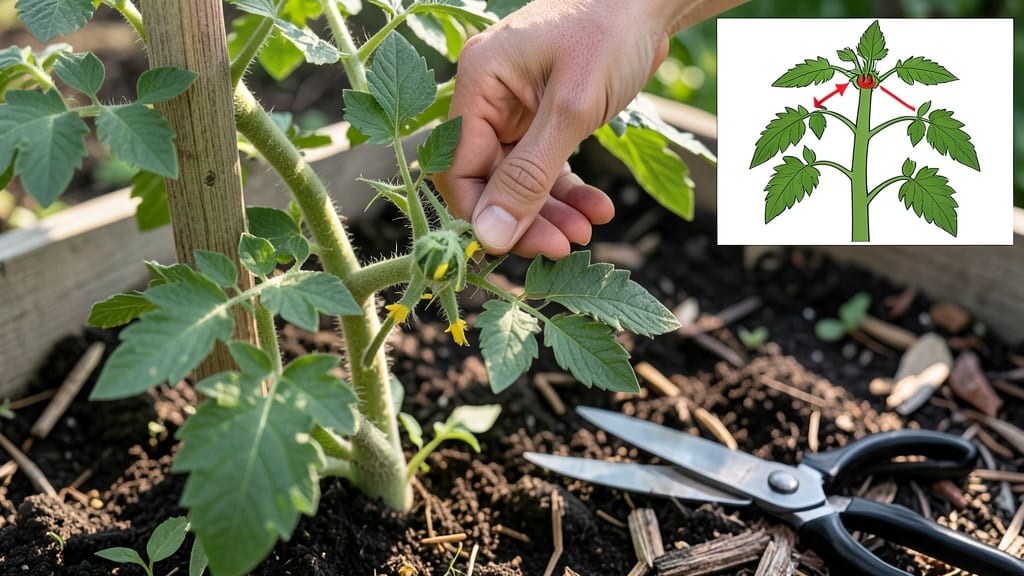
Pinching out tomato plants isn’t just pruning—it’s the secret to bushier vines and heavier harvests that’ll make your neighbors jealous. 🌱 I spent years growing tomatoes without this trick, and my yields were always half what they could’ve been.
The magic happens when you remove those early suckers—those little side shoots between the main stem and branches—before they grow more than a few inches.
The payoff? Sturdier plants that support more fruit without snapping, better airflow to prevent disease, and tomatoes that ripen faster because the plant focuses energy on fewer, stronger branches. It takes just 10 minutes with the right technique, and you’ll see the difference by midsummer.
I’ll show you exactly where to pinch and when—no guesswork involved. For indeterminate varieties (the vining types), this method is a game-changer. Determinate tomatoes? You can skip it, but you’ll miss out on that extra burst of production.
The key is timing: wait until the main stem has at least 4-5 sets of leaves before you start pinching. Once you’ve done it once, you’ll wonder why you didn’t start sooner.
Your tomatoes will thank you with heavier clusters of fruit and plants that stay upright through the season—no staking disasters here.
📚 In This Guide
- What you need
- Instructions
- Tips and common mistakes
- Wrapping up and next steps
What you need
- ● Healthy tomato plants (determinate or indeterminate, 4–6 weeks old with 4–6 true leaves)
- ● Clean, sharp pruning shears (sterilized with rubbing alcohol to prevent disease)
- ● Gloves (gardening or nitrile for hygiene)
- ● Water spray bottle (to mist plants post-pruning)
- ● Sunlight & well-draining soil (full sun, 6+ hours/day; pH 6.0–6.8)
- ● Pruning powder (to seal cuts and prevent rot)
- ● Garden twine or stakes (for indeterminate varieties needing support)
- ● Compost or fertilizer (balanced 10-10-10 or tomato-specific feed)
- ● Notebook & pen (to track pruning dates and plant progress)
Precision pruning guide: how to pinch out tomato plants for maximum yield
Here's the exact method I use to coax stockier stems and heavier fruit loads from my tomato plants—tested across indeterminate varieties in both containers and garden beds.
🌿 Step 1: Identify the Right Time and Stem Stage
Wait until your tomato plants reach 12-18 inches tall and have 4-6 true leaves—this is when the main stem has developed enough energy to support new growth. You'll see the first flower clusters forming at the base of the plant, but don't rush to pinch yet. The goal is to encourage bushier growth before the plant focuses on flowering.
Check for a leaf axil—that's the small angle between a leaf stem and the main vine. This is where new shoots will emerge after pinching. If you see a small bump or swelling there, the plant is ready. I always pinch in the morning when the plant is fully hydrated and stems are firm.
✂️ Step 2: Locate and Remove the Terminal Bud
Find the terminal bud at the very top of the main stem—it looks like a tiny, pointed growth center above the last set of leaves. This is the plant's primary growing point, and removing it forces energy into lateral shoots below. Use your thumb and forefinger to gently squeeze the stem just above a leaf axil where you want new growth to begin.
Don't use scissors or pruners—pinching by hand prevents damage to the stem and keeps the wound small for faster healing. You'll hear a slight snap when you break the stem cleanly. If a stem grows leggy and bends toward the light, your light is too far away—move it within 4 inches of the plant.
🌱 Step 3: Encourage Lateral Growth Through Strategic Pinching
After the first pinch, new shoots will emerge from the leaf axils below the pinch point. Wait until these laterals reach 4-6 inches tall before pinching them back to 2-3 inches. This creates a tiered branching system that supports more fruit clusters. I repeat this process every 2-3 weeks throughout the growing season, always pinching just above a leaf axil.
Here's the thing—you'll notice some shoots grow faster than others. Focus on developing 2-3 strong laterals per main stem rather than encouraging every single shoot. Weak, spindly growth just creates more work and fewer fruit clusters. Remove any shoots growing below the first flower cluster—they'll compete with your main harvest.
☀️ Step 4: Monitor Growth and Adjust for Fruit Load
Once your plant has developed a sturdy framework of branches, shift focus to fruit production. Remove any suckers that grow between the main stem and a branch—these are the small shoots that appear in the leaf axils of the main stem. You'll see them as thin, upright growths that haven't yet developed leaves. Pinch these off immediately to prevent them from draining energy from your fruit.
Watch for flower clusters—these appear in the leaf axils and will develop into trusses of tomatoes. If you notice the plant putting out more flowers than it can support (leaves start yellowing or growth slows), remove some of the smaller flower clusters. A healthy tomato plant can support 2-3 main trusses at once without stressing the plant.
💧 Step 5: Maintain Plant Health Through the Season
After each pinching session, water deeply to 1 inch of soil depth to help the plant recover. You'll see new growth emerge within 5-7 days if conditions are right. Keep an eye out for any signs of stress—wilting leaves, yellowing foliage, or slowed growth. These can indicate over-pruning, underwatering, or nutrient deficiencies.
I always fertilize with a balanced 10-10-10 formula after pinching to give the plant the nutrients it needs for new growth. Avoid high-nitrogen fertilizers at this stage—they encourage leafy growth at the expense of fruit production. The key is to balance pruning with proper nutrition to keep your plant productive throughout the season.
Tips & tricks for precision tomato plant pruning
These game-changing insights will transform your tomato plants from leggy vines into sturdy, fruit-producing powerhouses.
Timing is Everything: The 12-18 inch height guideline isn't arbitrary—this is when your plant has developed enough energy reserves to handle the stress of pinching. I've seen gardeners rush the process and end up with stunted growth because the plant wasn't ready. Look for that first flower cluster at the base as your cue that the plant has reached the right developmental stage. Morning pinching gives stems time to heal during daylight hours, preventing stress-related issues.
The Technique That Changed Everything: When pinching those laterals back to 2-3 inches, make your cuts just above a leaf axil—this is where new growth will emerge. I learned this the hard way after creating awkward growth patterns by cutting too close to leaf nodes. Use your thumb and forefinger for clean breaks rather than tools, which can crush stems and create entry points for disease. The slight snap you hear confirms you've done it right.
Growth Monitoring Strategy: After your initial pinch, you'll notice some shoots grow faster than others. This isn't random—it's the plant directing energy where it's needed most. Focus on developing just 2-3 strong laterals per main stem rather than trying to encourage every shoot. Those weak, spindly growths are actually stealing energy from your fruit production. I've found that removing any shoots below the first flower cluster prevents competition that can reduce your harvest by up to 30%.
Post-Pruning Recovery: That 1-inch deep watering after pinching isn't just about hydration—it's about giving your plant the energy to recover from the stress. You'll see new growth emerge within 5-7 days if conditions are right. I always follow up with a balanced 10-10-10 fertilizer to replenish nutrients lost during pruning. The key is to avoid high-nitrogen fertilizers at this stage, as they'll encourage leafy growth instead of the fruit production you're working toward.
Pro Tips for Pinch Out Tomato Plants
- These game-changing insights will transform your tomato plants from leggy vines into sturdy, fruit-producing powerhouses.
- Timing is Everything: The 12-18 inch height guideline isn't arbitrary—this is when your plant has developed enough energy reserves to handle the stress of pinching.
- The Technique That Changed Everything: When pinching those laterals back to 2-3 inches, make your cuts just above a leaf axil—this is where new growth will emerge.
Frequently asked questions
Got questions about pinching out tomato plants?
You’re not alone! Here are answers to the most common concerns to help you master this technique like a pro.
When is the best time to pinch out tomato plants?
Pinch out tomato plants when they’re 6–12 inches tall and have 3–5 sets of true leaves. For indeterminate varieties (like ‘Sungold’ or ‘Beefsteak’), keep pinching suckers (side shoots) every 1–2 weeks until late summer. Determinate (bush) tomatoes typically don’t need pinching—just remove lower leaves for airflow. Pro tip: Do it in the morning so plants recover by evening!
How many suckers should I leave on a tomato plant?
For indeterminate tomatoes, aim to leave 1–2 strong suckers per main stem to encourage branching. Remove weaker or crowded suckers to avoid overcrowding. Determinate tomatoes? Skip pinching entirely—they naturally form compact bushes. Over-pruning can stress plants, so less is more!
What if I pinch too late or miss a sucker?
No stress! Late pinching may reduce yields slightly, but your plant will adapt. If you miss a sucker, snip it off early (before it grows >3 inches) to minimize competition. For major oversights, focus on removing diseased or shaded leaves instead. Remember: Tomato plants are resilient—just keep up with regular checks!
Can I pinch tomato plants in containers or small gardens?
Container tomatoes benefit even more from pinching to control size and improve airflow. Use small pruning shears or your fingers (just avoid damaging the main stem). For dwarf varieties, minimal pinching (or none) works best. Bonus: Pinched container plants often produce earlier and heavier fruit!
What’s the difference between pinching and pruning tomato plants?
Pinching removes suckers (side shoots) between the main stem and branches, while pruning trims leaves, stems, or damaged growth. Both improve airflow and fruit production. Pinch early (growth stage) to shape the plant; prune later (season) to maintain health. Think of it as gardening’s version of a haircut vs. a trim!
Wrapping up and next steps
Mastering the art of pinching out tomato plants unlocks a world of healthier, more productive vines—and who doesn’t love a bountiful harvest? 🌱 By following these steps, you’re not just pruning; you’re shaping the future of your garden.
Now that you’re armed with the know-how, grab those shears and get ready to transform your tomato plants into fruit-loaded powerhouses.
Your next step? Observe, adapt, and experiment! Try different timing or techniques on a few plants, and watch how your garden responds. Happy growing—your tomatoes (and taste buds) will thank you!