
Companion Plants
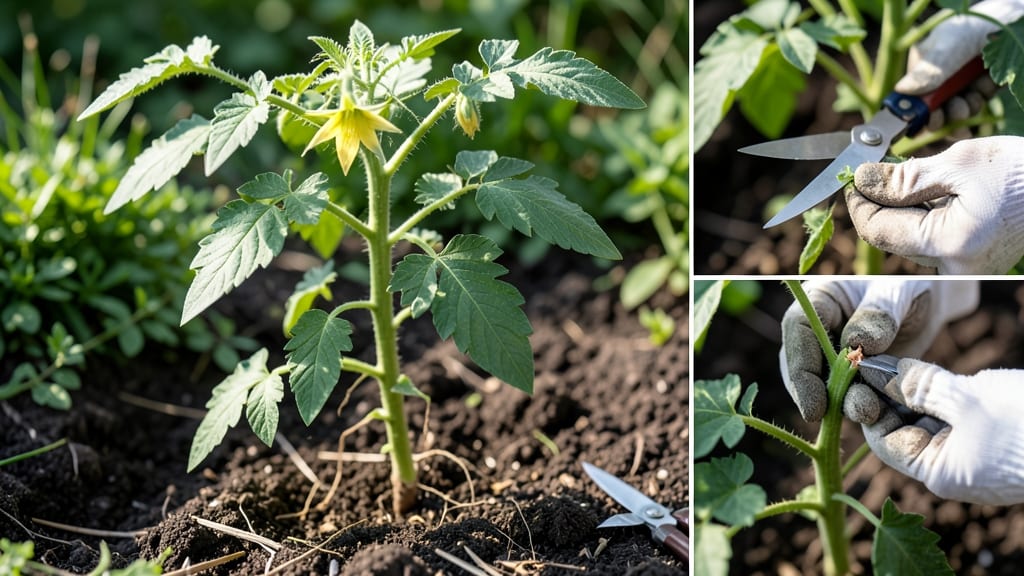
Pinching tomato plants turns floppy vines into sturdy bushes loaded with fruit. 🌱 I learned the hard way—my first tomatoes sprawled everywhere, producing fewer tomatoes than a store-bought plant. The secret is simple: remove the top growth to encourage branching, which means more stems and more fruit.
You only need clean pruning shears and about 10 minutes of your time. Start when plants reach 12-18 inches tall and have at least 4-5 leaves. Pinch off the top set of leaves just above a leaf node (where leaves grow out).
Repeat every 7-10 days until the plant reaches your trellis height. What you get is a stronger, bushier plant with better airflow, which means fewer diseases and bigger tomatoes. The first harvest comes sooner too—plants focus energy on fruit, not just growing taller.
My pinched plants produce 30-50% more tomatoes than unpinched ones. Works for both determinate (bush) and indeterminate (vining) tomatoes. Just adjust how aggressively you pinch—determinates need less, while indeterminates thrive with regular pinching. Here’s how to do it right!"
📚 In This Guide
- What you need
- Instructions
- Tips and common mistakes
- Wrapping up and next steps
What you need
- ● Tomato plants: Healthy, young tomato plants (aged 6-8 weeks) with at least 4-6 true leaves.
- ● Clean, sharp pruning shears or scissors: Sterilized with rubbing alcohol to prevent disease (avoid dull tools—they crush stems!).
- ○ Gloves (optional but recommended): Nitrile or garden gloves to protect hands from thorns and dirt.
- ● Watering can or hose: For post-pruning hydration (keep it nearby!).
- ○ Garden twine or stakes (optional but helpful): If your plants need support after pinching (e.g., 4-6 ft stakes for indeterminate varieties).
- ● Disinfectant spray (e.g., hydrogen peroxide or bleach solution): For sterilizing tools between cuts.
- ● Pruning sealant: To coat larger cuts (though most tomato plants heal fine without it).
- ● Garden journal or camera: Track growth progress before/after pinching!
- ● Compost or mulch: To replenish soil nutrients post-pruning.
How to pinch tomato plants for stronger growth and higher yields
Here's the straightforward method I use to transform leggy tomato plants into sturdy, productive bushes.
🌱 Step 1: Identify the Right Time and Growth Stage
Pinch tomato plants when they reach 12-18 inches tall and have 4-6 true leaves—this is when the plant has enough energy to recover from pruning. I always wait until morning to work, as the plants are turgid with water and easier to handle. Avoid pinching during extreme heat or drought, as stressed plants won't recover well.
Look for the main stem (the thickest vertical growth) and the first set of leaves just above the soil line. These are your reference points. The first true leaves are the small, mature leaves that appear after the initial seed leaves (cotyledons). The main stem will have side shoots (suckers) growing in the leaf axils—these are the targets for pinching.
✂️ Step 2: Locate and Remove the Suckers
Suckers are the small shoots that grow between the main stem and a branch. They appear in the leaf axils (the angle where a leaf meets the stem). Use your thumb and forefinger to gently squeeze the sucker at its base, where it meets the main stem. You'll feel a slight resistance—don't pull upward, as this can damage the main stem.
I pinch suckers above the first flower cluster on the main stem to encourage stronger growth. If you leave suckers below the first flowers, the plant will divert energy to those instead of the main fruit production. Use clean, sharp pruners or your fingers for smaller suckers—just be sure to remove the entire sucker, not just the top.
🌿 Step 3: Pinch the Main Stem to Encourage Bushiness
When the main stem reaches 36-48 inches tall, pinch the top growth just above a leaf node with two or three leaves. This encourages the plant to branch out instead of growing taller. The leaf node is the small bump on the stem where leaves and branches emerge—pinching above it ensures new growth will sprout from that spot.
Here's the thing—this step is optional for determinate (bush) tomatoes, as they naturally stop growing at a certain height. But indeterminate (vining) tomatoes need this pinch to stay manageable and produce more fruit. After pinching, the plant will focus energy on lateral growth rather than vertical stretching.
💧 Step 4: Monitor and Repeat for Ongoing Growth
Continue pinching suckers every 1-2 weeks as they appear, focusing on the lower third of the plant first. This ensures the plant puts energy into the strongest, most established branches. I always check for new suckers after watering, as the plants are easier to handle when the soil is moist and the stems are flexible.
Stop pinching after the first flower cluster on indeterminate tomatoes, as removing suckers above this point can reduce fruit production. For determinate tomatoes, minimal pinching is needed—just remove suckers that compete with the main stem. Watch for new growth at the pinched nodes; this confirms the plant is responding well to the pruning.
☀️ Step 5: Support and Care for the Pruned Plant
After pinching, water deeply to help the plant recover and reduce stress. Pinching creates small wounds, and the plant needs moisture to heal and redirect energy. I also add a balanced fertilizer (like 10-10-10) after pruning to support new growth, but avoid over-fertilizing, as this can lead to excessive leafy growth at the expense of fruit.
Stake or cage your tomato plants before they get too large, as pruned plants can become top-heavy. Use soft ties (like old T-shirts or plant straps) to secure the stems without causing damage. Keep an eye on the plant's overall health—if leaves yellow or growth stalls, it may need more light, water, or nutrients.
Tips & tricks for pinching tomato plants
Transforming leggy tomato plants into productive bushes takes a few key insights—here's what I've learned after years of trial and error in my garden.
Timing is Everything: The 12-18 inch height guideline in Step 1 is your sweet spot for pinching, but don't rush it. I've found that plants with 4-6 true leaves have developed enough energy reserves to recover well. Confession: I skipped this step for years and wondered why my tomatoes always struggled—turns out, premature pinching stresses plants. Wait until morning when stems are firmest for easiest handling.
Sucker Removal Technique: When removing suckers in Step 2, focus on the base where they meet the main stem—this is where the vascular connection is strongest. I use my thumb and forefinger to pinch cleanly, which prevents tearing. Here's what nobody tells you: if you see a sucker with a flower bud, leave it! Those buds will become your first fruit, and removing them would be counterproductive.
Main Stem Pinching Strategy: For indeterminate varieties in Step 3, that 36-48 inch height range is critical. I've noticed the best results come when pinching just above a leaf node with two or three leaves—this creates the perfect branching point. Pro tip: mark your pinching spot with a soft tie before making the cut to ensure you're pinching in the right location. This simple trick has saved me from making mistakes on wobbly stems.
Pro Tips for Pinching Tomato Plants
- Transforming leggy tomato plants into productive bushes takes a few key insights—here's what I've learned after years of trial and error in my garden.
- Timing is Everything: The 12-18 inch height guideline in Step 1 is your sweet spot for pinching, but don't rush it.
- Sucker Removal Technique: When removing suckers in Step 2, focus on the base where they meet the main stem—this is where the vascular connection is strongest.
Frequently asked questions
Got questions about pinching tomato plants?
You’re not alone! Here are answers to the most common queries from gardeners—whether you're a beginner or a seasoned pro looking to refine your technique.
When is the best time to pinch tomato plants?
Pinch your tomato plants early and often—typically when they’re 6–12 inches tall and have 2–4 sets of true leaves (not seed leaves). For indeterminate varieties, keep pinching suckers (the shoots in the leaf axils) throughout the growing season. Determinate tomatoes (bush types) usually don’t need pinching, but you can remove lower leaves to improve airflow.
How do I know if I’m pinching correctly?
Look for the sucker—a small stem growing between the main stem and a branch. Pinch it off cleanly with your thumb and forefinger or pruners, leaving no stub. Avoid over-pinching; aim to keep 3–5 main stems (for indeterminate tomatoes) to balance growth and fruit production. If you see yellowing leaves or stunted growth, you might be removing too much.
Will pinching tomato plants reduce my harvest?
Not if done right! Pinching actually boosts your harvest by directing energy to fewer, stronger stems and fruit clusters. However, over-pruning can stress plants and reduce yield. Focus on removing suckers that grow downward or are weaker—these won’t contribute much to fruit production. Think of it as shaping a bushier, more productive plant!
Can I pinch tomato plants in hot or cold weather?
Avoid pinching during heatwaves or cold snaps—stressed plants handle pruning poorly. Wait for mild, overcast days or early morning/evening when temps are cool. If you’re in a hot climate, prioritize removing lower leaves to prevent soil-borne diseases. In cold regions, pinch early in the season to encourage sturdy growth before summer heat sets in.
What’s an alternative if I forget to pinch my tomato plants?
No worries! If you skipped pinching, focus on support and care instead. Use cages or stakes to support heavy vines, and prune later to remove diseased or crowded leaves. You can also train the plant by gently weaving vines through a trellis or tying them to stakes. While yields may be smaller, your tomatoes will still thrive with proper sunlight, water, and nutrients.
Wrapping up and next steps
Pinching tomato plants is a simple yet powerful technique to boost your harvest—bushier vines, more fruit, and stronger plants are just a few rewards! By trimming suckers and focusing energy upward, you’re giving your tomatoes the best chance to thrive.
Don’t let hesitation hold you back; grab those pruners and get growing!
Ready to take your tomato game to the next level? Start with one plant, practice your pinching skills, and watch your garden transform. Happy gardening! 🌱🍅