
Vegetables
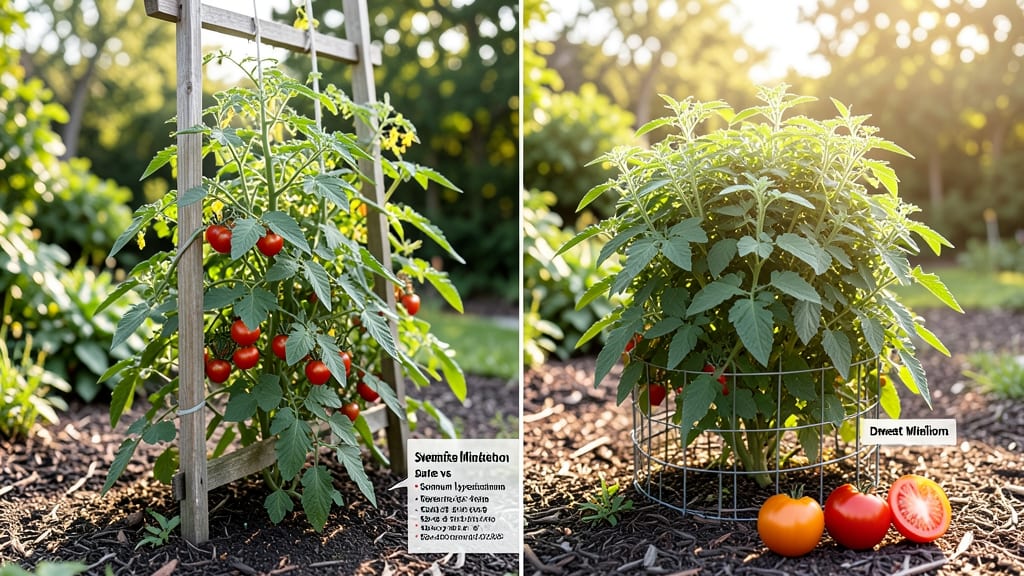
Sweet Million tomatoes come in both determinate (compact, bush-type) and indeterminate (vining) forms, with determinate varieties producing all their fruit at once in tight clusters and indeterminate types yielding continuously throughout the growing season. Your choice depends on whether you prioritize space efficiency or extended harvests.
Determinate Sweet Million tomatoes are perfect for small gardens or containers because they grow in neat, self-supporting bushes that stop growing once they start flowering.
This makes them ideal for gardeners who want a concentrated harvest all at once, which is great for canning or preserving. 🌱 On the other hand, indeterminate varieties keep producing fruit until frost, making them better for continuous snacking or selling at farmers' markets.
The key difference lies in their growth patterns—determinate plants reach maturity quickly and stop growing upward, while indeterminate ones need trellises and keep producing vines and fruit throughout the season.
If you're working with limited space or want an easy-care option, determinate Sweet Millions are your best bet. They typically need less pruning and support, but you'll need to harvest all at once.
For larger gardens where you can provide trellises and want fresh tomatoes all season long, indeterminate varieties deliver the most rewards. The choice ultimately comes down to your garden layout and how you plan to use your harvest.
💡 In This Article
- How Sweet Million Tomato Growth Habits Affect Yield and Care
- Best Sweet Million Varieties for Your Garden Type
How Sweet Million tomato growth habits affect yield and care
The fundamental difference between determinate and indeterminate Sweet Million tomatoes lies in their genetic growth patterns. Determinate varieties grow to a fixed height—typically between 3-5 feet—and produce all their fruit simultaneously in compact clusters.
This happens because they develop a natural "top" where growth stops after flowering begins, triggering a massive energy shift toward fruit production. Indeterminate types, however, keep growing vertically throughout the season, producing new leaves and flowers continuously until frost kills the plant.
This explains why indeterminate Sweet Millions can yield 20-30 pounds per plant over 3-4 months, while determinate varieties might produce 10-15 pounds in a single 2-week harvest window. 🌿
Care requirements differ dramatically between these types. Determinate plants need minimal support—often just a small cage or stake—and require less frequent pruning since they're naturally compact. However, their concentrated harvest demands immediate processing or storage to avoid spoilage.
Indeterminate varieties, meanwhile, require strong trellises or cages to support their 6-10 foot vines, and benefit from regular pruning to remove suckers (side shoots) that divert energy from fruit production.
Disease resistance also varies: indeterminate types often develop more slowly because their continuous growth dilutes pathogen exposure, while determinate plants' rapid maturation makes them slightly more vulnerable to early-season blights.
Spacing is another critical factor where growth habits create major differences. Determinate Sweet Millions thrive in 18-24 inches of spacing between plants, allowing their compact forms to fill space efficiently. Indeterminate varieties need 24-36 inches between plants and 3-4 feet between rows to accommodate their sprawling vines. The reason?
Indeterminate plants develop extensive root systems that compete aggressively for nutrients, while determinate plants have shallower roots that benefit from closer companionship. This spacing difference explains why indeterminate types work better in large garden plots or along fences, while determinate varieties excel in containers or small urban gardens.
Harvest timing presents another key consideration. Determinate Sweet Millions reach maturity in 70-80 days and produce all their fruit within a 2-3 week window, making them ideal for canning or preserving. Their synchronized ripening creates labor-intensive harvest periods but ensures you can process hundreds of tomatoes at once.
Indeterminate varieties, by contrast, yield continuously from early summer until frost, providing a steady supply of fresh tomatoes for salads and snacks. This continuous production requires more frequent checking but eliminates the need for large-scale processing all at once. 🍅
Consider these practical implications when choosing: determinate varieties offer convenience for small spaces and single-season harvests, while indeterminate types provide extended freshness but demand more maintenance.
The choice affects not just your garden layout but also how you'll use your tomatoes—whether you prefer canning a big batch or enjoying fresh fruit all season.
For example, a home gardener with a 5x10 foot plot might choose 4 determinate plants for a single harvest, while a market gardener with 100 square feet could install 8 indeterminate plants for continuous sales.
One advanced consideration is how these growth habits interact with your climate. In cooler regions, indeterminate varieties may struggle to produce fruit continuously if nights get too chilly, while determinate plants might finish their cycle before the season ends.
Conversely, in hot climates, indeterminate types can keep producing until late fall, while determinate plants might ripen too quickly and become susceptible to heat stress. Understanding your local frost dates and temperature patterns helps determine which growth habit will perform best in your specific conditions.