
Vegetables
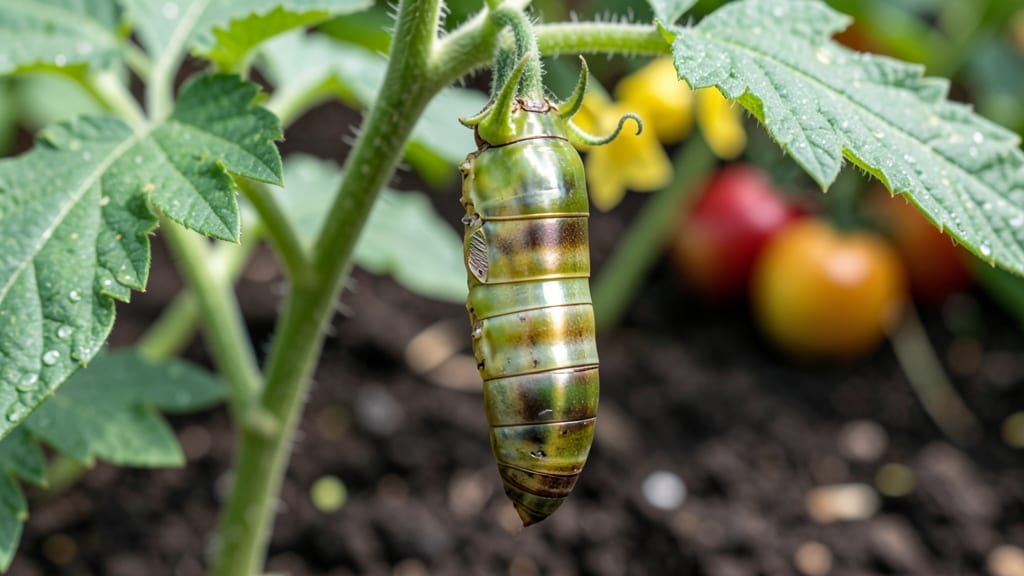
Your tomato plants might look healthy now, but those green chrysalises hiding in the leaves could mean trouble later. 🌱 The tomato hornworm chrysalis is the sneaky stage where these voracious caterpillars transform into moths, and if you miss it, your plants will suffer.
I’ve seen entire tomato plants stripped bare in days—until I learned how to spot and manage these critters early.
Here’s the thing—these chrysalises aren’t just a nuisance; they’re a sign your garden is already under attack. The caterpillars start as tiny eggs laid by moths, then grow into inch-long bandits that devour leaves overnight.
By the time you see the chrysalis, the damage is already done unless you act fast. The good news? You can break the cycle with 3 simple, organic steps that keep your tomatoes thriving without harsh chemicals.
What you’ll get is a garden where tomato hornworms don’t stand a chance. No more wilted plants or missing leaves—just strong, productive vines that actually bear fruit. The key is early intervention: remove chrysalises before they hatch, attract their natural predators, and protect your plants with barriers.
It’s not complicated, but it does require knowing where to look and what to do when you find them.
This works for any tomato variety—whether you’re growing heirlooms in your backyard or cherry tomatoes in containers. The same principles apply, and once you’ve done it once, you’ll spot those chrysalises before they become a problem. Let’s get your garden back on track!
Nature’s Timing Triggers
When you spot a tomato hornworm chrysalis in your garden, it’s not just a random event—it’s a carefully orchestrated part of the insect’s life cycle. Understanding the why behind their appearance helps you predict, prevent, and manage them effectively.
Let’s break down the key factors that turn your tomato plants into a hornworm hotspot.
The tomato hornworm (Manduca sexta) thrives in warm climates and follows a predictable seasonal pattern. Here’s how timing plays a role:
- Spring to Early Summer: Adult moths emerge from pupation (chrysalis stage) and lay eggs on tomato plants. Eggs hatch in 3–5 days, releasing voracious caterpillars that strip leaves overnight. 🌙
- Mid to Late Summer: Hornworms reach maturity, drop to the soil, and form chrysalises. This is when you’ll spot them hanging from stems or buried in mulch. The chrysalis stage lasts 2–4 weeks, depending on temperature.
- Temperature Dependence: Warmer nights (70°F+) accelerate their development. Cool spells slow growth, extending the chrysalis phase—meaning more time for them to persist in your garden.
Actionable Tip: Monitor your garden in June–August for chrysalises. If you’re in a warm climate, start scouting earlier (May) to catch them before they pupate.
Tomato hornworms are specialists—they only feed on plants in the Solanaceae family (tomatoes, peppers, eggplants, and potatoes). Here’s why your garden becomes their buffet:
- Abundant Food Supply: Healthy tomato plants with lush foliage attract moths to lay eggs. A single female can deposit 2,000+ eggs in her lifetime! 🥔🍅
- Young, Tender Leaves: Hornworms prefer new growth, which is high in water and nutrients. Over-fertilizing with nitrogen can make plants even more appealing.
- No Natural Predators Early On: While parasitic wasps (Cotesia congregata) eventually attack hornworms, young caterpillars often go unchecked until they’re large enough to pupate.
Actionable Tip: Rotate crops or interplant tomatoes with basil, marigolds, or borage—these repel moths naturally. Also, avoid excessive nitrogen fertilizer to reduce plant attractiveness.
Hornworms and their chrysalises thrive in specific environmental conditions. If your garden matches these, you’re likely to see more of them:
| Factor | Why It Matters | How to Adjust |
|---|---|---|
| Warm, Humid Air | Chrysalises prefer 70–85°F and high humidity to develop. Dry conditions can kill them, but they’ll seek shelter in mulch or soil. | Use drip irrigation (not overhead) to keep soil moist without creating humidity hotspots. |
| Sheltered Spots | Chrysalises attach to stems, fences, or buried mulch to avoid predators and weather. Shady areas with organic matter are ideal. | Remove dense mulch piles and inspect plant stems regularly for hanging chrysalises. |
| Soil Type | Loamy, well-draining soil makes it easier for caterpillars to burrow and pupate. Sandy soil can dry them out, while clay may trap moisture and attract fungi. | Amend soil with compost for balance, but avoid over-mulching near tomato bases. |
Actionable Tip: Create less hospitable zones by keeping garden beds well-aerated and avoiding thick mulch layers near tomato plants.
Tomato hornworms face few threats in their early stages, but their numbers are naturally controlled by:
- Parasitic Wasps (Cotesia congregata): These tiny wasps lay eggs inside hornworms, causing them to stop feeding and die before pupating. However, they often arrive too late—after caterpillars have already damaged plants.
- Birds and Lizards: Adult moths and chrysalises are vulnerable to predators, but young caterpillars blend into foliage, making them hard to spot.
- Fungal Infections: Pathogens like Beauveria bassiana can kill hornworms, but they require high humidity to spread effectively.
Actionable Tip: Encourage predators by planting native flowers (e.g., dill, fennel) to attract parasitic wasps. Avoid pesticides that harm beneficial insects.
How to Fix Your Garden Naturally
If you’ve spotted a tomato hornworm chrysalis lurking in your garden, don’t panic—there are simple, effective ways to manage them without harming your plants or the ecosystem. Below are practical solutions tailored to the most common causes, from quick fixes to long-term prevention.
Problem: A single chrysalis can turn into a voracious caterpillar, stripping your tomato plants in days.
Fix:
- 👨🍳 Inspect daily – Check leaves, stems, and soil around plants for green or brown chrysalises (they look like small, bumpy pods).
- 🔪 Pick them off by hand – Use gloves or tweak them into a bucket of soapy water (this kills them instantly).
- 🌿 Drop them in the sun – If you prefer a natural method, place them in a sealed container and leave it in direct sunlight for a few hours (heat kills them).
Pro Tip: 💡 Timing matters! Remove chrysalises in the morning when they’re cooler and less likely to wriggle free.
Problem: Hornworms have few natural enemies, but some bugs love eating them.
Fix:
- 🐞 Encourage parasitic wasps – Tiny Cotesia glomeratus wasps lay eggs inside hornworms, killing them from within. Plant dill, fennel, or parsley to attract them.
- 🐸 Welcome birds & lizards – Install a bird feeder or rock pile to attract predators that snack on caterpillars.
- 🦋 Release ladybugs or praying mantises – Buy beneficial insects from a garden center and release them near infested plants.
Pro Tip: ✨ Avoid pesticides! Chemicals kill both pests and their natural predators—stick to organic control.
Problem: If hornworms are already munching on your tomatoes, you may need a quick deterrent.
Fix:
- 🌿 Spray with neem oil – Mix 1 tbsp neem oil + 1 tsp mild soap + 1 quart water, then spray on leaves (reapply every 5–7 days).
- 🌶️ Try garlic or chili spray – Blend garlic, hot peppers, water, and a drop of dish soap, strain, and spray on plants (hornworms hate the smell!).
- 🍃 Use kaolin clay – Sprinkle Surround WP (a clay-based powder) on leaves to create a barrier they won’t cross.
Pro Tip: 🌡️ Spray in the evening to avoid harming bees and other pollinators.
Problem: Stopping hornworms before they start saves time and stress.
Fix:
- 🌱 Plant companion crops – Basil, marigolds, and borage repel hornworms naturally.
- 🕳️ Cover young plants – Use row covers (fine mesh netting) until flowers appear (hornworms can’t lay eggs on covered plants).
- 🌙 Rotate crops – Avoid planting tomatoes in the same spot yearly—hornworms remember favorite locations!
- 🌱 Remove egg clusters – Hornworm eggs are tiny and yellow—check undersides of leaves and wipe them off with a damp cloth.
Pro Tip: 🎯 Healthy plants = fewer pests! Keep tomatoes well-watered, pruned, and fertilized to make them less appealing.
Final Thought: With these simple, eco-friendly methods, you can keep your tomato plants thriving without chemicals. Act fast—early intervention is the key to a pest-free harvest! 🍅🌿
Frequently asked questions about tomato hornworm chrysalises
How do I know if I’ve found a tomato hornworm chrysalis?
Look for small, green or brown bumpy pods (about 1–2 inches long) hanging from stems or buried in mulch. They often have a smooth, waxy coating and may appear slightly translucent when held up to light. Check undersides of leaves and soil near tomato plants during June–August when they’re most active.
Can I safely remove a chrysalis by hand?
Yes! Use gloves or tweezers to gently pick them off and drop them into soapy water (this kills them instantly). For a natural method, place them in a sealed container and leave in direct sunlight for a few hours—the heat will kill them. Always remove them in the morning when they’re cooler and less likely to escape.
What happens if I leave a chrysalis on my tomato plant?
In 2–4 weeks, it will hatch into a moth, which will lay 2,000+ eggs on your plants. The caterpillars that emerge will strip your tomatoes bare overnight. Removing chrysalises early breaks the cycle and prevents future infestations. Think of it as stopping a problem before it starts!
Are there natural predators that eat tomato hornworm chrysalises?
Birds, lizards, and parasitic wasps (Cotesia glomeratus) may attack chrysalises, but they’re not reliable enough to control populations alone. To boost their numbers, plant dill, fennel, or parsley to attract parasitic wasps, or install a bird feeder to lure in feathered helpers.
Will neem oil or other sprays kill chrysalises?
Neem oil and garlic/chili sprays won’t harm established chrysalises, but they can deter adult moths from laying eggs. For existing chrysalises, physical removal is the most effective method. Sprays work best as a preventive measure—apply them to leaves before moths arrive in spring.