
Planting
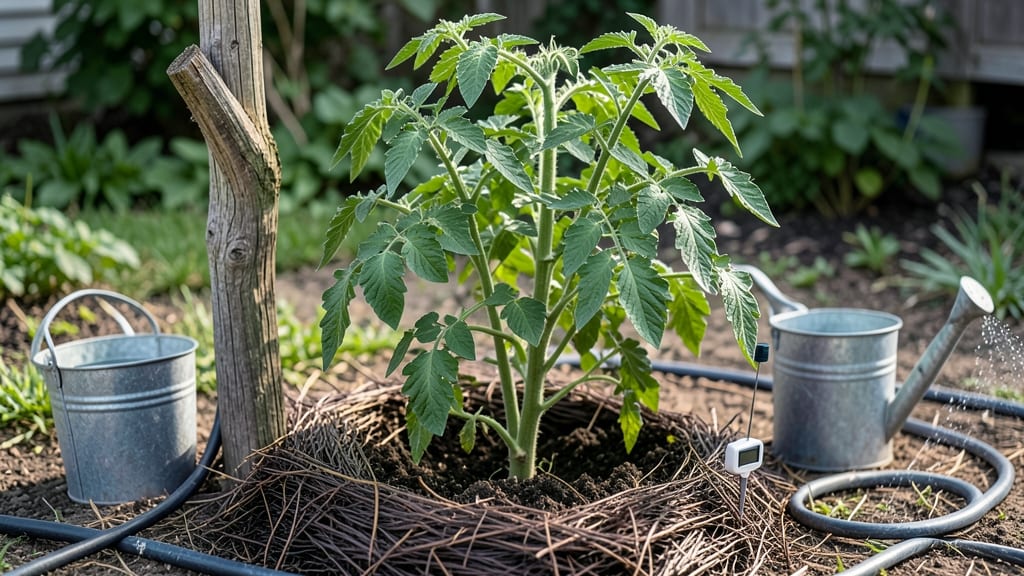
Your tomato plant drooping like a sad noodle? 🌱 I’ve nursed back more wilted vines than I’d like to admit—and the good news is most cases fix fast with the right moves.
Whether it’s thirst, heat, or hidden pests, we’ll get those leaves perky again within a day (or at least stop the damage).
The culprits are usually overwatering (soggy roots can’t breathe), underwatering (roots screaming for moisture), or pests like spider mites sucking the life out of leaves. Heat stress and nutrient deficiencies play villain too, but these three are the most common.
Grab a spray bottle, gloves, and let’s diagnose—your plant’s survival depends on it.
Start by checking the soil: stick your finger in 2 inches deep—dry as a bone? Water deeply. Still damp? Hold off and check for pests on the undersides of leaves. A quick blast of water can dislodge aphids, and a neem oil spray keeps them away.
Within 24 hours, you’ll see improvement if it’s not a disease like fusarium wilt.
For stubborn cases, we’ll talk pruning, mulching, and even when to pull the plug. But first—let’s rule out the easy fixes before panic sets in. Your tomatoes are worth saving, and I’ve got the battle plan.
Root Causes Behind Wilting Tomatoes
When your tomato plant suddenly looks like it’s taking a nap—leaves drooping, stems softening, or the whole plant sagging—it’s usually a cry for help. Understanding the why behind the wilt is half the battle in reviving your vine.
Below, we break down the most common culprits, from hidden pests to overlooked watering habits, with the science to back it up.
Tomatoes are thirsty plants, but too much love in the wrong way can drown them. Overwatering or soil that doesn’t drain well leads to root suffocation—roots deprived of oxygen start to rot, cutting off the plant’s water and nutrient supply.
This triggers wilting as the plant can’t absorb what it needs.
- Signs: Yellowing leaves, mushy stems, or soil that stays soggy for days.
- Why it happens: Compacted clay soil, containers without drainage holes, or heavy rains without breaks.
- Science note: Roots need aeration—oxygen gaps in soil—to function. Waterlogged soil displaces oxygen, causing anaerobic conditions that harm root cells.
Pro tip: Stick your finger 2 inches into the soil. If it’s damp, wait. If it’s bone-dry, water deeply—but only until excess drains away.
Tomatoes are tropical at heart but can’t handle sudden temperature swings. Heat stress (above 90°F/32°C) causes cells to lose turgor pressure—think of it like a balloon deflating. Meanwhile, cold snaps (below 50°F/10°C) slow metabolic processes, making the plant sluggish and wilted.
- Signs: Leaves curling upward (heat) or drooping uniformly (cold), often with a grayish tint.
- Why it happens: Afternoon sun without shade, late-season frosts, or moving plants between hot/cold microclimates.
- Science note: Heat causes stomatal closure (pores on leaves seal to retain water), while cold disrupts photosynthesis enzymes, starving the plant of energy.
Pro tip: Mulch with straw or shade cloth during heatwaves. For cold, use row covers or move potted tomatoes to a sheltered spot.
Hidden invaders can weaken your tomato plant faster than you’d think. Aphids, spider mites, or fungal diseases like early blight sap nutrients and clog plant tissues, leading to wilting. Even root-knot nematodes (microscopic worms) can gnaw on roots, reducing water uptake.
- Signs:
- Sticky residue (aphids), webbing (spider mites), or brown spots on leaves (fungus).
- Stunted growth with wilting that worsens at night (disease or pests).
- Why it happens: Poor air circulation, overcrowded plants, or ignoring early signs of infestation.
- Science note: Pests pierce cells to feed, while pathogens release toxins that disrupt water transport in the xylem (plant’s "straws" for water).
Pro tip: Inspect undersides of leaves daily. Spray with neem oil for pests or copper fungicide for early blight.
A tomato plant wilting can sometimes be a hunger signal. Too little potassium or calcium weakens cell walls, while excess nitrogen (common in synthetic fertilizers) promotes leafy growth at the expense of roots. Both scenarios leave the plant unable to support its own weight.
- Signs:
- Yellowing leaves (nitrogen excess) or brown leaf edges (potassium deficiency).
- Blossom-end rot (calcium deficiency)—wilting often follows.
- Why it happens: Over-fertilizing, using only nitrogen-heavy fertilizers, or soil depleted of micronutrients.
- Science note: Potassium regulates osmotic pressure in cells, while calcium strengthens cell membranes. Without them, cells collapse.
Pro tip: Test soil pH (aim for 6.0–6.8) and use a balanced fertilizer (e.g., 5-10-10) with added calcium (crushed eggshells or lime).
Now that you know the why, the next step is diagnosing which culprit is behind your drooping tomato. Check out our 24-hour revival guide to tackle the issue head-on!
How to solve it
Seeing your tomato plants droop can feel like a gardener’s worst nightmare—especially when you’ve put so much effort into growing those juicy, vine-ripened fruits! 🍅😬 But don’t panic. Most of the time, a drooping tomato plant is fixable with the right care.
Below, we’ve broken down the most common causes of wilting and paired them with simple, actionable solutions to get your plants perking up in no time. We’ve also included prevention tips to keep your tomatoes thriving long-term.
Tomatoes are finicky about water—too much or too little can cause drooping. The key is consistent moisture, not soggy soil or bone-dry roots.
🔥 Fix It Fast:
- Check the soil: Stick your finger 1–2 inches into the soil. If it’s dry, water deeply until moisture reaches the roots.
If it’s soggy, hold off on watering and let it dry out slightly. - Water at the base: Avoid wetting the leaves to prevent fungal diseases.
Use a soaker hose or drip irrigation for even distribution. - Morning watering: Water early in the day so leaves have time to dry, reducing the risk of blight.
💡 Prevention Tips:
- Mulch around plants to retain moisture and regulate soil temperature.
- Aim for 1–1.5 inches of water per week, adjusting for heat or rain.
- Avoid shallow watering—deep, infrequent watering encourages stronger roots.
Intense heat or sudden temperature swings can cause tomatoes to wilt as they struggle to regulate moisture. Leaf scorch or sunburned foliage is another red flag.
🍳 Fix It Fast:
- Provide shade: Use shade cloth (30–50% coverage) during peak afternoon sun, especially in extreme heat.
- Mulch heavily: A thick layer of straw or wood chips keeps roots cool and conserves moisture.
- Prune strategically: Remove lower leaves to improve airflow and reduce heat exposure.
🌡️ Prevention Tips:
- Choose heat-tolerant varieties like ‘Solar Fire’ or ‘Heatmaster’ if you live in a hot climate.
- Water deeply in the early morning to cool the soil and reduce stress.
- Avoid fertilizing during heatwaves—plants focus on survival, not growth.
Root problems—like compacted soil, root rot, or pests—can starve your tomato plant of water and nutrients, leading to drooping. If the roots are unhealthy, the whole plant suffers.
👨🍳 Fix It Fast:
- Loosen the soil: Gently aerate the root zone with a fork or trowel to improve drainage and oxygen flow.
- Check for rot: If the soil smells sour or the roots are mushy, trim away the bad sections and repot in fresh, well-draining soil.
- Inspect for pests: Look for grubs, nematodes, or gnawed roots.
Treat with neem oil or beneficial nematodes if needed.
✨ Prevention Tips:
- Plant tomatoes in loamy, well-draining soil with a pH of 6.0–6.8.
- Avoid over-fertilizing with nitrogen—it encourages leafy growth at the expense of roots.
- Rotate crops yearly to prevent soil-borne diseases.
Fungal diseases (like early blight or fusarium wilt) or pests (such as aphids or spider mites) can weaken your tomato plant, causing wilting. Act quickly to stop the spread.
🔪 Fix It Fast:
- Identify the problem: Yellowing leaves + brown spots? Likely blight. Sticky leaves + curled new growth?
Aphids. - Remove affected parts: Prune and destroy infected leaves to prevent spread. - Spray solutions: - Fungal diseases: Use a copper fungicide or baking soda spray (1 tbsp baking soda + 1 quart water + a drop of dish soap). - Pests: Blast off aphids with water, or spray neem oil for mites and soft-bodied insects.
🎯 Prevention Tips:
- Space plants properly for airflow (18–24 inches apart).
- Water at the base to keep foliage dry.
- Practice crop rotation and clean up debris after harvest.
Drooping can also signal a lack of essential nutrients, like nitrogen, potassium, or magnesium. Yellow leaves, stunted growth, or weak stems are common signs.
📊 Fix It Fast:
- Test your soil: A simple DIY kit or lab test can reveal deficiencies.
- Quick fixes:
- Nitrogen (yellow leaves): Use a balanced fertilizer (10-10-10) or compost tea.
- Potassium (weak stems): Add wood ash or a banana peel tea (yes, really!).
- Magnesium (yellow between veins): Sprinkle Epsom salt around the base (1 tbsp per gallon of water).
💪 Prevention Tips:
- Side-dress with compost mid-season for a slow-release nutrient boost.
- Avoid synthetic fertilizers—organic options like fish emulsion or worm castings are gentler.
- Mulch with compost to improve soil health over time.
With these fixes, your tomato plants should start perking up within 24–48 hours. Keep an eye on them, adjust care as needed, and soon you’ll be back to harvesting those sweet, juicy tomatoes! 🍅🌟 For persistent issues, don’t hesitate to consult a local gardening expert or extension service.
Frequently asked questions
Why does my tomato plant droop only in the afternoon?
Afternoon wilting is often a sign of heat stress or underwatering. Tomato plants lose water faster in hot afternoons, and if roots can't keep up, leaves droop temporarily. Check soil moisture—if dry, water deeply in the morning. Mulch helps retain moisture and cool roots.
Can I save a tomato plant with drooping leaves that feel mushy?
Mushy stems indicate root rot or severe fungal infection. If caught early, trim affected areas, repot in fresh soil, and reduce watering. For advanced cases, prune back healthy growth and treat with copper fungicide. Unfortunately, if the entire stem is mushy, the plant may not recover.
How do I tell if my drooping tomato plant needs water or shade?
Check soil moisture first—if dry, water deeply. If soil is damp but leaves still droop, it's likely heat stress. Provide afternoon shade with a light cloth (30-50% coverage) and water at the base. Look for crispy leaf edges (heat) vs. uniformly wilted leaves (thirst).
Will pruning help a drooping tomato plant recover faster?
Yes, but only if the plant isn't severely diseased. Remove lower leaves to improve airflow and reduce heat stress. Cut back any yellow or diseased foliage to redirect energy to healthy growth. Avoid heavy pruning—focus on removing only damaged or non-productive branches.
What's the fastest way to check for pests causing drooping?
Inspect the undersides of leaves for tiny webs (spider mites), sticky residue (aphids), or tiny holes (thrips). Shake leaves over white paper—pests will drop. For root pests (like nematodes), gently dig around roots. A strong blast of water removes many pests, while neem oil kills remaining ones within 24 hours.