
Diseases
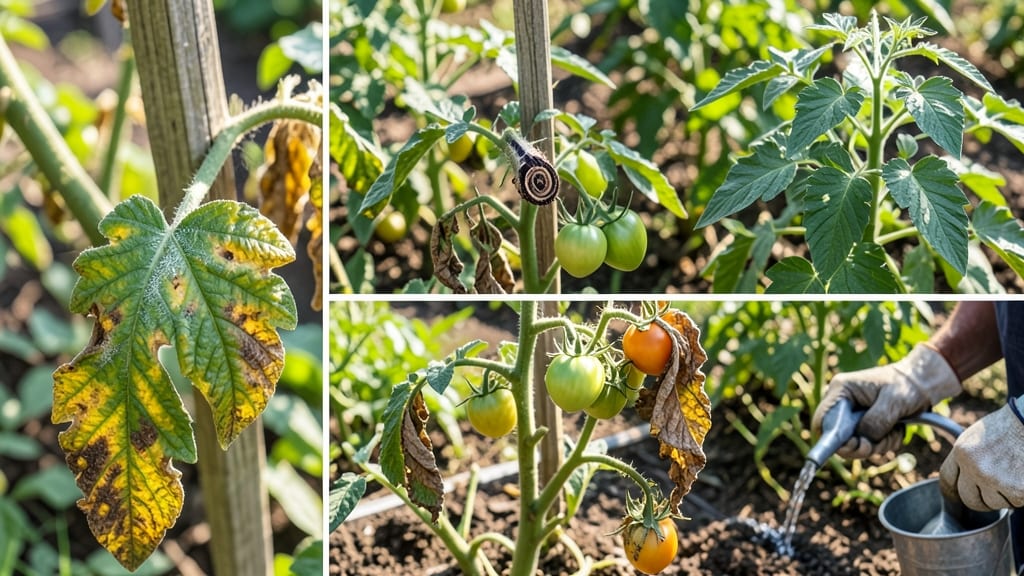
When the tomato plant wilt disease suddenly strikes even with attentive care, you're facing one of gardening’s most frustrating challenges. 🌱 I've seen entire harvests lost to bacterial spot and early blight—both look similar at first glance but demand completely different fixes.
The difference between saving your plants and losing them often comes down to catching the right problem early.
Bacterial spot shows up as tiny dark spots with yellow halos, while early blight starts with brown spots on lower leaves that spread upward. Both can make plants wilt, but bacterial wilt spreads through water, while early blight thrives in wet, humid conditions.
The good news? Both have prevention and treatment options that actually work—once you know what you're dealing with.
You'll learn how to diagnose each disease by examining leaves, stems, and roots, plus simple solutions like removing infected foliage, using copper fungicides, or switching to resistant varieties.
Organic options like neem oil and proper spacing can make a huge difference too—my plants stayed healthy all season after implementing these changes.
Whether you're dealing with a backyard garden, containers, or raised beds, these strategies adapt to any setup. The key is acting fast before the disease spreads. Let's get those tomatoes thriving again!
Understanding Root Causes
When your once-vibrant tomato plants start wilting unexpectedly, it’s often a sign of an underlying issue—whether biological, environmental, or cultural. Wilting in tomatoes isn’t just one problem; it’s a symptom with multiple triggers. Below, we break down the most common culprits and why they attack your plants.
Bacterial wilt diseases, like Ralstonia solanacearum, are notorious for causing sudden, irreversible wilting. Here’s how they strike:
- Entry Points: Bacteria often sneak in through wounds (e.g., pruning cuts, insect bites) or natural openings like stomata (leaf pores). They thrive in warm, moist conditions—ideal for bacterial growth.
- Vascular Blockage: Once inside, bacteria clog the plant’s xylem (water-transporting vessels), starving leaves of water. This causes vascular wilt, where stems turn brown and brittle.
- Systemic Spread: Unlike fungi, bacteria move freely through the plant’s vascular system, making treatment nearly impossible once symptoms appear.
Red Flag: Wilting that starts in one plant and spreads rapidly to others, often in the late afternoon when water demand peaks.
Fungal wilts, such as Verticillium or Fusarium, are persistent and soil-borne. They don’t just cause wilting—they weaken plants over time:
- Soil Reservoirs: Fungal spores survive in infected soil or plant debris for years, waiting for susceptible hosts (like tomatoes).
- Root Invasion: Hyphae (fungal threads) penetrate roots, disrupting nutrient and water uptake. The plant compensates by wilting during heat stress.
- Stem Discoloration: Cut open a wilted stem—if it’s brown or blackened internally, fungi are likely the culprit.
Red Flag: Wilting that progresses slowly, often with yellowing leaves (chlorosis) before collapse, especially in older plants.
Wilting isn’t always about pathogens—water management plays a huge role. Tomatoes are sensitive to extremes:
- Underwatering: Shallow roots dry out quickly, especially in sandy or rocky soil. Plants wilt during the day but may recover at night.
- Overwatering: Soggy soil suffocates roots, cutting off oxygen. This invites root rot (e.g., Phytophthora), which mimics wilt symptoms.
- Salinity Buildup: In container gardens, over-fertilizing or poor drainage can raise soil salinity, making roots unable to absorb water efficiently.
Red Flag: Wilting that’s reversible with water (or drainage fixes) and affects all plants equally in a bed.
Extreme conditions can trigger wilting even in healthy plants. Tomatoes are tropical but need balance:
- Heat Stress: Temperatures above 90°F (32°C) cause stomata to close, reducing water uptake. Leaves may wilt but stay turgid (firm) when touched.
- Cold Damage: Chilly nights (below 50°F/10°C) slow root activity, leading to daytime wilting. Young plants are most vulnerable.
- Wind Burn: Strong winds dehydrate leaves faster than roots can replace water, causing a "scorched" wilt appearance.
Red Flag: Wilting that occurs daily during heatwaves or after sudden temperature drops, with no other symptoms.
Pests like nematodes or aphids feed on roots or sap, disrupting water flow:
- Root-Feeding Nematodes: Microscopic worms burrow into roots, creating lesions that block water absorption. Infested roots may look "knotty" or stunted.
- Sap-Sucking Insects: Aphids or spider mites drain plant fluids, causing leaves to wilt and curl. Look for sticky honeydew or webbing.
- Boring Insects: Tomato hornworms or cutworms chew roots or stems, creating entry points for secondary infections.
Red Flag: Wilting accompanied by visible pests, chewed leaves, or stunted growth.
Each of these causes demands a different approach—from cultural fixes (like improving drainage) to targeted treatments (like copper sprays for bacteria). The key is acting fast and identifying the root issue before it spreads. 🕵️♂️
How to Fix Wilted Tomato Plants
Wilted tomato plants can be heartbreaking, but the good news is that many causes have simple, effective fixes—especially if you catch them early. Below, we break down practical solutions for each common cause of wilting, from quick fixes to long-term prevention.
Think of this as your tomato plant’s emergency repair kit!
If your tomato leaves are yellowing, browning, or wilting from the bottom up, a fungal infection is likely the culprit. Here’s how to tackle it:
🍳 Remove Infected Plant Parts
- Snip off yellow or brown leaves immediately with clean pruners (sterilize with rubbing alcohol).
- Dispose of infected debris in the trash (not compost)—fungi spread easily through organic matter.
👨🍳 Apply Fungicidal Sprays
- Copper-based sprays (like copper fungicide) or neem oil (1 tsp per quart of water + a drop of dish soap) work well for early blight.
- Baking soda spray (1 tbsp baking soda + 1 tsp oil + 1 gallon water) can prevent spores from germinating.
- Reapply every 7–10 days during wet or humid conditions.
🌡️ Improve Airflow & Watering Habits
- Space plants 18–24 inches apart to reduce humidity buildup.
- Water at the base (not overhead) in the early morning so foliage dries quickly.
- Mulch with straw (not wood chips) to keep soil moist but prevent fungal spores from splashing onto leaves.
🎯 Prevent Future Outbreaks
- Rotate crops: Don’t plant tomatoes (or nightshades like peppers/eggplants) in the same spot for 3–4 years.
- Solarize soil in late summer (cover with clear plastic for 4–6 weeks) to kill fungal spores.
- Choose resistant varieties: Look for tomatoes labeled "Early Blight Resistant" (e.g., ‘Mountain Merit’ or ‘Defiant PhR’).
Bacterial infections (like Xanthomonas or Pseudomonas) cause sudden wilting, dark spots, and oozing lesions. These are harder to cure but manageable:
🔪 Prune & Sterilize Aggressively
- Cut off severely infected leaves/stems with sterilized tools (bleach or alcohol).
- Burn or trash infected plant parts—do not compost.
🌧️ Adjust Watering & Sanitation
- Water only in the morning and avoid overhead sprinklers (bacteria spread via water droplets).
- Use drip irrigation to keep foliage dry.
- Clean tools and hands between plants to prevent cross-contamination.
💪 Boost Plant Immunity
- Fertilize lightly with a balanced 10-10-10 or fish emulsion to strengthen plants (avoid excess nitrogen).
- Companion plant with basil, marigolds, or garlic—they deter bacteria naturally.
- Remove weeds around tomato beds (they harbor bacterial pathogens).
✨ Last Resort: Replace Severely Infected Plants
If wilting spreads rapidly (within days), pull the plant and destroy it to stop the spread. Bacterial wilts are often incurable once systemic.
Wilting from drought, root rot, or extreme heat is usually reversible with quick adjustments:
🌱 Check the Roots First
- Gently dig around the base to inspect roots:
- Healthy roots: Firm, white, with some brown (normal).
- Rotten roots: Mushy, black, or smelly → overwatering.
- Dry, brittle roots: Underwatering or compacted soil.
- Fix root rot: Stop watering, loosen soil, and replant in well-draining mix (add perlite or sand).
💦 Adjust Watering Like a Pro
- Stick your finger 1–2 inches into soil—if dry, water deeply until it drains from the bottom.
- Use a moisture meter for precision (aim for 60–70% moisture).
- Mulch heavily (2–3 inches of straw) to retain moisture and cool roots.
🌡️ Beat the Heat
- Shade cloth (30–50%) during peak sun (11 AM–3 PM).
- Provide afternoon shade with a row cover or umbrella.
- Harvest ripe tomatoes early to reduce stress on the plant.
| Problem | Prevent It With… |
|---|---|
| Fungal Wilting | Crop rotation, resistant varieties, copper spray |
| Bacterial Wilting | Sterilized tools, drip irrigation, weed control |
| Overwatering | Well-draining soil, mulch, moisture meter |
| Underwatering | Deep watering, drought-resistant varieties |
| Heat Stress | Shade cloth, morning watering, mulch |
Pro Tip: 💡 Test your soil (pH 6.0–6.8 is ideal for tomatoes) and amend with compost before planting. Healthy soil = stronger plants that fight disease better!
By acting fast and targeting the root cause (literally!), your tomato plants can bounce back—even from wilting. Happy growing! 🍅🌱
Frequently asked questions
How can I tell if my tomato plant's wilting is from a disease or just heat stress?
Check the time of day and leaf texture: wilting from heat stress happens during hot afternoons but recovers at night, with leaves staying firm when touched. Disease-related wilting happens anytime and leaves feel limp even in cool conditions. Also look for spots or discoloration—diseases often leave visible marks while heat stress doesn't.
Can I save a tomato plant that's already completely wilted from bacterial wilt?
Unfortunately, once bacterial wilt sets in, there's no cure. The bacteria clog the plant's vascular system permanently. Your best option is to remove the infected plant immediately to prevent spreading to other tomatoes or nightshades. Sterilize your tools thoroughly after pruning to avoid cross-contamination.
What's the fastest way to prevent fungal wilting in my tomato patch?
Start with proper spacing (18-24 inches between plants) and water only at the base in the morning. Apply a preventive copper fungicide spray every 10-14 days during humid weather. For organic options, use a baking soda spray (1 tbsp baking soda + 1 tsp oil per gallon of water) weekly as a protective barrier.
Will mulching really help prevent tomato plant wilting?
A 2-3 inch layer of straw mulch helps by keeping soil moisture even, preventing temperature swings, and reducing fungal spores splashing onto leaves. Just avoid wood chips which can harbor fungal spores. Mulch also suppresses weeds that compete with your tomatoes for water and nutrients.
How often should I check my tomato plants for early signs of disease?
Inspect your plants at least twice weekly, especially after rain or when humidity rises. Look for tiny dark spots (bacterial spot), yellowing lower leaves (early blight), or unusual wilting patterns. Early detection gives you the best chance to treat problems before they spread. Morning inspections work best when leaves are dry.