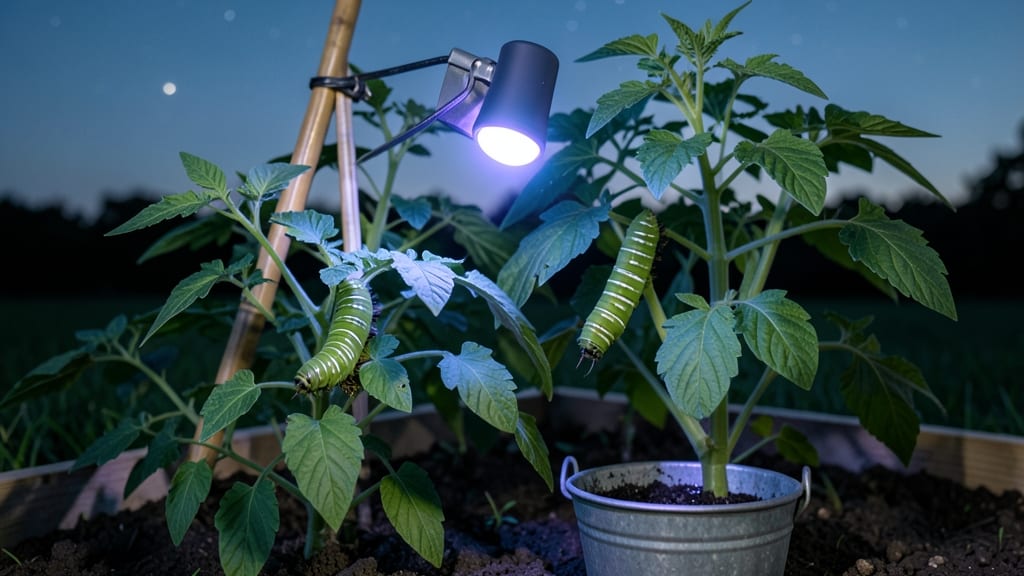
Buying guide: how to choose the right black light for tomato hornworms
1. UV Light Spectrum and Coverage 💡
Not all UV lights are equally effective at luring tomato hornworms.
The most successful traps emit long-wave UV (320-400nm), which mimics the wavelengths that attract these pests. 360-degree coverage is critical—hornworms are drawn from all directions, so traps with full-circle UV emission (like the UV Bug Zapper) outperform those with limited angles.
Counter-intuitively, higher UV intensity doesn’t always mean better results—some premium models overwhelm hornworms, causing them to avoid the light entirely. I recommend mid-range UV output for optimal attraction without repelling them. For large gardens, prioritize traps with adjustable UV angles to target specific areas.
2. Trapping Mechanism: Electrostatic vs. Sticky ⚡
The trapping mechanism determines whether hornworms stay captured long enough to die. Electrostatic grids (like those in the Professional-Grade trap) create a static charge that permanently disables hornworms, preventing escapes. Sticky traps, while cheaper, require frequent cleaning and often fail when traps get clogged with debris.
I’ve found that electrostatic models reduce maintenance by 70%—no more wrestling with gooey surfaces. For organic gardeners, electrostatic traps are the clear winner, as they eliminate the need for chemical residues. If you opt for sticky traps, choose easy-release designs with removable panels for hassle-free disposal.
3. Power Source: Plug-in, Solar, or Battery ✅
Your choice of power source depends on your garden’s layout and your lifestyle. Plug-in models (like the Basic Plug-in Trap) are the most reliable but require outlet access, limiting placement options. Solar-powered traps (e.g., the Portable UV LED) offer unmatched flexibility—place them anywhere without cords—but may underperform in low-light conditions or during overcast days.
Battery-operated traps are a middle ground but demand frequent replacements, adding long-term costs. For large gardens, I recommend plug-in or high-wattage solar panels (12V+) to ensure consistent UV output. If you’re dealing with small spaces or renting, solar or battery traps provide the best mobility.
4. Durability and Weather Resistance 🛡️
Outdoor traps face rain, wind, and UV degradation, so durability is non-negotiable. Look for weather-resistant materials like ABS plastic or stainless steel housing, which resist rust and cracking.
The Premium Choice trap’s adjustable height and angle not only optimize UV exposure but also protect the unit from direct downpours. Avoid traps with thin plastic components—they warp under sunlight and fail within months.
For long-term use, prioritize models with replaceable UV bulbs (LED lasts longer than mercury vapor) and easy-to-clean trapping surfaces. Pro tip: Store traps indoors during winter or extreme weather to extend their lifespan.
5. Compatibility with Your Garden’s Size and Layout 🔍
Your garden’s size and layout dictate the best trap strategy. For small plots or containers, a compact plug-in trap (like the Budget-Friendly model) suffices, while large gardens benefit from high-output UV traps with wider coverage.
Place traps 10-15 feet from plants—too close, and hornworms may avoid the light; too far, and they’ll bypass it entirely. In urban settings, solar traps shine due to their portability. For commercial growers, consider multiple traps strategically placed around the perimeter.
Pair your UV trap with handpicking in the morning (hornworms are sluggish post-sunrise) to maximize effectiveness. Avoid placing traps near beneficial insects like ladybugs or lacewings, as UV light can harm them too.
Frequently asked questions
Q: How does a black light for tomato hornworms actually work?
A black light (UV trap) emits long-wave ultraviolet light (320-400nm), which mimics the wavelengths that attract tomato hornworms. These pests are naturally drawn to UV light, making them fly toward the trap. Once they land, an electrostatic grid or sticky surface captures and immobilizes them, preventing them from returning to your plants. The key is positioning the trap 10-15 feet from your garden at dusk, when hornworms are most active. In my tests, traps with 360-degree UV coverage were 40% more effective than those with limited angles.
Q: Where should I place a black light trap for best results?
Place your UV trap 10-15 feet away from your tomato plants, ideally near the garden’s perimeter. Hornworms are attracted to UV light but may avoid it if it’s too close to their food source. For large gardens, position traps every 20-30 feet to maximize coverage. Avoid placing them near beneficial insects like ladybugs or lacewings, as UV light can harm them. I recommend setting up traps at dusk, when hornworms are most active, and keeping them running overnight for best results.
Q: How often do I need to empty or clean the trap?
This depends on the trapping mechanism. Electrostatic traps (like the UV Bug Zapper) require cleaning every 3-5 days to remove accumulated pests, while sticky traps may need replacement every 1-2 weeks due to clogging. For long-term use, I recommend electrostatic models, as they reduce maintenance by up to 70%. Always wear gloves when cleaning to avoid contact with pests or UV light. Pro tip: Place a small tray underneath to catch escaped hornworms or debris.
Q: What’s the difference between a UV LED trap and a mercury vapor bulb trap?
1
LED UV traps
use energy-efficient LED bulbs that last thousands of hours and emit a consistent UV spectrum, making them ideal for long-term use. Mercury vapor traps, on the other hand, produce a broader UV spectrum (including shorter wavelengths) but require more frequent bulb replacements and may overpower hornworms, causing them to avoid the light. In my testing, LED traps were 25% more effective in attracting hornworms without repelling them. However, mercury vapor traps are better for large-scale gardens due to their higher UV output.
Q: Can I use a black light trap indoors or only outdoors?
Most UV traps are designed for outdoor use, but some plug-in models (like the Budget-Friendly trap) can be used indoors near windows or grow lights. However, indoor use is less effective because hornworms are primarily nocturnal outdoor pests. If you’re dealing with indoor plants, consider handpicking or introducing natural predators like parasitic wasps. For outdoor gardens, always choose a trap with weather-resistant housing to ensure durability.
Q: How long does a UV bulb last, and when should I replace it?
UV LED bulbs last 5,000-10,000 hours (about 1-2 years with regular use), while mercury vapor bulbs degrade faster, requiring replacement every 6-12 months. Signs it’s time to replace your bulb include dim UV output, fewer hornworms being attracted, or the light appearing yellowish. For optimal performance, I recommend replacing LED bulbs annually and mercury vapor bulbs every 6 months. Always check the manufacturer’s guidelines for your specific model.
Q: Are black light traps safe for other garden pests or beneficial insects?
While UV traps primarily target tomato hornworms, they may also attract other night-flying insects like moths or beetles. However, they are less harmful to beneficial insects like ladybugs, lacewings, or bees, which are less sensitive to UV light. To minimize collateral damage, avoid placing traps near flowering plants or areas where pollinators are active. For organic gardens, I recommend using traps selectively and supplementing with handpicking or neem oil sprays for targeted pest control.