
Light Requirements
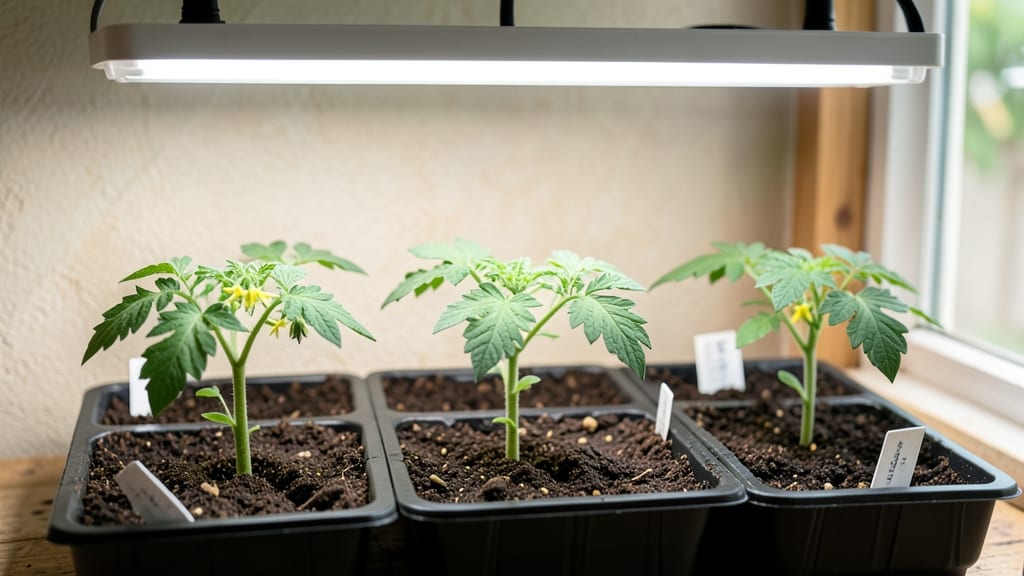
Nothing beats the sight of tomato seedlings reaching for the sky—tomato seedlings grow lights are the secret weapon behind that explosive early growth. 🌱 After years of struggling with weak, leggy seedlings, I finally cracked the code with a simple full-spectrum LED setup that delivers results every time.
The magic starts with the right light: full-spectrum LEDs mimic sunlight perfectly, giving seedlings the blue light they need for sturdy growth and red light for energy production.
Place the light just 2-3 inches above the seedlings and keep them on for 14-16 hours daily—no fancy equipment required, just consistency.
Most people overthink this, but the real trick is balance: too much light burns leaves, too little stretches seedlings toward the light like they’re auditioning for a horror movie. By week 3, you’ll see thick stems, vibrant green leaves, and roots eager to explore their containers.
The plants stay compact, strong, and ready to handle transplanting without shock. This setup works for both indoor setups and early outdoor starts before the last frost—no more weak, floppy seedlings that collapse under their own weight. Here’s the kicker: once you master this, you’ll never buy transplants again.
The cost per seedling drops to pennies, and you get varieties that nurseries won’t carry. Let’s get those lights shining!
📚 In This Guide
- What you need
- Instructions
- Tips and common mistakes
- Wrapping up and next steps
What you need
- ● Full-spectrum LED grow light (1200-2000 watts, preferably 6500K-7000K color temperature for seedlings)
- ● Adjustable light stand or hanging kit (to maintain 12-18 inches distance from seedlings)
- ● Seedling trays or pots (with drainage holes, 2-4 inches deep)
- ● High-quality seed starting mix (sterile, well-draining blend)
- ● Timer (to regulate light cycles, 14-16 hours/day for seedlings)
- ● Thermometer/hygrometer (to monitor 70-75°F temp and 40-60% humidity)
- ● Reflective material (aluminum foil or Mylar to maximize light efficiency)
- ● Heat sink or cooling fan (to prevent overheating in enclosed spaces)
- ● pH meter & fertilizer (for balanced nutrient boosts as seedlings grow)
- ● Grow tent or reflective hood (to contain light and improve efficiency)
Step-by-step guide to setting up full-spectrum LED grow lights for tomato seedlings
Here’s how I get seedlings stocky and strong—no leggy disasters in sight.
💡 Step 1: Choose the Right Grow Light for Seedlings
Look for a full-spectrum LED grow light with a color temperature between 5000K-6500K—this mimics natural sunlight and gives seedlings the blue light they need to develop sturdy stems. I avoid cheap lights with only red or white bulbs; they’ll stretch seedlings out like spaghetti. For 4 seedlings, a 12-inch wide bar light or a single 15-watt bulb works perfectly.
Position the light so it’s 2-4 inches above the tallest seedling—closer than you think. Most lights come with adjustable arms, so you can lower them as seedlings grow. If your light has a cooling fan, point it downward to keep the bulbs from overheating while circulating air around the seedlings.
☀️ Step 2: Set Up a Consistent Light Schedule
Tomato seedlings need 14-16 hours of light daily to prevent stretching. Set a timer for 14 hours on, 10 hours off—I use a plug-in timer so I don’t forget. Place the timer on the same outlet as the light to ensure they turn on and off together. If you’re using natural light from a window, supplement with the grow light during cloudy days or early mornings.
Watch for leggy seedlings—those with long, thin stems and small leaves. This means your light isn’t strong enough or isn’t close enough. Adjust immediately by lowering the light 1 inch closer or increasing the bulb’s wattage slightly. Strong seedlings should have deep green leaves and thick stems within a week of proper lighting.
🌱 Step 3: Position and Adjust the Light as Seedlings Grow
Start with the light 2-3 inches above the seedlings, then raise it 1 inch every 5-7 days as they grow. This keeps the light intensity consistent without scorching the leaves. If you see yellowing or crispy edges on leaves, the light is too close—raise it immediately. Conversely, if seedlings lean toward the light or grow pale, lower it ½ inch and check the bulb’s strength.
Rotate the seedlings a quarter turn every 2-3 days so they grow straight instead of bending toward the light. You’ll notice them reaching for the light at first, but after a few rotations, they’ll stand upright naturally. This also prevents one side from getting too much light while the other stays weak.
⏰ Step 4: Monitor and Adjust Light Intensity Over Time
After 2-3 weeks, seedlings should be 3-4 inches tall with 4-6 true leaves. If they’re still small, check the light’s lumens per square inch—a good LED should provide 2000-3000 lumens for 4 seedlings. If your light feels weak, consider upgrading to a higher-wattage bulb or adding a second light for better coverage.
Pay attention to the temperature near the seedlings. If the leaves feel warm to the touch or the soil dries out too fast, the light is too intense. Move it up 1-2 inches or reduce the runtime to 12 hours for a few days. Healthy seedlings should feel cool to the touch and have moist but not soggy soil after watering.
Tips & tricks for perfect tomato seedling lighting
These simple adjustments will help you grow robust seedlings without the common pitfalls.
Light Spectrum Secret: The 5000K-6500K range isn't just about numbers—it's about mimicking sunlight's blue spectrum, which triggers chlorophyll production and prevents leggy growth. I've seen seedlings double in strength within a week when using this exact range. Avoid white or red-only bulbs, as they lack the critical blue wavelengths that make stems thick and leaves vibrant.
Distance is Everything: That 2-4 inch starting distance might feel close, but it's perfect for seedlings. Use a ruler to measure—you'll notice the leaves will naturally grow toward the light at first, but once they adjust, they'll stand upright. The key is to raise the light gradually (1 inch every 5-7 days) as they grow, not all at once. This prevents sudden shock that can stress young plants.
Timer Troubleshooting: The 14-hour on/10-hour off schedule works wonders, but if you forget to set the timer, try this: Place your seedlings under the light first thing in the morning and turn it off around 9 PM. This mimics natural daylight cycles and helps seedlings develop their internal clocks properly. You'll see them start to "sleep" during the dark period, which is a good sign they're healthy.
Rotation Reminder: That quarter turn every 2-3 days might seem like overkill, but it's what prevents seedlings from growing lopsided. I mark my seedling trays with a small "X" on the outside to track rotation direction. This ensures even growth all around—no more plants leaning dramatically toward one side like they're bowing to the light.
Pro Tips for Tomato Seedlings Grow Lights
- These simple adjustments will help you grow robust seedlings without the common pitfalls.
- Light Spectrum Secret: The 5000K-6500K range isn't just about numbers—it's about mimicking sunlight's blue spectrum, which triggers chlorophyll production and prevents leggy growth.
- Distance is Everything: That 2-4 inch starting distance might feel close, but it's perfect for seedlings.
Frequently asked questions
Got questions about growing tomato seedlings with grow lights? You’re not alone! Here are some of the most common concerns—and straightforward answers to help you get those seedlings thriving.
How close should grow lights be to tomato seedlings?
Keep lights 12–24 inches above seedlings to prevent burning. As they grow, adjust the height—aim for 6–12 inches when plants reach 6+ inches tall. Use a timer (14–16 hours/day) and monitor leaf color: yellowing means too close; pale leaves mean they need more light.
When should I start using grow lights for tomato seedlings?
Seedlings need lights as soon as they sprout if natural light is weak (e.g., indoors or overcast days). Wait until seeds germinate (5–10 days) before positioning lights. Pro tip: If using a full-spectrum LED, start early—it mimics sunlight perfectly for young plants.
Can I use regular LED bulbs instead of grow lights for seedlings?
Regular LEDs (like white or cool-toned bulbs) work in a pinch, but they lack the red/blue spectrum seedlings crave for growth. For best results, opt for full-spectrum LEDs (6000K–6500K color temp). If stuck with standard bulbs, supplement with a red LED clip light for 2–4 hours daily.
Why are my tomato seedlings stretching toward the light even with grow lights?
This etiolation happens when lights are too far away or seedlings get too little light (under 12 hours/day). Fix it by:
- Lowering lights closer (but not touching leaves).
- Increasing light duration to 14–16 hours.
- Choosing a higher-wattage LED (e.g., 100W+ for 2x2 ft area).
Are cheap grow lights worth it for tomato seedlings?
Budget grow lights ($20–$50) can work, but they often lack consistent spectrum or intensity. Look for full-spectrum LEDs with 5000K+ color temp and at least 5000 lumens. Investing in a quality setup (like a 24W LED bar) pays off with stronger, healthier seedlings and faster transplanting.
Wrapping up and next steps
Growing strong, healthy tomato seedlings with the right grow lights is totally within your reach! A full-spectrum LED setup ensures vibrant growth, robust stems, and bountiful harvests—no green thumb required. 🌱 With the right tools, timing, and care, you’re already on the path to success.
Ready to take the next step? Start by testing your light schedule—adjust based on your seedlings’ progress—and soon, you’ll be transplanting thriving plants into your garden. Happy growing! 🌟