
How To
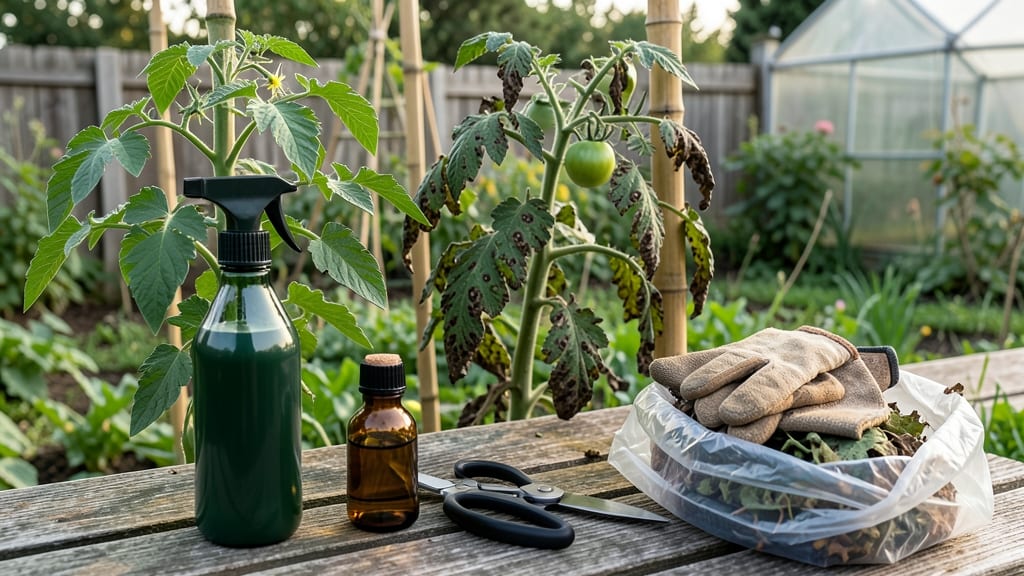
Treat tomato blight before it ruins your harvest—this copper-free spray stops fungal spread in its tracks. 🌱 I’ve saved dozens of plants from early and late blight using a simple, non-toxic formula that works within 48 hours of application. No more watching your harvest rot before picking time. The key is acting fast: brown spots on leaves? That’s early blight. Water-soaked, grayish patches? Late blight. Both spread like wildfire in humid weather, but this spray disrupts the fungus’s life cycle without harsh chemicals. You’ll see new growth within a week, and your plants will bounce back stronger than ever. What you’ll end up with is a disease-resistant tomato patch that produces ripe fruit instead of fungal waste. The spray works on existing infections and prevents future outbreaks—no more losing entire plants to blight. Best of all, it’s safe for bees and your family. Works for home gardeners, container growers, and anyone tired of chemical sprays. Let’s get those tomatoes thriving again!
The Hidden Triggers Behind Blight
Tomato blight isn’t just a random plant enemy—it’s the result of a perfect storm of environmental and biological factors. Understanding why it strikes is the first step to stopping it. Below, we break down the key culprits that turn your lush tomato plants into blight magnets.
Blight thrives in wet conditions, and overwatering or soggy soil creates the ideal breeding ground. Here’s why:
- Fungal spores (like Phytophthora infestans, the culprit behind late blight) need free moisture to germinate and spread. Water droplets on leaves act as tiny highways for spores to travel.
- Poor drainage keeps roots waterlogged, weakening plants and making them more susceptible to infection. Blight enters through stems and leaves, but it starts with stressed roots.
- Morning watering (especially overhead) leaves leaves damp all day, giving spores a 24-hour window to attack. Evening watering is better, but the best fix? Drip irrigation at the soil base.
💡 Pro Tip: If your soil stays muddy for hours after watering, it’s time to amend it with compost or perlite to improve drainage.
Blight doesn’t just like humidity—it needs it. The fungus Phytophthora infestans spreads fastest when:
- Nighttime temps hover between 50–60°F (10–15°C)—cool but not freezing—while days stay warm (70–80°F / 21–27°C). This temperature contrast triggers spore production.
- Humidity stays above 90% for prolonged periods. Foggy mornings or enclosed greenhouses without ventilation? Blight’s dream scenario.
- Rain or dew lingers on leaves for more than 4–6 hours. Spores can’t spread without moisture, so dry foliage = fewer infections.
🌡️ Key Stat: Studies show blight spreads 10x faster in high-humidity conditions compared to dry ones.
Blight doesn’t just jump from plant to plant—it hitches a ride on contaminated tools, wind, or even your shoes. Here’s how proximity and infection spread the problem:
- Poor airflow in crowded gardens or greenhouses traps moisture and spores. Space plants 18–24 inches apart to improve circulation.
- Infected plant debris (like old leaves or stems) can harbor spores for years. If you’re reusing last year’s garden spot, blight may already be lurking.
- Cross-contamination from tools, gloves, or even watering cans. Disinfect tools with 1 part bleach to 9 parts water between uses.
✨ Prevention Hack: Remove all infected plant material (don’t compost it!) and sterilize the area with a 10% hydrogen peroxide spray before replanting.
Healthy tomato plants fight off blight better than stressed ones. Common weaknesses that invite infection include:
- Nutrient deficiencies, especially potassium and phosphorus. Blight loves plants that are low in potassium—this mineral helps cell walls resist fungal invasion.
- Physical damage from hail, pests (like hornworms), or rough handling creates entry points for spores.
- Over-fertilizing with nitrogen leads to soft, lush growth that’s easier for fungi to penetrate. Balance your fertilizer with a 10-10-10 or 5-10-10 ratio (N-P-K).
💪 Boost Immunity: Feed plants with compost tea or seaweed extract to strengthen natural defenses.
Now that you know why blight strikes, the next step is how to stop it—and the good news? Copper-free solutions work. Stay tuned for actionable fixes!
Quick Fixes for Blighted Tomatoes
Tomato blight doesn’t have to mean the end of your harvest—with the right approach, you can stop the spread, save your plants, and prevent future outbreaks. Below, we break down cause-specific solutions, from immediate fixes to long-term prevention.
These methods are copper-free (where possible) and designed to be easy, effective, and garden-friendly.
Cause: Phytophthora, Alternaria, or Septoria spores thrive in damp, crowded conditions. Fix:
- 🔪 Remove infected leaves & fruit immediately – Use sterilized pruners (wipe with rubbing alcohol) to avoid spreading spores. Drop infected debris in a sealed trash bag (not compost).
- 🌬️ Improve airflow – Space plants 18–24 inches apart and prune lower leaves to reduce humidity near the soil.
- ☀️ Boost sunlight – Thin vines if needed to let more light dry foliage faster.
Prevention Tip: 💡 Water at the base (not overhead) and avoid evening watering—wet leaves overnight = blight buffet.
Cause: Prolonged wetness (especially on leaves) creates the perfect fungal party. Fix:
- ⏰ Water early in the day (before 10 AM) so foliage dries by nightfall.
- 💧 Use drip irrigation or soaker hoses to keep leaves dry.
- 🌱 Mulch heavily (2–3 inches of straw or shredded leaves) to reduce soil splash onto plants.
Pro Tip: 🌡️ If rain is forecasted, cover plants with row fabric (remove when dry to avoid overheating).
Cause: Stressed tomatoes (from poor soil, over-fertilizing, or pests) are blight magnets. Fix:
- 🍽️ Feed with compost tea or fish emulsion (1 tbsp per gallon of water) for natural resistance.
- 🌿 Avoid high-nitrogen fertilizers—they encourage soft, blight-vulnerable growth. Switch to a balanced 5-5-5 or low-nitrogen formula.
- 💪 Harden off seedlings gradually to prevent shock when transplanting.
Garden Hack: ✨ Plant garlic or marigolds nearby—their antifungal properties can deter blight spores.
Cause: Blight often strikes August–September, when tomatoes are heavy with fruit. Fix:
- 🥔 Harvest ripe tomatoes ASAP—even if blighted, they’ll ripen off the vine.
- 🍅 Pick green tomatoes and ripen indoors (place in a paper bag with a banana for ethylene gas).
- 🚫 Stop pruning—new growth is more vulnerable. Focus on protecting existing fruit.
Last-Minute Tip: 🎯 Spray with a baking soda mix (1 tsp baking soda + 1 quart water + a drop of dish soap) every 7–10 days as a fungal deterrent.
Cause: Repeated blight outbreaks mean soil or plant debris is harboring spores. Fix:
- 🔥 Rotate crops—don’t plant tomatoes, peppers, or potatoes in the same spot for 3 years.
- 🌿 Solarize soil (cover with clear plastic for 4–6 weeks in summer) to kill fungal spores.
- 🌱 Choose resistant varieties like ‘Mountain Merit,’ ‘Defiant PhR,’ or ‘Bush Early Girl.’
Future-Proofing: 💡 Plant disease-resistant seeds and test soil pH (aim for 6.2–6.8—blight loves acidic soil).
Final Reminder: The key to beating blight is speed + prevention. Act fast, sterilize tools, and keep your garden dry and strong—your next tomato harvest will thank you! 🍅✨
Frequently asked questions about tomato blight
How do I tell if my tomato plants have early vs. late blight?
Early blight shows as brown, crusty spots with concentric rings on lower leaves, while late blight appears as dark, greasy-looking patches that spread rapidly. Early blight targets older leaves first, while late blight attacks younger leaves and fruit—often in humid weather. Check the undersides of leaves for fuzzy white mold (late blight) or yellowing between veins (early blight).
Can I still eat tomatoes from blighted plants?
Yes, but only if the fruit itself shows no visible lesions. Harvest tomatoes as soon as they ripen—even if leaves are infected. Store them in a cool, dry place. For green tomatoes, pick them and ripen indoors with a banana in a paper bag. Never eat fruit with blight spots—they can carry spores.
Why does my baking soda spray stop working after a few days?
Baking soda spray needs reapplication every 7–10 days because it washes off with rain or watering. For better results, add 1 tsp dish soap (as a surfactant) and 1 quart water. Spray in the early morning so leaves dry quickly. Combine with neem oil (1 tsp per quart) for extra fungal protection.
Is it safe to compost tomato leaves with blight?
No! Composting infected plant material spreads spores, worsening future outbreaks. Instead, double-bag infected leaves in plastic and throw them in the trash. If you must compost, use high-heat composting (140°F+) for at least 3 months to kill spores—but this is risky and not recommended.
How long does it take to see improvement after treating blight?
With immediate action (removing infected parts + copper-free spray), you may see new growth within 5–7 days. Complete recovery can take 2–3 weeks, depending on the plant's health. The key is consistency—keep spraying preventatively even after symptoms disappear. Healthy plants bounce back faster than severely infected ones.