
Plants
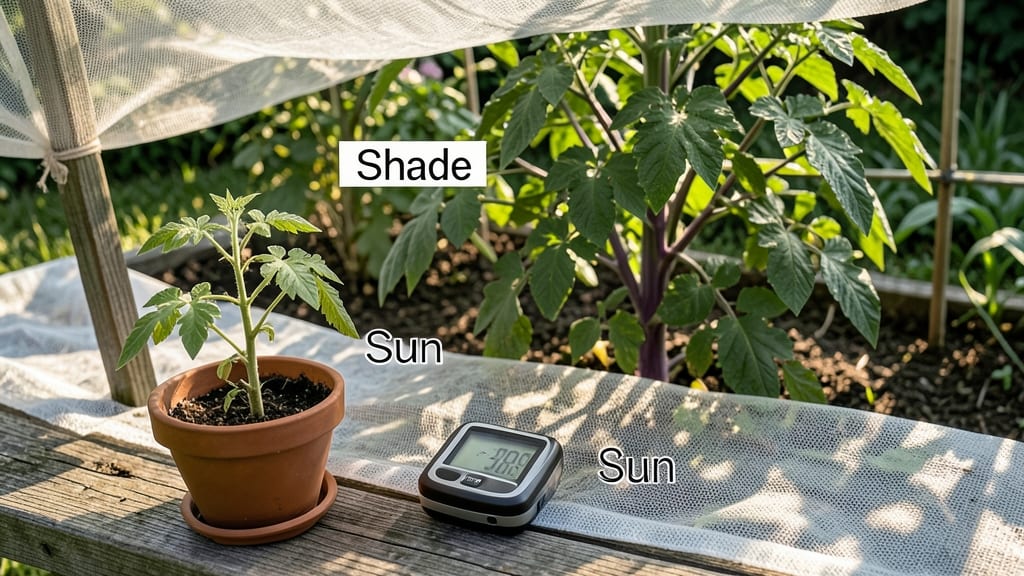
Tomato plants can grow in shade, but they’ll struggle without the right adjustments—this is the truth many gardeners learn the hard way.
Picture this: you’ve spent hours planting your 🍅 seedlings, only to watch them stretch toward the sky like they’re reaching for something they can’t quite grasp. That’s shade talking—and while tomatoes aren’t built for low light, they can survive (and even produce fruit) with smart workarounds.
Most varieties need 6+ hours of sunlight daily, but partial shade or dappled light won’t doom your crop if you pick the right techniques. We’re talking shade-tolerant varieties, strategic pruning, and even a few high-tech tricks to trick your plants into thinking they’re basking in the sun.
In this guide, I’ll walk you through how to assess your light conditions, choose the best tomato types for shade, and keep your vines healthy—even when the sun takes a backseat. Ready to save your 🍅 harvest?

How much shade can tomato plants tolerate before failing?
Tomatoes thrive in full sun—typically 6-8 hours of direct sunlight daily—but they can survive in partial shade with adjustments. The key lies in understanding your specific shade type: light shade (4-6 hours of sun) is manageable, while deep shade (under 4 hours) severely limits growth and fruit production.
Even shade-tolerant varieties struggle when deprived of sunlight for extended periods.
Photosynthesis is the root of the problem. Tomato plants need sunlight to convert energy into sugars, which fuel growth and fruit development. In low-light conditions, chlorophyll production drops, leading to pale, weak leaves and stunted vines.
The result? Fewer flowers, smaller fruits, and a higher risk of disease due to poor air circulation from leggy growth.
Not all shade is created equal. Dappled shade (filtering sunlight through trees) is less harmful than dense shade (blocked by buildings or thick foliage). If your tomatoes receive only 2-3 hours of sun, expect minimal fruit set and slow growth.
Below 2 hours, most varieties will fail to produce meaningful harvests, regardless of care.
Here’s the science: Tomatoes require 1,000-1,500 foot-candles of light for optimal growth. Full sun provides 10,000+ foot-candles, while partial shade drops this to 100-500 foot-candles. Below 200 foot-candles, photosynthesis slows dramatically, and the plant shifts energy toward survival rather than fruiting.
| Variety Type | Shade Tolerance (Hours of Sun) | Fruit Quality in Shade | Best For |
|---|---|---|---|
| Cherry (e.g., 'Sweet Million') | 4-6 hours | Small, fewer fruits; tart flavor | Containers, balconies |
| Beefsteak (e.g., 'Brandywine') | 6+ hours (struggles under 5) | Poor yield; weak structure | Full sun only |
| Dwarf (e.g., 'Tiny Tim') | 4-5 hours | Compact growth; limited harvest | Indoor growing |
| Heirloom (e.g., 'Stupice') | 5-6 hours | Slower ripening; smaller size | Partial shade gardens |
| Grape (e.g., 'Black Cherry') | 4-5 hours | Clustered but underdeveloped | Vertical shade spots |
Leaf color is your first clue about shade stress. Healthy tomato leaves are deep green and glossy. In low light, they turn yellowish or pale green, signaling chlorophyll depletion.
Watch for long, thin internodes (the spaces between leaves)—a classic sign of "shade stretching" as the plant reaches for light. If you notice fewer flowers or blossoms dropping, your plant is struggling to support fruit production.
Growth patterns also reveal shade struggles. Tomato plants in low light often develop weak stems that flop or require staking. The fruit set may be sparse, with tomatoes that fail to ripen fully or develop a mealy, bland texture.
Even with proper care, shaded tomatoes are prone to blossom end rot due to inconsistent calcium uptake caused by poor energy production.
If your tomatoes receive less than 4 hours of sun daily, consider supplementing with grow lights or relocating them to a sunnier spot.
For 4-6 hours of sun, focus on shade-tolerant varieties like 'Stupice' or 'Sweet Million', and use reflective surfaces (like white walls or mirrors) to bounce extra light onto the plants. Regular pruning to improve air circulation can also mitigate some shade-related issues.
Remember: No tomato variety thrives in deep, consistent shade. Even the hardiest types will produce smaller yields and lower-quality fruit without adequate sunlight. If your goal is a bountiful harvest, prioritize maximum light exposure and adjust your expectations—or your garden layout— accordingly.
5 Proven strategies to grow tomatoes in shade successfully
Tomatoes thrive in full sun, but that doesn’t mean you can’t grow them in shade. With the right adaptations, you can still enjoy a bountiful harvest.
The key lies in optimizing light exposure, choosing the right varieties, and adjusting care routines. Let’s explore five effective strategies to help your shade-loving tomatoes flourish.
First, understand that tomatoes in shade will grow slower and produce fewer fruits. However, by maximizing light availability and providing extra care, you can compensate for the lack of sunlight.
Start by selecting shade-tolerant varieties like 'Stupice' or 'Sungold', which perform better in low-light conditions. These varieties are bred to handle less sunlight while still delivering delicious yields.
Next, consider the placement of your plants. If growing in containers, use reflective surfaces like white walls or mirrors to bounce extra light onto the leaves. This simple trick can significantly improve photosynthesis.
Additionally, rotate your containers every few days to ensure all sides receive equal exposure. This even light distribution helps prevent leggy growth and promotes healthier foliage.
Now, let’s dive into the most effective strategies, ranked by their impact on your shade-grown tomatoes:
Opt for determinate varieties like 'Stupice' or 'Roma' that handle low light better. These produce compact plants with higher yields in limited sunlight.
LED grow lights are the most efficient for shade gardening. Place them 6-12 inches above plants for 12-14 hours daily to mimic sunlight.
Use containers at least 12 inches deep and wide to accommodate root growth. Smaller pots restrict roots, reducing the plant’s ability to access nutrients.
Remove lower leaves to improve air circulation and light penetration. Focus on opening the canopy to allow sunlight to reach inner leaves.
Increase phosphorus and potassium in your soil to boost flowering and fruiting. Use a balanced fertilizer like 10-10-10 and apply it every 4-6 weeks.
Another critical step is to monitor your plants closely. Shade-grown tomatoes are more susceptible to pests and diseases due to slower growth. Inspect leaves regularly for signs of aphids or fungal infections, and address issues promptly.
Aphids thrive in shaded, humid conditions, so use neem oil or insecticidal soap to keep them at bay.
Finally, don’t underestimate the power of patience and consistency. Tomatoes in shade take longer to mature, but with the right care, they can still produce flavorful fruits. Keep your soil moist, avoid over-fertilizing, and be prepared to extend the growing season with row covers or cold frames if needed.
With these strategies, you’ll be well on your way to a successful shade-grown tomato harvest! 🌱