
Pests
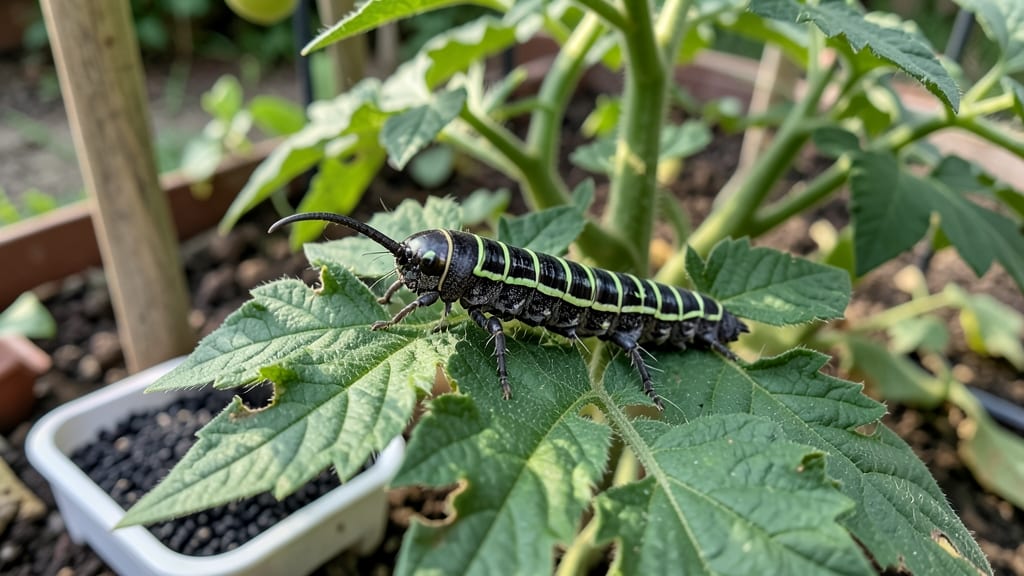
Tomato hornworms are not poisonous to humans or pets, though their skin can cause mild irritation if handled roughly. Their primary defense is camouflage and speed, not toxicity, but their diet of tomato plants may leave a bitter residue on fingers. Always wash hands after contact.
These caterpillars rely on their striking green color and rapid movement to avoid predators rather than toxins. 🌿 Unlike monarch butterflies, which store cardiac glycosides from milkweed, tomato hornworms have no chemical defenses—just a quick escape when threatened.
The bitter taste comes from their tomato-heavy diet, but it's harmless unless you're allergic to nightshades. Gardeners often find them more annoying than dangerous, though their appetite for tomato plants can be frustrating.
If you're worried about handling them, simply wear gloves and avoid squeezing—their primary "weapon" is their ability to disappear faster than you can blink. 💫 The real battle is managing their population in your garden while keeping your plants safe.
💡 In This Article
- Tomato Hornworm Defense Mechanisms: Why They’re Not Toxic
- Safe Removal and Garden Management for Tomato Hornworms
Tomato hornworm defense mechanisms: why they’re not toxic
Tomato hornworms (Manduca sexta) have evolved a suite of non-toxic defenses that rely on biology rather than chemistry.
Their most striking feature is their camouflage: their green bodies with white diagonal stripes mimic the appearance of tomato leaves, making them nearly invisible to predators like birds and lizards. This visual trickery is so effective that many gardeners only spot them when they're already munching on their plants!
Their speed is another key defense—when threatened, they can move at 2 inches per second, a rapid escape for an insect their size (about 3-4 inches long).
Their diet of tomato plants also plays a role in their perceived "danger." While not toxic, the alkaloids from nightshade plants (like tomatoes) can leave a bitter residue on their skin, which may deter some predators.
This isn't poisonous to humans, but it can cause mild irritation if you handle them roughly—similar to how handling certain plants like stinging nettles can cause skin reactions. Unlike monarch butterflies, which store toxic compounds from milkweed, hornworms have no chemical defenses.
Their only "weapon" is their ability to blend in and vanish in seconds.
Interestingly, hornworms have another trick up their sleeves: regurgitation. When grabbed, they often expel a foul-tasting liquid as a last-ditch effort to make predators think twice. This isn't venomous, but the taste is unpleasant enough to discourage most animals.
Their life cycle also works in their favor—they grow rapidly, molting up to 5 times before pupating, which means they spend less time vulnerable to predators. The entire process from egg to adult takes just 30-40 days under ideal conditions.
What makes hornworms unique compared to other caterpillars is their lack of toxicity at any life stage. Even their chrysalises (pupae) are harmless, though they can look intimidating with their spiky appearance.
This contrasts sharply with species like the io moth caterpillar, which has venomous spines, or the hickory tussock moth, whose urticating hairs can cause skin irritation. The hornworm's entire strategy is built around avoiding detection and conflict rather than engaging in chemical warfare.
For gardeners, this means you don't need to fear handling them—just be prepared for their sudden disappearance when you reach for them. The real challenge isn't their toxicity but their appetite: a single hornworm can consume up to 20 tomato leaves in one day.
Their non-toxic nature makes them easy to manage with organic methods like hand-picking or introducing natural predators like parasitic wasps, which lay eggs inside hornworm larvae without harming humans or pets.
Here's what you should remember: hornworms are nature's stealth operators, using speed and disguise rather than poison. Their only "danger" is to your tomato plants—not to you or your pets. The bitter taste from their diet is harmless, and their regurgation is more of a nuisance than a threat.
With the right garden strategies, you can coexist with them without worry.