
How To
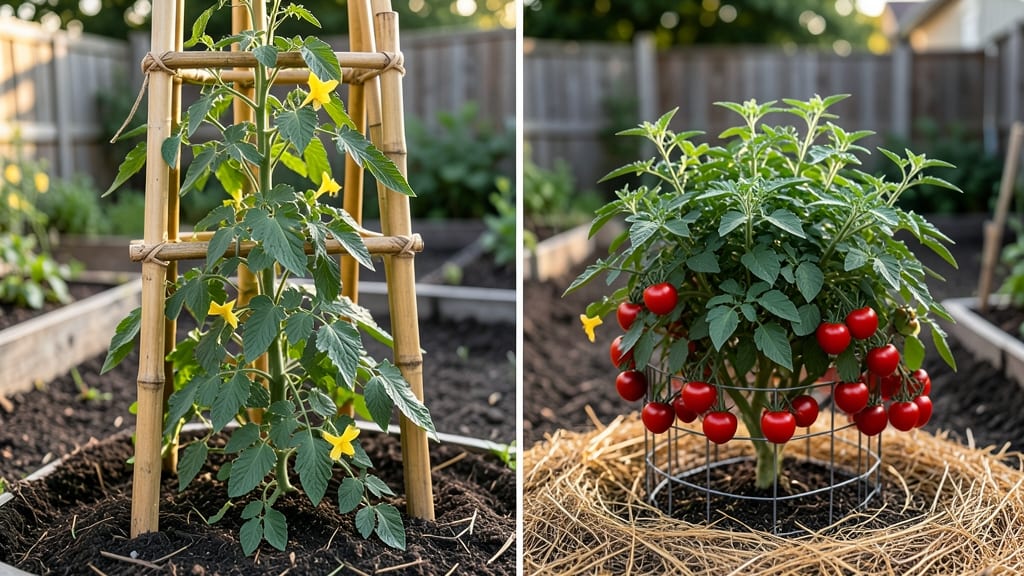
Big Boy tomatoes are indeterminate varieties, meaning they grow continuously throughout the season until frost hits. Their sprawling vines can reach 6–8 feet tall, requiring sturdy support like cages or trellises to prevent sprawl and maximize fruit production.
This classic variety thrives on its ability to produce fruit all season long, unlike determinate tomatoes that set fruit in one big flush before stopping. 🌱 The key to managing Big Boy plants lies in their vertical growth—without proper support, vines can sprawl uncontrollably, leading to disease and reduced yields.
I've found that pruning the suckers (side shoots) every 2–3 weeks not only keeps the plant manageable but also directs energy toward larger, healthier fruit. Warm climates with long growing seasons are ideal, but even in cooler regions, they'll keep producing as long as temperatures stay above 50°F.
For gardeners working with limited space, this indeterminate nature means you can grow Big Boy tomatoes vertically in containers or along fences, saving valuable ground space. The trade-off? They demand more attention than determinate varieties, but the payoff is a steady harvest of those signature beefsteak-sized tomatoes all season.
💡 In This Article
- How Indeterminate Big Boy Tomatoes Grow Differently Than Determinate Varieties
- Optimal Spacing and Support Systems for Big Boy Tomato Plants
How indeterminate Big Boy tomatoes grow differently than determinate varieties
Big Boy tomatoes belong to the indeterminate category, which means their growth habit is fundamentally different from their determinate cousins.
While determinate varieties grow to a fixed height (typically 3-5 feet) and produce fruit in a single flush before stopping, Big Boy plants grow continuously throughout the season—sometimes reaching heights of 6-10 feet—with new leaves, stems, and flowers emerging at the tips.
This vertical growth is driven by their apical dominance, where the main stem continues elongating as long as conditions allow, creating an endless vine that can sprawl if unsupported.
The botanical mechanism behind this growth involves the plant's meristematic tissue—the actively dividing cells at the tips of stems and branches. Indeterminate varieties like Big Boy maintain active growth points at their tips, allowing them to keep producing new shoots, leaves, and flowers until frost.
This contrasts with determinate tomatoes, which have a genetic "stop" signal that triggers once they reach maturity, causing them to focus all energy on ripening existing fruit rather than growing more. The result?
Big Boy plants can produce hundreds of pounds of fruit per season if properly managed, whereas determinate varieties typically yield in one massive harvest before declining.
This continuous growth pattern creates unique challenges. Without proper support, Big Boy vines can become top-heavy with fruit, causing stems to break under their own weight. The sprawling habit also creates dense foliage that traps moisture, increasing risks of fungal diseases like blight.
That's why pruning plays a critical role—regularly removing suckers (the shoots that form in the leaf axils) every 2-3 weeks improves airflow and directs the plant's energy toward fewer, larger fruit.
I've seen Big Boy tomatoes develop beefsteak-sized fruits weighing over 1 pound each when given this care, compared to the smaller, bushier tomatoes from determinate varieties.
The temperature requirements further highlight this difference. Big Boy tomatoes thrive in warm climates where growing seasons extend well into fall, allowing them to keep producing until frost.
They prefer daytime temperatures between 70-85°F and nighttime temperatures above 55°F, with optimal fruit set occurring when daytime temps are consistently above 65°F. In cooler regions, gardeners often use row covers or grow them in containers to extend the season.
This temperature sensitivity explains why Big Boy plants often outperform determinate varieties in long, hot summers but may struggle in short or cool growing seasons.
Another key difference lies in the root system development. Indeterminate varieties like Big Boy develop deeper, more extensive root systems as they grow taller, which helps them access water and nutrients from deeper soil layers. This is particularly advantageous in dry climates where determinate varieties might struggle.
However, this deep root system also means they're less tolerant of transplant shock, requiring careful handling when moving young plants to the garden. The combination of continuous growth, deep roots, and heat tolerance makes Big Boy tomatoes a favorite among serious gardeners willing to invest in proper support systems.
What most gardeners don't realize is how this growth habit affects pollination efficiency. The continuous flowering of Big Boy plants means they produce more blossoms than they can often pollinate naturally, especially in cool or humid conditions.
This can lead to blossom drop—where flowers fall off without setting fruit. To combat this, I recommend gently shaking the plants during flowering or using a small brush to transfer pollen between flowers. This simple technique can dramatically increase fruit set and yield, turning potential losses into abundant harvests.