
Watering
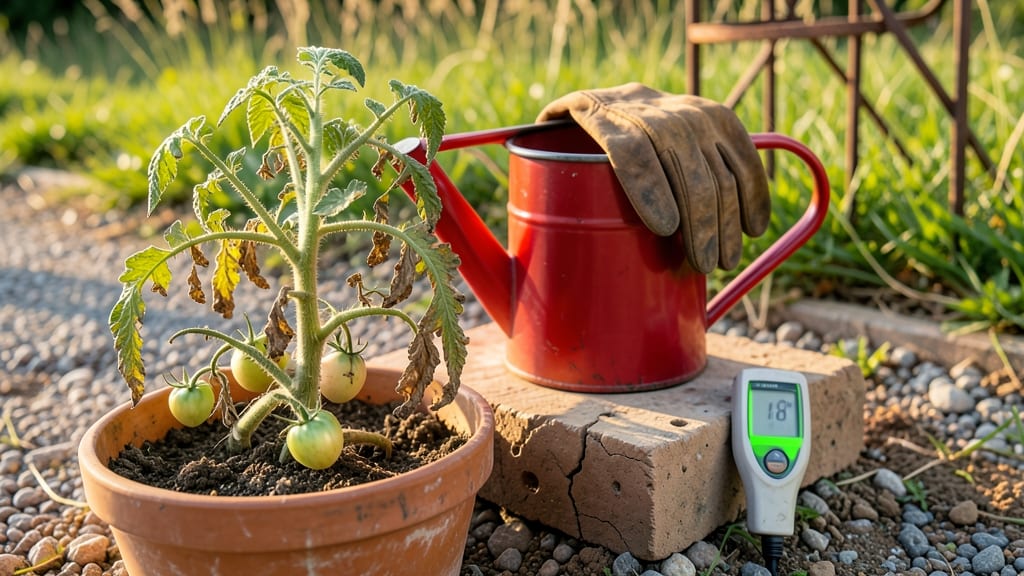
Your tomato plant's drooping leaves aren't a death sentence—just a cry for water. 🌱 I've nursed back more underwatered tomatoes than I can count, and the revival process is simpler than you'd think, even when the soil feels like sandpaper.
The first clue is always the leaves: they curl upward like crumpled paper, then yellow at the edges. Check the soil—if the top 2 inches are bone-dry, you've got your answer. Tomato roots need consistent moisture, not sporadic drenchings.
I learned this the hard way after my first plant wilted dramatically one afternoon. Here's the game-changer: deep watering twice weekly (or daily in heatwaves) until water runs out the bottom. Add mulch to lock in moisture, and watch those leaves perk up within 24 hours.
The roots will start reaching deeper, and your plant will bounce back stronger than before. This works for container tomatoes too—just ensure drainage holes and water until it flows out. The secret isn't fancy tools; it's paying attention to what your plant actually needs.
Why it happens
When your tomato plants start wilting despite your best efforts, the issue often boils down to water stress—but not always in the way you’d expect. Understanding the why behind underwatering helps you fix the problem faster and keep your plants thriving.
Let’s break down the most common culprits, from soil science to human habits.
🌱 Poor Soil Drainage Or Texture
Tomatoes need well-aerated soil that balances moisture retention and drainage. If your soil is too dense (like clay) or compacted, water pools at the surface instead of soaking in. This creates a false sense of hydration: the top layer stays wet, but roots below struggle for moisture.
Even "rich" garden soil can become waterlogged if amended incorrectly—too much compost or peat can suffocate roots, preventing them from accessing deep water reserves.
Actionable fix:
- Test your soil’s drainage by digging a 6-inch hole, filling it with water, and timing how long it takes to drain. If it’s slower than 4 hours, amend with perlite, coarse sand, or vermiculite (20-30% of the soil mix).
- Avoid tilling wet soil—it compacts further. Instead, add organic matter (like aged manure or coconut coir) to improve structure over time.
💧 Inconsistent Watering Patterns
Tomatoes have deep taproots that can stretch 2–3 feet into the soil. When you water lightly or sporadically, these roots dry out, triggering the plant to close stomata (pores on leaves) to conserve water.
This leads to wilting, even if the soil looks damp. Drip irrigation or deep watering (1–1.5 inches per week) is key—surface watering only wets the top inch, leaving roots parched.
Science alert: Tomatoes are not drought-tolerant like succulents. Their cells rely on turgor pressure (water-filled rigidity) to stay upright. When dehydrated, leaves lose structure, causing that classic "V" wilt.
Actionable fix:
- Water early morning (6–9 AM) to reduce evaporation and fungal risks. Avoid evening watering—wet foliage overnight invites disease.
- Use a moisture meter or the "knuckle test": Push your finger 2 inches into the soil. If it’s dry, water deeply until moisture reaches 6+ inches down.
- For potted tomatoes, ensure containers have drainage holes and use self-watering pots or saucers to maintain even moisture.
🌡️ Extreme Heat Or Wind Stress
High temperatures (90°F+) and strong winds accelerate transpiration—the process where plants lose water through leaves. Tomatoes can lose up to 95% of their water intake to evaporation on hot days, even if the soil is moist.
Wind exacerbates this by disrupting the boundary layer (a thin film of humid air around leaves), forcing the plant to work harder to retain moisture.
Pro tip: Mulch is your best friend in these conditions. A 2–3 inch layer of straw or wood chips keeps soil cool, reduces evaporation, and blocks wind’s drying effect.
Actionable fix:
- Install shade cloth (30-50%) during peak heat (11 AM–3 PM) to lower leaf temperatures by 10–15°F.
- Water more frequently in heatwaves—aim for 1.5–2 inches per week, split into 2–3 sessions.
- Use windbreaks (like burlap screens or tall plants) to shield tomato beds from gusts.
🍅 Overcrowded Or Root-Bound Plants
When tomato plants compete for water, nutrients, and space, their roots become stunted and unable to absorb enough moisture. This is common in:
- Container-grown tomatoes with roots circling the pot (root-bound).
- Garden beds planted too closely (follow spacing guidelines: 18–24 inches apart for indeterminate varieties).
- Weedy or compacted soil where roots can’t spread.
Root-bound plants develop shallow, dense root systems that dry out faster. Even with regular watering, they can’t access deep reserves.
Actionable fix:
- For potted tomatoes, uproot gently and trim circled roots before repotting in a larger container (5+ gallons).
- In gardens, thin seedlings to the strongest plant per spot and loosen soil around roots with a fork to encourage deeper growth.
- Add mycorrhizal fungi (a soil additive) to boost root exploration and water uptake.
🔧 Human Errors: Ignoring Signs Or Over-Fertilizing
Sometimes, the issue isn’t the plant—it’s you. Over-fertilizing with high-nitrogen feeds (like lawn fertilizer) encourages leafy growth over roots, making plants more susceptible to drought. Conversely, under-fertilizing weakens roots, reducing their ability to absorb water.
Other common mistakes:
- Skipping mulch leads to faster soil drying.
- Watering only when leaves wilt (too late—damage is done).
- Using hard water (high in minerals) that crusts soil, blocking water penetration.
Actionable fix:
- Switch to a balanced fertilizer (10-10-10 or 5-5-5) to encourage root development.
- Flush soil annually with rainwater or distilled water to prevent mineral buildup.
- Set a weekly watering reminder—consistency is critical!
Revive Your Tomato Plants Fast
When your tomato plants look droopy and stressed, it’s time to act—but don’t panic! With the right fixes, you can bring them back to life and prevent future dehydration. Below are targeted solutions for the most common causes of underwatering, along with easy steps to restore your plants and keep them thriving.
If your tomato plant’s soil is bone-dry, shallow watering won’t cut it. Instead, give it a deep drink to rehydrate the roots.
- 🔥 Step 1: Check Soil Moisture Stick your finger 2–3 inches into the soil. If it’s dry, it’s time to water.
- 🍳 Step 2: Water Slowly & Deeply Use a watering can or hose with a gentle setting to soak the soil until water flows out of the drainage holes. Aim for 1–1.5 inches of water per week (more in extreme heat).
- 👨🍳 Step 3: Let Soil Settle Wait 30 minutes, then water again if the top inch is still dry. This ensures water penetrates deeply.
- 🌱 Pro Tip: Water in the early morning to reduce evaporation and fungal risks.
Tomatoes in hot, sunny climates lose moisture faster. If your plant is wilting despite regular watering, it may need a smarter schedule.
- ⏰ Step 1: Water Before Heat Peaks Schedule watering before 10 AM to give roots time to absorb moisture before the sun intensifies.
- 🌡️ Step 2: Increase Frequency in Heatwaves In temperatures above 90°F (32°C), water every 1–2 days instead of every 3–4.
- 🎯 Step 3: Use Mulch to Retain Moisture Spread 2–3 inches of organic mulch (straw, wood chips) around the base to lock in moisture and cool roots.
- ✨ Pro Tip: Drip irrigation or soaker hoses deliver water directly to roots, reducing waste and stress.
Sandy or poor-quality soil drains too fast, leaving roots thirsty. Amend it to hold moisture longer.
- 🔪 Step 1: Test Your Soil If it drains like sand, mix in compost or coconut coir (20–30%) to improve water retention.
- 🥗 Step 2: Add Organic Matter Work in well-rotted manure or worm castings to boost soil structure and nutrient availability.
- 📊 Step 3: Avoid Over-Fertilizing Too much nitrogen can encourage leafy growth at the expense of roots. Use a balanced 10-10-10 or 5-5-5 fertilizer sparingly.
- 💡 Pro Tip: Self-watering pots or clay pots (which absorb and release moisture) help regulate hydration.
Once your plant recovers, follow these habits to prevent future dehydration:
- 🌿 Monitor Leaf Color Dark green leaves = healthy. Yellowing or crispy edges = time to water.
- 💦 Water Consistently Tomatoes hate moisture swings—stick to a regular schedule rather than sporadic deep soaks.
- 🌡️ Adjust for Weather Shifts Cloudy days? Reduce watering. Windy? Increase it to compensate for evaporation.
- 🌱 Choose the Right Container If growing in pots, opt for larger containers (5+ gallons) with drainage holes.
- 🍅 Prune Wisely Overloaded with fruit? Remove some tomatoes to reduce the plant’s water demands.
With these fixes, your tomato plant should perk up within 24–48 hours. Keep an eye on its progress, and soon you’ll be harvesting juicy, sun-ripened tomatoes instead of wilting leaves! 🍅💦
Frequently asked questions
How quickly can a tomato plant recover from underwatering?
With proper care, you’ll often see improvement within 24–48 hours. Deep watering in the morning and mulching helps roots rehydrate faster. Severe cases may take 3–5 days, but avoid overwatering afterward—focus on consistent moisture.
Can I save a tomato plant if the leaves are already yellow and crispy?
It depends on the severity. If only the edges are yellow (early stress), the plant can recover with deep watering. But if leaves are fully brown and brittle, the damage is permanent. Prune affected foliage to redirect energy to new growth, and keep the soil moist to support recovery.
What’s the best way to water potted tomatoes to prevent underwatering?
Use self-watering pots or containers with 5+ gallons of capacity to maintain moisture. Water until it drains from the bottom, then empty the saucer. Check soil daily in summer—potted plants dry out faster than in-ground varieties. Mulch the surface to slow evaporation.
Will underwatering affect my tomato harvest?
Yes—stressed plants produce smaller, fewer fruits. Underwatering causes blossom-end rot (black bottoms) and weakens vines, leading to dropped flowers. Keep soil consistently moist (1–1.5 inches per week) to maximize yield and fruit quality.
Can I use ice cubes to revive an underwatered tomato plant?
Ice cubes are a quick fix for emergency hydration, but they’re not a long-term solution. Place 1–2 ice cubes at the base of the plant to slowly release water. Follow up with deep watering and mulch to prevent future stress—ice alone won’t rebuild the root system.