
Companion Plants
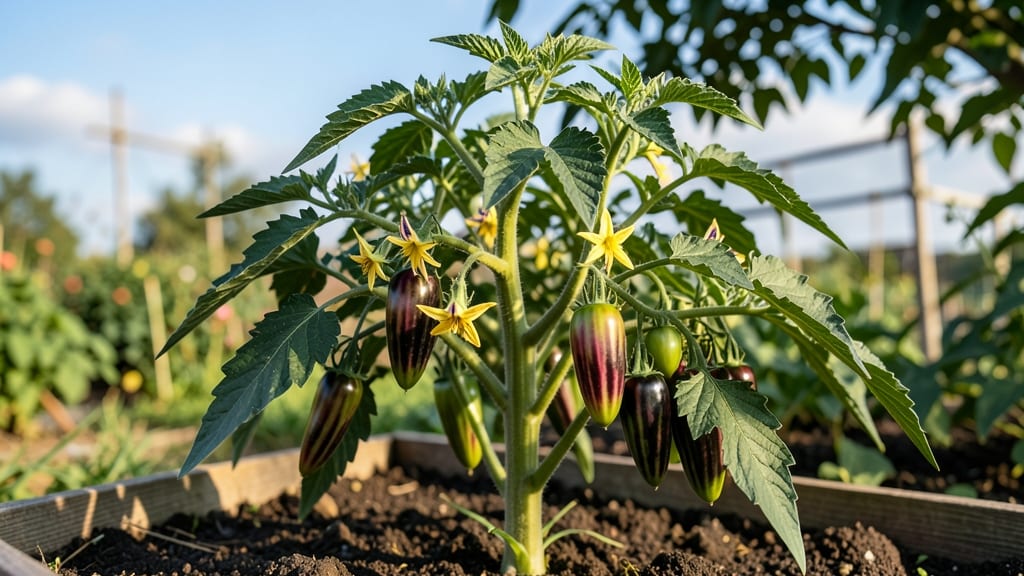
Growing Black Zebra tomato plants delivers stunning striped fruit that tastes as dramatic as it looks—sweet, smoky, and full of depth. 🌱 I first grew them after seeing their striking black-and-green stripes in a catalog, and they became my garden’s showstopper without demanding extra work.
These heirlooms thrive in warm climates but reward patience even in cooler zones with proper timing. The secret to their success lies in rich, well-draining soil and full sun (6+ hours daily).
Space plants 24-36 inches apart to prevent crowding, and start seeds indoors 6-8 weeks before last frost for a head start. Black Zebras love warmth but hate soggy roots—mulch heavily to keep moisture steady and roots cool.
Once established, these tomatoes need minimal fuss: water deeply at the base (avoid wetting leaves to prevent disease), fertilize lightly with compost tea every 4-6 weeks, and prune suckers to encourage stronger stems. Stake or cage them early—their vines grow 4-6 feet tall and can topple without support.
Harvest begins 70-85 days after transplanting, when fruit turns deep purple-black with green stripes. The flavor? Rich, slightly smoky, and complex—perfect for slicing on sandwiches or roasting whole. Just watch for cracking (keep soil consistently moist) and early blight (prune lower leaves for airflow).
With the right care, you’ll end up with baskets of showstopping tomatoes that neighbors will beg for cuttings.
📚 In This Guide
- What you need
- Instructions
- Tips and common mistakes
- Wrapping up and next steps
What you need
- ● Black Zebra Tomato Seeds or Seedlings: 3–5 plants (or seeds for sowing). Choose organic, non-GMO seeds for best results.
- ● Containers or Garden Bed: Containers: 5-gallon pots (1 per plant) with drainage holes.
- ● Garden Bed: Well-draining soil in a sunny spot (6+ hours of sunlight daily).
- ● High-Quality Potting Mix: 10–15 lbs of organic, peat-free mix (e.g., Miracle-Gro Organic Choice).
- ● Fertilizer: Balanced Fertilizer: 10-10-10 or 5-5-5 (organic options like fish emulsion or compost tea work too).
- ○ Tomato-Specific Feed: Optional but helpful (e.g., Dr. Earth Organic Tomato Fertilizer).
- ● Support System: 6-foot tomato cages or stakes (2 per plant for heavy varieties).
- ● Mulch: Straw or shredded leaves (1–2 inches) to retain moisture and suppress weeds.
- ● Hand Trowel or Transplant Spade (for planting/seeding).
- ● Watering Can or Hose with Adjustable Nozzle (gentle watering avoids soil erosion).
- ● Pruning Shears (to remove suckers and encourage bushier growth).
- ○ pH Test Kit (optional but useful—ideal soil pH: 6.0–6.8).
- ○ Companion Plants (Optional): Basil, marigolds, or onions (deter pests naturally).
- ● Avoid planting near fennel or dill (they inhibit growth).
How to grow striking black Zebra tomatoes with confidence
Here's the straightforward method I've used for years to grow these dramatic striped tomatoes—no fuss, just bold harvests.
🌱 Step 1: Select and Prepare Your Planting Site
Black Zebra tomatoes thrive in full sun with at least 6-8 hours of direct light daily. Choose a spot with well-draining soil—they hate soggy roots. If your soil is heavy clay, mix in 2-3 inches of compost to improve drainage and fertility. I always test my soil pH first; these tomatoes prefer a slightly acidic range of 6.0-6.8.
Dig a hole twice as wide as the root ball but no deeper. Loosen the sides of the hole so roots can spread easily. If planting in containers, use pots at least 12 inches deep with drainage holes. Black Zebras are indeterminate, so they'll grow continuously—expect vines to reach 6-10 feet if supported properly.
☀️ Step 2: Plant and Provide Immediate Support
Remove the tomato from its container and gently tease the roots apart if they're circling. Place the plant in the hole so the top of the root ball sits 1 inch below soil level—this encourages stronger root growth. Fill around the base with native soil, pressing lightly to eliminate air pockets.
Install a sturdy cage or trellis immediately. Black Zebras produce heavy fruit, so a 5-foot tall cage or tall bamboo stakes with twine support work best. I tie the main stem loosely to the support with soft plant ties—don't cinch too tight, or you'll restrict growth. Water deeply right after planting to settle the soil.
💧 Step 3: Water and Feed for Maximum Fruit Production
Keep soil consistently moist but never soggy. Water at the base 1-2 inches deep every 2-3 days until the top inch of soil feels dry. Black Zebras are prone to cracking if moisture fluctuates wildly, so mulch with 2-3 inches of straw or shredded leaves to maintain even moisture and suppress weeds.
Feed with a balanced 10-10-10 fertilizer every 2-3 weeks once flowers appear. I switch to a calcium supplement mid-season to prevent blossom-end rot—a common issue with these heavy-fruited varieties. Watch for the first flowers to appear about 4-6 weeks after transplanting.
✂️ Step 4: Prune and Maintain for Healthier Plants
Prune suckers regularly—those little shoots that grow in the leaf axils. Remove them when they're small to redirect energy to fruit production. I also pinch off the first few flowers that appear, letting the plant focus on establishing strong vines first. Once the plant is well-established, let it flower freely.
Watch for early signs of disease like yellowing leaves or spots. Black Zebras are susceptible to early blight, so remove affected leaves immediately and space plants 2-3 feet apart for good air circulation. If you notice wilting in the afternoon, it's often a sign of overwatering—let the top inch dry out before watering again.
🍅 Step 5: Harvest and Enjoy Your Striped Tomatoes
Harvest when tomatoes are fully colored but still slightly firm to the touch. Black Zebras ripen unevenly, so check plants every 2-3 days starting about 70-80 days after transplanting. Use pruning shears to cut stems cleanly, leaving a small portion attached to the plant.
Store harvested tomatoes at room temperature until fully ripe. They keep well for 1-2 weeks on the counter. The dramatic black-and-green stripes make them a showstopper in salads, sauces, or even sliced fresh. I always save a few to dry for winter use—they make incredible sun-dried tomatoes with their bold flavor.
Tips & tricks for growing stunning black Zebra tomatoes
These game-changing insights will help you coax the boldest striped harvests from your Black Zebra plants.
Sunlight Strategy: While 6-8 hours of direct sun is the minimum, I've found these tomatoes reward you for pushing it further. If possible, give them morning sun plus afternoon shade in hot climates—this prevents sunburn on the dramatic black stripes. Early morning light is especially critical for photosynthesis, so avoid planting near tall structures that cast shadows before noon.
Support System Secret: That 5-foot cage recommendation is non-negotiable, but here's what nobody tells you: Install your support structure BEFORE planting. Black Zebras grow aggressively, and trying to add support later risks damaging the root system. I use bamboo stakes because they're lightweight yet sturdy enough to handle the weight of those heavy striped fruits without bending.
Watering Wisdom: The 2-3 days between waterings can be tricky—especially when those first tomatoes start forming. I water deeply in the morning, then check soil moisture by pushing my finger 1-2 inches down. If it's dry, water again. The key is consistency: Black Zebras hate moisture swings, which is why that 2-3 inch mulch layer is your best friend. It's like giving your plants their own built-in irrigation system.
Pruning Precision: When you're pinching off those early flowers in Step 4, don't stop at just the first few. Keep removing any flowers that appear until you see 4-5 strong main stems. This might take up to 6 weeks, but trust me—your harvest will be worth the wait. The plant needs to establish a strong framework first, and those early fruits often end up small and underdeveloped anyway.
Pro Tips for Black Zebra Tomato Plants
- These game-changing insights will help you coax the boldest striped harvests from your Black Zebra plants.
- Sunlight Strategy: While 6-8 hours of direct sun is the minimum, I've found these tomatoes reward you for pushing it ...
- Support System Secret: That 5-foot cage recommendation is non-negotiable, but here's what nobody tells you: Install y...
Frequently asked questions
Got questions about growing Black Zebra tomato plants? You’re not alone!
Here are some of the most common queries—plus straightforward answers to help you cultivate these striking striped beauties with confidence.
How long does it take for Black Zebra tomato plants to produce fruit?
Black Zebra tomatoes typically take 70–85 days from transplanting to harvest, depending on your climate and growing conditions. Start seeds indoors 6–8 weeks before the last frost to ensure a timely harvest. Patience pays off—these heirlooms are worth the wait!
Can Black Zebra tomatoes grow in containers, or do they need a garden bed?
These tomatoes thrive in 5-gallon containers or larger with proper support (like cages or stakes). Just ensure the pot has drainage holes and use a high-quality potting mix. Container growing is ideal for urban gardeners or those with limited space—just keep them in full sun!
What pests or diseases should I watch out for, and how do I prevent them?
Black Zebra tomatoes are prone to aphids, hornworms, and early blight. Preventive care includes:
- Rotate crops yearly to avoid soil-borne diseases.
- Use neem oil or insecticidal soap for pests.
- Prune lower leaves to improve airflow and reduce humidity.
- Apply mulch to deter soil splashing and fungal spores.
Are Black Zebra tomatoes better for cooking, eating raw, or both?
These tomatoes are versatile superstars! Their smoky, slightly sweet flavor shines in:
- Raw: Sliced on sandwiches or in salads (their striped beauty adds flair!).
- Cooked: Perfect for sauces, roasting, or grilling—hold up well to heat.
- Preserving: Great for canning or sun-drying due to their meaty texture.
Can I grow Black Zebra tomatoes in cold climates, or do they need warm weather?
Black Zebras love warmth but can tolerate light frosts if hardened off properly. For cold climates:
- Start seeds indoors early (February–March).
- Use row covers or a greenhouse to extend the season.
- Choose early-maturing varieties if your growing season is short.
Wrapping up and next steps
Growing black zebra tomato plants is a rewarding journey that brings bold flavors and striking beauty to your garden with surprisingly little effort! Their unique striped fruit, rich taste, and resilience make them a standout choice for both novice and experienced gardeners.
Whether you’re aiming for a thriving companion planting setup or simply want to elevate your harvest, these tomatoes deliver—without the fuss.
Ready to dive in? Start by sketching your garden layout and selecting the perfect companions (like basil or marigolds) to maximize growth and flavor. Then, grab your gloves and get planting—your future bold, striped harvest is waiting! 🌱✨