
Pests and Diseases
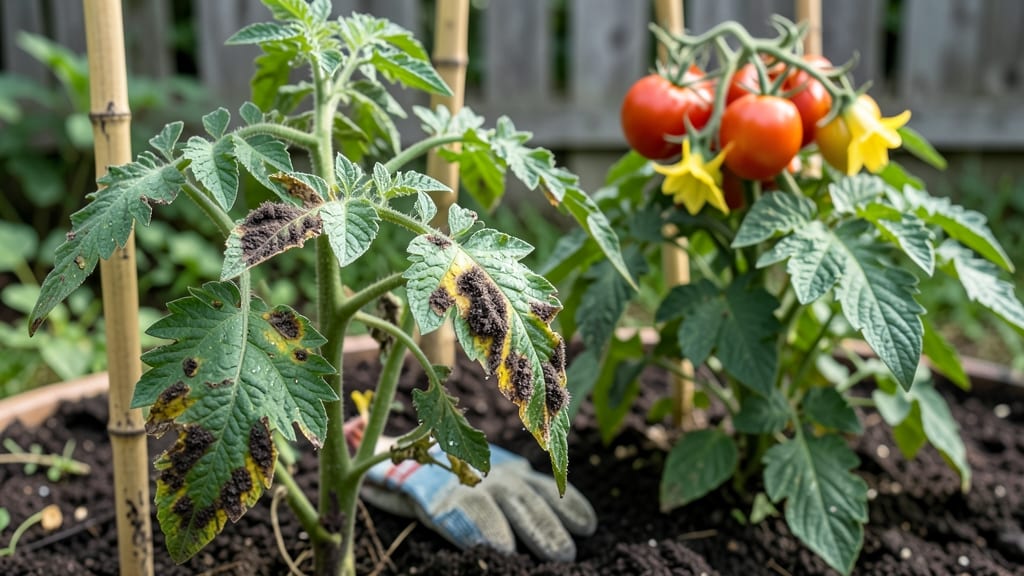
Brown spots creeping up your tomato stems? That’s early blight—or worse—trying to steal your harvest. ✨ I’ve battled this exact problem, and copper spray isn’t just a last resort—it’s the first line of defense when those ugly spots start spreading like a bad rumor.
The key is catching it early, before the fungus turns your plants into a sad, leaf-dropping mess.
Those brown spots? They’re usually early blight or bacterial spot, both thriving in wet, crowded conditions. Early blight starts at the bottom of leaves, while bacterial spot leaves water-soaked marks that ooze when touched.
The moment you see them, act fast—prune infected leaves immediately and space your plants wider to improve airflow. Wet foliage at night is their party invitation, so water at the base in the morning instead.
Copper spray works because it’s a preventive shield, not just a cure. Mix it up every 7–10 days once you spot trouble, and you’ll see new growth pushing out clean and strong. Even if the spots are already there, copper stops the spread while your plant fights back.
The best part? It’s organic enough for certified gardens but tough enough to outmuscle fungus before it wins.
Here’s the game-changer: one spray session won’t fix it all. You’ll need consistency—think of it like taking antibiotics for a stubborn infection. But with copper, proper spacing, and morning watering, your tomatoes will bounce back faster than you’d expect. Trust me, your next harvest will thank you.
Root Causes Of Stem Discoloration
When you spot brown or blackened patches creeping up your tomato stems, it’s rarely a coincidence—it’s a sign of stress or infection. Understanding the why behind these marks helps you tackle the problem before it spreads. Below, we break down the most common culprits, from environmental mishaps to sneaky pathogens.
Tomatoes thrive on consistency, but too much moisture—especially stagnant water—can drown roots and trigger anaerobic conditions. When stems sit in soggy soil for days, they develop:
- Waterlogged stress: Roots suffocate, cutting off nutrient flow, causing stems to weaken and darken.
- Fungal entry points: Damp skin becomes a breeding ground for Phytophthora or Pythium, which rot stems from the inside out.
- Physiological browning: Oxygen deprivation leads to necrosis (dead tissue), turning stems leathery and discolored.
💡 Pro Tip: Test soil moisture with your finger—if the top 2 inches stay wet for >48 hours, you’re overwatering. Amend clay soil with perlite or sand to improve drainage.
While tomatoes love sun, intense midday heat (especially above 90°F/32°C) can cook stems, causing:
- Photoxidative damage: UV rays break down cell membranes, leading to brown, crispy patches (often on exposed stems).
- Transpiration imbalance: Plants lose more water than they absorb, causing wilting and stem discoloration.
- Blossom-end rot mimicry: Heat-stressed stems may develop dark, sunken spots similar to fungal blight but without the fuzzy growth.
🔥 Action Step: Use shade cloth (30–50%) during peak sun or mulch heavily to insulate roots and retain moisture.
Most alarming brown spots stem from pathogenic fungi that thrive in warm, humid conditions. Here’s how they strike:
🍅 Early Blight (Alternaria solani)
This airborne fungus starts as tiny concentric rings on lower leaves, then spreads upward via spores. Key signs on stems:
- Target-like lesions: Dark brown centers with yellow halos.
- Cracked, sunken tissue: Stems may split as the fungus invades vascular bundles.
- Rapid progression: Humidity >75% accelerates spread—expect blackened stem tissue in 7–10 days.
🍅 Late Blight (Phytophthora infestans)
A devastating cousin of potato blight, this fungus creates:
- Oily, greasy spots: Dark brown to black, often with white mold on undersides.
- Stem collapse: Infected stems rot at the base, causing plants to topple.
- Cool, wet conditions: Thrives at 60–75°F (15–24°C) with overnight dew.
💡 Critical Note: Late blight spreads 3x faster than early blight—remove infected plants immediately and sterilize tools with 70% alcohol.
🍅 Anthracnose (Colletotrichum spp.)
Less common but persistent, anthracnose causes:
- Sunken, water-soaked spots: Turn dark brown/black with pink or salmon spore masses.
- Cankers: Raised, leathery growths that girdle stems, strangling water flow.
- Survival strategy: Fungus hibernates in soil/debris for years, reinfecting yearly.
Pests like hornworms, aphids, or spider mites don’t just eat leaves—they salivate on stems, leaving behind:
- Sticky residue: Honeydew (aphid waste) feeds sooty mold, causing black, velvety coatings.
- Physical trauma: Hornworm mandibles tear stems, exposing tissue to bacteria/fungi.
- Viral vectors: Aphids spread tobacco mosaic virus (TMV), which causes mosaic-patterned browning on stems.
🔪 Quick Fix: Blast stems with neem oil (1 tsp/gallon water) to deter pests and disrupt fungal growth.
Even well-meaning gardeners can overdo it:
- Salt burn: Over-fertilizing with synthetic nitrogen (e.g., urea) causes brown, crispy stem tips.
- Herbicide drift: Glyphosate or 2,4-D can bleach or blacken stems if sprayed nearby.
- Calcium deficiency: Leads to blossom-end rot-like symptoms but also weakened stem tissue prone to cracking.
🌱 Solution: Flush soil with water (pH 6.0–6.8) to leach excess salts, and side-dress with crushed eggshells or lime for calcium.
Fixing Tomato Stem Spots Fast
Brown spots on tomato stems can feel like a gardener’s worst nightmare—especially when they threaten your hard-earned harvest. 🌱 But don’t panic! With the right approach, you can reverse the damage, save your plants, and prevent future outbreaks.
Below, we’ve mapped out targeted solutions based on the most common causes, from fungal infections to environmental stressors. Each fix is practical, budget-friendly, and easy to implement—no green-thumb PhD required.
If your tomato stems are covered in dark, mushy, or powdery spots, fungi like early blight, late blight, or powdery mildew are likely the culprits. These spread fast in humid, crowded, or poorly ventilated conditions.
🔥 Step 1: Remove Infected Plant Parts Immediately
- 🔪 Snip off stems, leaves, or fruit with brown spots using sterilized pruners (wipe with rubbing alcohol between cuts).
- 🗑️ Dispose of infected debris in the trash (not compost)—fungi can survive and reinfect.
- 🌬️ Thin out plants to improve airflow (aim for 12–18 inches between stems).
🍳 Step 2: Apply Fungicidal Sprays
For organic control, mix:
- 1 tbsp baking soda + 1 tsp dish soap + 1 gallon water (spray every 7–10 days).
- 💡 Pro Tip: Add 1 tsp neem oil to boost antifungal power.
For stronger defense, use:
- Copper fungicide (like Copper Soap or Bordeaux mixture)—follow label rates.
- 🌡️ Best time to spray: Early morning or evening (avoid direct sunlight, which can burn leaves).
⏰ Step 3: Prevent Recurrence
- 🌧️ Water at the base (never overhead) to keep foliage dry.
- 🌞 Space plants for sunlight (fungi thrive in shade).
- 🔄 Rotate crops—don’t plant tomatoes in the same spot next year.
If spots are dry, crispy, and appear only on sun-exposed sides, your tomatoes are suffering from sun scorch—common in hot climates or after sudden temperature swings.
👨🍳 Step 1: Shield Plants from Harsh Sun
- 🌿 Use shade cloth (30–50% coverage) during peak afternoon heat (12 PM–4 PM).
- 🏡 Plant near taller crops (like corn or sunflowers) to create natural shade.
- 💧 Increase watering (deep watering 1–2 inches per week) to help plants regulate temperature.
🌱 Step 2: Adjust Mulching
- 🌿 Apply 2–3 inches of mulch (straw, grass clippings, or wood chips) to keep roots cool.
- ✨ Avoid dark mulch in hot climates—it absorbs heat and worsens stress.
🎯 Step 3: Choose Heat-Tolerant Varieties
If you live in a hot, dry climate, opt for heat-resistant tomatoes like:
- ‘Solar Fire’
- ‘Heatmaster’
- ‘Cherokee Purple’
Spots from aphids, spider mites, or whiteflies often look like sticky, discolored patches (sometimes with webbing or tiny bugs).
🔥 Step 1: Blast Off Pests
- 💦 Spray with water (forceful stream from a hose dislodges bugs).
- 🍋 Mix 1 tbsp neem oil + 1 tsp castile soap + 1 quart water—spray every 3–5 days.
- 🐝 Introduce beneficial insects (ladybugs, lacewings, or parasitic wasps).
🌿 Step 2: Trap and Remove
- 🕷️ Stick yellow sticky traps near plants to catch flying pests.
- 🍎 Wipe leaves with a damp cloth to remove eggs and residue.
🔄 Step 3: Prevent Future Infestations
- 🌱 Interplant with pest-repelling herbs (basil, marigolds, or dill).
- 🌧️ Avoid over-fertilizing with nitrogen—soft, new growth attracts pests.
If your tomato plant is already heavily infected and recovery seems unlikely:
- 🍅 Harvest remaining healthy fruit (fungi can spread to tomatoes).
- 🗑️ Pull the plant (if >50% of the stem is brown) to stop the spread.
- 🌱 Replace with a new, disease-resistant plant (like ‘Defiant PhR’ for blight resistance).
🎯 Final Reminder: The key to long-term success is prevention—rotate crops, improve airflow, and stay vigilant with inspections. With these fixes, your tomato plants will bounce back stronger than ever! 🍅💪
Frequently asked questions about tomato stem spots
Why do my tomato stems develop brown spots even when I water them regularly?
Overwatering can actually cause brown spots by creating waterlogged soil that suffocates roots and invites fungal infections like Phytophthora. Test soil moisture by sticking your finger 2 inches deep—if it stays wet for more than 48 hours, you're overwatering. Improve drainage with perlite or sand and water only when the top inch feels dry.
Can I still save my tomato plant if the brown spots have spread to the main stem?
If the main stem shows blackened, mushy tissue or cracking, the plant is likely beyond saving. However, if only small patches appear, prune them immediately with sterilized tools and apply copper fungicide. For severe cases, harvest any healthy fruit and remove the plant to prevent spread.
How can I tell if my tomato spots are from fungus or sun damage?
Fungal spots (like early blight) appear as dark brown concentric rings with yellow halos, while sun damage creates dry, crispy patches only on sun-exposed sides. Fungal spots often have white or gray mold underneath leaves, while sun damage lacks this. Check leaf undersides for clues!
Will neem oil work for tomato stem spots caused by bacteria like bacterial spot?
Neem oil helps prevent fungal/bacterial spread but isn't a cure for active infections. For bacterial spot, mix 1 tbsp baking soda + 1 tsp dish soap + 1 gallon water and spray every 7–10 days. Copper fungicide is more effective for bacterial infections—apply at first sign of oozing spots.
Can I use the same pruners on healthy tomato plants after cutting off infected stems?
Never reuse tools! Sterilize pruners with 70% rubbing alcohol or a 10-minute bleach soak (1 part bleach to 9 parts water) between cuts. Fungal spores can hitch rides and reinfect healthy plants. Keep a separate pair just for diseased plants.