
Plants
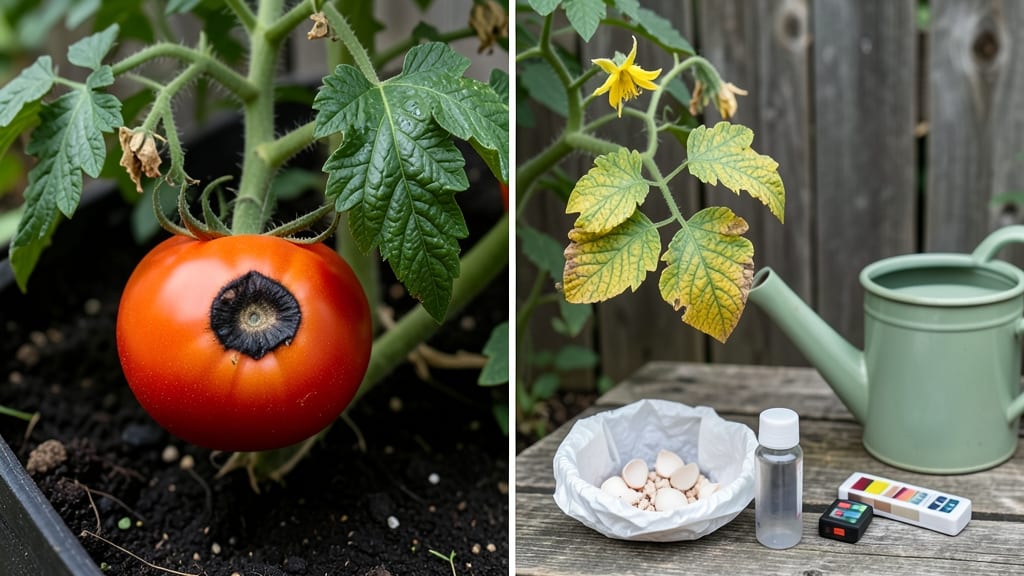
Calcium deficiency in tomato plants is turning your fruit into a sad, spotted mess—and those crinkled leaves are their way of screaming for help. 🌱 I’ve seen this problem ruin entire harvests, but the fix is simpler than you’d think—it’s all about soil, water, and a few easy amendments.
Calcium deficiency shows up as sunken spots on fruit or leaf edges that look like they’ve been singed. The real culprit? Too much water, not enough calcium in the soil, or pH that’s too high or low.
My first garden journal entry from 2018 still has a photo of my sad tomatoes—now I know better.
You’ll fix it fast with crushed eggshells, gypsum, or a side dressing of lime. Adjust your watering to avoid dry-wet cycles, and mulch to keep moisture steady. Within weeks, your plants will bounce back with stronger stems and plump, healthy fruit.
Prevent it next season by testing your soil and adding compost before planting. Even my black thumb can’t mess this up once you know the tricks. Let’s get those tomatoes thriving again!
Root Causes Of Calcium Shortages
Calcium deficiency in tomato plants isn’t just about a lack of soil calcium—it’s often a complex interplay of environmental, biological, and even cultural factors. Understanding these root causes helps you take precise corrective action before your plants show distress.
Here’s why your tomatoes might be starving for this essential nutrient, even when it’s present in the soil.
Calcium is highly immobile in plants, meaning it can’t easily relocate once absorbed.
When soil stays soggy—whether from overwatering, poor drainage, or heavy clay—roots suffocate and struggle to uptake nutrients, including calcium. Waterlogged conditions also trigger anaerobic bacteria that compete with tomato roots for available calcium, leaving your plants high and dry.
Why it matters: Even fertile soil with ample calcium becomes useless if roots can’t access it due to poor aeration. This is why blossom end rot (a classic calcium deficiency symptom) often appears after heavy rains or inconsistent watering.
Tomatoes thrive in slightly acidic to neutral soil (pH 6.0–6.8). When soil pH veers too high (alkaline) or too low (acidic), calcium availability plummets. Here’s how:
- High pH (alkaline soil, pH >7.0): Calcium binds tightly to soil particles, becoming locked away and unavailable to roots.
- Low pH (acidic soil, pH <5.5): While calcium is more soluble, hydrogen ions outcompete tomato roots for uptake, and aluminum/manganese toxicity can block calcium absorption.
Pro tip: Test your soil’s pH annually. If it’s off-kilter, amend with sulfur (to lower pH) or lime (to raise pH) gradually—never in large doses, or you’ll disrupt nutrient balance further.
Tomatoes are calcium hogs, especially during exponential growth phases like flowering, fruiting, and early fruit development. If your plants are suddenly hit with a growth spurt—thanks to ideal conditions (sun, warmth, fertilizer)—they’ll deplete soil calcium faster than it can replenish, leading to deficiency symptoms.
Key triggers:
- Sudden exposure to full sun after shade.
- Over-fertilizing with nitrogen-heavy fertilizers (which boost leafy growth but starve roots of calcium).
- Transplant shock after moving seedlings to the garden.
Solution: Use a balanced fertilizer (e.g., 10-10-10 or 5-5-5) and avoid high-nitrogen feeds during fruiting. Calcium supplements (like gypsum or crushed eggshells) can help bridge the gap.
Calcium uptake is temperature-sensitive. When soil temps dip below 50°F (10°C) or spike above 90°F (32°C), root activity slows, and calcium absorption grinds to a halt. Even diurnal swings (hot days, cool nights) can stress roots, making them less efficient at nutrient uptake.
Moisture stress compounds the problem: Inconsistent watering (e.g., drought followed by a deep soak) disrupts calcium movement within the plant. Roots can’t deliver calcium to growing tissues fast enough, leading to blossom end rot or leaf cupping.
Actionable fix:
- Mulch heavily to stabilize soil temperature.
- Water deeply and consistently (1–1.5 inches per week), avoiding surface-level sprinkling.
- Use drip irrigation to maintain even moisture.
Calcium isn’t the only nutrient vying for root attention. Certain elements can block its uptake or tie it up in the soil:
- Potassium (K) and Magnesium (Mg) excess: These cations compete directly with calcium for absorption sites on root hairs.
- High sodium or chloride levels: Common in salty soils or from overuse of synthetic fertilizers, these ions disrupt root membrane function, reducing calcium intake.
- Organic matter breakdown: As compost or manure decomposes, it can temporarily bind calcium, making it less available to plants.
Test your soil: A simple soil test will reveal imbalances. If potassium or magnesium is high, reduce synthetic fertilizers and amend with gypsum (calcium sulfate) to improve availability.
Remember: Calcium deficiency is rarely about a total absence of calcium in the soil—it’s about accessibility. By addressing these root causes, you’ll help your tomato plants absorb what they need before symptoms like blossom end rot or stunted growth appear.
Quick Fixes for Weak Tomato Plants
If your tomato plants are showing signs of calcium deficiency—like crinkled leaves, blossom end rot, or stunted growth—don’t panic! The good news is that most issues can be resolved with targeted fixes.
Below, we’ll break down the most common causes and match them with practical solutions, plus prevention tips to keep your plants thriving. 🌱
Tomatoes are heavy feeders, and if your soil lacks calcium, they’ll struggle to absorb enough, even if you’re watering properly. The fix? Amend your soil with calcium-rich materials to give your plants a quick nutrient boost.
- 🍳 Add crushed eggshells – Rinse, dry, and grind clean eggshells into a fine powder. Sprinkle 1–2 tablespoons around the base of each plant and lightly work it into the top inch of soil. (Pro tip: Bake shells at 200°F for 10 minutes to kill bacteria before grinding!)
- 🥛 Use calcium-rich fertilizers – Look for fertilizers with calcium nitrate (15.5-0-0) or gypsum (calcium sulfate). Apply according to package instructions, usually every 2–4 weeks during the growing season.
- 🌡️ Mix in lime (sparingly) – If your soil is acidic (pH < 6.0), a light dusting of garden lime (calcium carbonate) can help. Test your soil first—too much lime can disrupt other nutrients.
Prevention tip: Before planting, mix composted manure or worm castings into your soil—they naturally contain calcium and improve soil structure. 💡
Calcium deficiency often flares up when plants experience fluctuating moisture levels. Too much water washes away nutrients, while uneven watering stresses roots. Here’s how to stabilize things:
- 👨🍳 Water deeply but less frequently – Aim for 1–1.5 inches of water per week, delivered at the soil level (not overhead). Use drip irrigation or soaker hoses to keep roots consistently moist.
- ⏰ Mulch heavily – Spread 2–3 inches of organic mulch (straw, wood chips, or grass clippings) around plants to retain moisture and prevent nutrient runoff. (Bonus: Mulch also keeps roots cool!)
- 🌡️ Avoid watering at peak heat – Early morning (6–8 AM) is ideal. Watering in the evening can promote fungal diseases.
Prevention tip: If you’re using well water, test it for hardness (calcium/magnesium levels). Soft water lacks calcium, so supplement with gypsum if needed. 🎯
Hot days or cold nights can lock out calcium absorption, even if it’s in the soil. Tomatoes need stable temperatures (ideally 60–85°F) to uptake nutrients efficiently.
- 🌿 Shade young plants – Use floating row covers or shade cloth (30–50%) during heatwaves to protect leaves from scorching.
- 🌡️ Extend the growing season – In cool climates, plant in black plastic mulch to warm the soil faster. In hot climates, use white mulch to reflect sunlight.
- 💧 Foliar spray for quick relief – Mix 1 tablespoon of calcium chloride per gallon of water and spray leaves in the early morning. This gives plants an immediate calcium boost through the leaves.
Prevention tip: Choose heat-tolerant tomato varieties like ‘Heatmaster’ or ‘Solar Fire’ if you live in a hot climate. They handle stress better! ✨
If your soil has excess potassium (K) or magnesium (Mg), tomatoes may compete for calcium, leading to deficiency symptoms. Rebalancing is key:
- 📊 Test your soil – A simple $20 soil test kit (like those from Lab4Plants) will show nutrient ratios. Aim for a Ca:Mg ratio of 7:1.
- 🍽️ Reduce potassium-heavy fertilizers – Avoid overusing banana peels, wood ash, or high-K fertilizers (like 5-10-10). Instead, use calcium nitrate or gypsum.
- 🌱 Flush the soil – If you suspect buildup, water heavily with rainwater or distilled water to leach excess salts and nutrients.
Prevention tip: Rotate crops yearly to avoid nutrient depletion. Follow up tomato plants with legumes (beans, peas) or brassicas (kale, broccoli), which don’t compete for calcium. 🔄
If roots can’t access calcium because of compacted or waterlogged soil, your plants will suffer—even with plenty of calcium in the soil. Loosen things up:
- 🔪 Aerate the soil – Gently loosen soil around plants with a hand fork or broadfork to improve root penetration. (Do this carefully to avoid damaging roots!)
- 🪴 Raise beds or containers – If your soil is clay-heavy, grow tomatoes in raised beds with perlite or vermiculite to improve drainage.
- 🌱 Add organic matter – Mix in compost, coconut coir, or peat moss to lighten heavy soil and help roots absorb calcium.
Prevention tip: Avoid walking on garden beds—compaction is a silent killer for root growth. Use stepping stones or boards to navigate your garden. 👟
With these fixes, your tomato plants should bounce back in 2–4 weeks. Keep an eye on new growth—if leaves stay firm and blossoms set fruit without rot, you’re on the right track! For persistent issues, retest your soil and adjust as needed. Happy gardening! 🍅🌟
Frequently asked questions
Why do my tomato leaves get crinkled when there's calcium deficiency?
Crinkled or cupped leaves are classic signs of calcium deficiency because calcium strengthens cell walls. When plants lack it, new growth can't maintain proper structure, causing edges to curl inward. You'll often see this on younger leaves first since calcium moves slowly within plants.
Can I use crushed eggshells right away, or do they need to cure first?
Crushed eggshells work best after baking at 200°F for 10 minutes to kill bacteria, then grinding into a fine powder. Unbaked shells may harbor pathogens. Apply 1-2 tablespoons per plant every 4-6 weeks during growing season for best results.
Will gypsum raise my soil pH and cause other nutrient problems?
No, gypsum (calcium sulfate) won't change soil pH - it only provides calcium and sulfur. Unlike lime, it won't make your soil more alkaline. Use 1 pound per 100 sq ft worked into top 6 inches of soil for best calcium availability.
How quickly should I see improvement after adding calcium?
With proper soil amendments, you should see new growth showing improvement in 2-4 weeks. Existing blossom-end rot won't reverse, but new fruit should develop normally. For fastest results, combine calcium amendments with consistent watering and mulching.
Can I overcorrect calcium deficiency?
Yes, excessive calcium can actually block magnesium and potassium uptake. Stick to 1/4 cup crushed eggshells or 1 lb gypsum per 100 sq ft as a starting point. Monitor plant health - if new leaves develop yellowing between veins, you may have overdone it.