
Vegetables
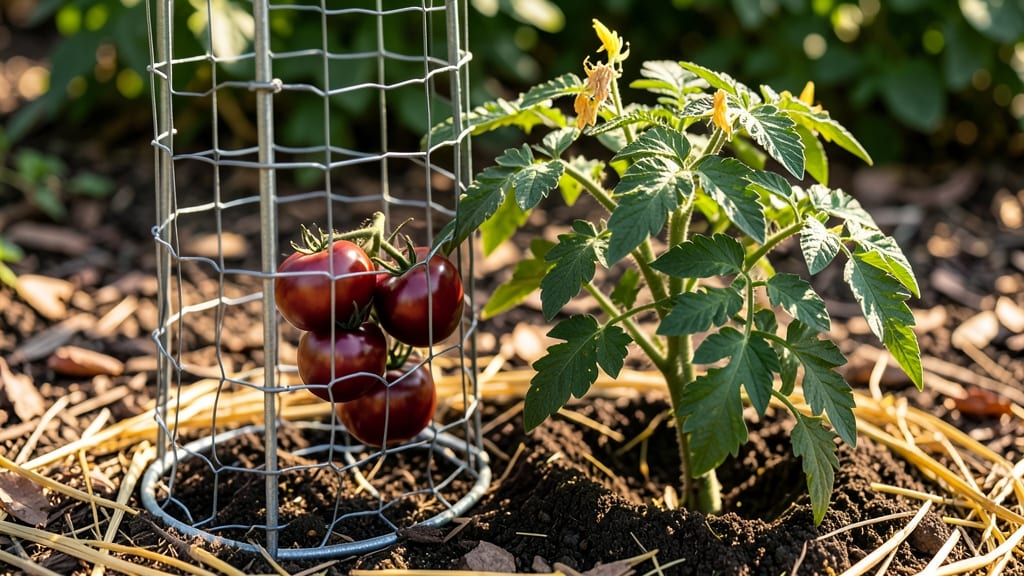
Cherokee Purple tomatoes are indeterminate—that's the secret most gardeners miss when planning their layout. 🌱 I've grown them for years, and the difference between determinate and indeterminate isn't just about size—it's about how you train, stake, and harvest them for maximum flavor and yield.
Indeterminate varieties like Cherokee Purple grow 6-10 feet tall with an open, sprawling habit, producing fruit all season long instead of one big harvest. Determinate tomatoes stop growing at a fixed height (usually 3-4 feet) and ripen all their fruit at once.
That means indeterminate plants need strong trellises or cages and regular pruning to direct energy into fewer, larger fruits with that signature deep purple hue.
You'll get continuous harvests from indeterminate plants—just keep picking those rich, beefsteak-sized tomatoes—and they thrive in containers or garden beds as long as they have support. The trade-off? They need more attention than determinate varieties, but the payoff is worth it for home gardeners who love fresh tomatoes all summer.
For best results, prune suckers weekly, stake early, and fertilize lightly during fruiting. The key is balancing growth and fruit production—too much nitrogen means leafy vines, not tomatoes. With proper care, you'll end up with heirloom-quality tomatoes that neighbors will beg for recipes from.
📚 In This Guide
- What you need
- Instructions
- Tips and common mistakes
- Wrapping up and next steps
What you need
- ● Seeds or Seedlings: Cherokee Purple tomato seeds (determinate or indeterminate variety—check seed packets!)
- ○ Optional: Transplants from a nursery (if starting late in the season).
- ● Growing Containers or Garden Space: For containers: 5-gallon pots or larger (at least 12–18 inches deep and 18–24 inches wide per plant).
- ● For in-ground: Full sun (6–8+ hours/day) and well-draining soil.
- ● High-Quality Potting Mix: 1–2 bags of organic, well-draining potting mix (avoid garden soil—it compacts!).
- ○ Optional: Perlite or vermiculite (1–2 cups) for aeration.
- ● Fertilizer: Balanced tomato fertilizer (e.g., 5-10-10 or organic options like compost or worm castings).
- ○ Optional: Slow-release pellets or liquid feed (like fish emulsion) for extra nutrients.
- ● Gardening Tools: Trowel or hand shovel
- ● Pruning shears (for indeterminate varieties—they grow tall!)
- ● Sturdy stakes or cages (4–6 ft tall for indeterminate; 2–3 ft for determinate)
- ● Watering Supplies: Watering can or hose with a gentle spray nozzle
- ○ Optional: Drip irrigation kit for consistent moisture.
- ● Mulch: Straw or shredded leaves (2–3 inches thick) to retain moisture and suppress weeds.
- ○ Protective Gear (Optional but Helpful): Row covers or shade cloth (if in hot climates)
- ● Insect netting (to deter pests like hornworms).
- ● Know your last frost date—Cherokee Purples thrive in warm weather (70–85°F).
- ● Determinate varieties are bushier and compact (great for containers or small spaces).
- ● Indeterminate varieties are vining and continuous producers (need more space and support!).
- ● Pro Tip: Test soil pH (aim for 6.0–6.8)—Cherokee Purples love slightly acidic soil!
How to identify and grow Cherokee Purple tomatoes correctly
This heirloom beauty thrives when you understand its growth habit first—here's how to grow it like a pro.
🌱 Step 1: Confirm the Growth Type Before Planting
Cherokee Purple is indeterminate, meaning it grows continuously until frost, producing fruit all season long. Determinate varieties stop growing at a certain height and produce fruit in one big flush. This affects everything from spacing to pruning to trellising.
Check your seed packet or plant tag—if it says "vining" or "bushless," that's your clue. Indeterminate types need strong support from day one. I always plant mine next to a 6-foot tall tomato cage or sturdy stakes, because those heavy, meaty fruits will snap stems without support.
☀️ Step 2: Plant in Full Sun with Proper Spacing
Give Cherokee Purple 6-8 hours of direct sun daily—it needs that intensity to develop its signature deep purple color and rich flavor. The vines will spread 3-4 feet outward, so space plants 2-3 feet apart in rows 3 feet apart to allow airflow and prevent disease.
I plant mine in raised beds filled with well-draining soil amended with compost. The extra organic matter helps those heavy fruits develop without cracking. Watch for the first true leaves—those are your signal to start fertilizing lightly with a balanced organic formula.
✂️ Step 3: Prune Strategically for Airflow and Fruit Quality
Unlike determinate varieties, Cherokee Purple benefits from pruning to focus energy on fewer, larger fruits. Remove suckers (the small shoots that form in the joint between the main stem and branches) when they're 2-3 inches long. I leave 2-3 main stems for better airflow, which prevents fungal diseases like early blight.
Never prune more than ⅓ of the plant at once. This variety is sensitive to stress, and heavy pruning can delay fruiting. The goal is to create an open, airy structure where sunlight reaches all the leaves and fruits. You'll know you're doing it right when you see new growth within 7-10 days of pruning.
💧 Step 4: Water Deeply and Consistently
Indeterminate tomatoes like Cherokee Purple need 1-1.5 inches of water weekly, delivered at the base of the plant. I water deeply 2-3 times per week, checking that the soil is moist 6 inches down. Inconsistent watering causes blossom-end rot, where the bottom of the fruit turns white and mushy.
Water in the morning so foliage dries quickly, reducing disease risk. Mulch heavily with straw to retain moisture and keep roots cool. You'll see the plant respond with steady, dark green leaves and strong vine growth—this tells me the watering routine is working.
🍅 Step 5: Harvest at Peak Ripeness for Best Flavor
Cherokee Purple tomatoes ripen unevenly, so check plants every 2-3 days starting in mid-summer. The color deepens to a rich, almost blackish-purple when fully ripe. Gently twist fruits from the vine—they should come off easily without tearing the stem.
Don't wait for uniform ripening if frost threatens. Even slightly underripe Cherokee Purples are delicious, though their full flavor develops with proper ripening. Store harvested tomatoes at 55-65°F in a single layer—they won't ripen further off the vine, but they'll keep for 2-3 weeks in ideal conditions.
Tips & tricks for growing Cherokee Purple tomatoes like a pro
These insights will help you avoid common pitfalls and maximize your harvest with this prized heirloom.
Support System Matters: In Step 1, when you plant near a 6-foot tall tomato cage, bury the cage halfway into the soil to stabilize it against wind. This prevents leaning and creates a stronger anchor for the heavy vines. I've seen Cherokee Purples snap stems when cages aren't properly secured—don't make my mistake! The extra stability also helps prevent fruit rot by keeping foliage off the ground.
Sunlight Secret: The 6-8 hours of direct sun in Step 2 is non-negotiable for that signature deep purple color. If your garden gets afternoon shade, position plants to catch morning sun first—this is when light intensity is highest. I've noticed the richest color development when plants receive at least 3 hours of midday sun, even if total hours are 6. Consider using reflective mulch to bounce extra light onto the plants if needed.
Pruning Precision: When removing those 2-3 inch suckers in Step 3, use clean pruning shears and make cuts at a 45-degree angle just above a leaf node. This technique promotes faster healing and prevents disease entry points. I've found that pruning in the morning gives plants the full day to recover before nighttime moisture can stress them. The 7-10 day regrowth window is your confirmation that you're not over-stressing the plant—new growth should appear within this timeframe.
Watering Wisdom: For the 1-1.5 inches of weekly water in Step 4, I recommend using a rain gauge to measure actual rainfall—this helps you adjust your supplemental watering. The key is consistent moisture at the 6-inch depth; I check this by inserting a screwdriver into the soil. If it goes in easily, you're good. If it meets resistance, water more. Mulching with straw isn't just about moisture—it also keeps soil temperatures stable, which is crucial for Cherokee Purples that prefer that 65°F range.
Pro Tips for Cherokee Purple Tomato Determinate Or Indeterminate
- These insights will help you avoid common pitfalls and maximize your harvest with this prized heirloom.
- Support System Matters: In Step 1, when you plant near a 6-foot tall tomato cage, bury the cage halfway into the soil to stabilize it against wind.
- Sunlight Secret: The 6-8 hours of direct sun in Step 2 is non-negotiable for that signature deep purple color.
Frequently asked questions
Got questions about the Cherokee Purple tomato?
You’re not alone! This stunning heirloom variety sparks curiosity—especially when it comes to growth habits, care, and yield. Here are answers to the most common queries to help you grow like a pro.
Is the Cherokee Purple tomato determinate or indeterminate?
The Cherokee Purple is indeterminate, meaning it grows tall and continuously produces fruit throughout the season. Unlike determinate varieties, it won’t stop growing or set all its tomatoes at once—just keep pruning and supporting it for a steady harvest!
How long does it take for Cherokee Purple tomatoes to ripen?
Expect 80–90 days from transplanting to ripe fruit, depending on your climate. Warmer regions may speed this up, while cooler areas might need a longer season. Start seeds indoors 6–8 weeks before the last frost for the best timing.
Can Cherokee Purple tomatoes grow in containers?
Yes! Since they’re indeterminate, choose a 5-gallon container or larger with drainage holes. Use a sturdy trellis or cage to support their vines. Just ensure they get 6–8 hours of sunlight daily and consistent watering—container-grown plants dry out faster.
What pests or diseases should I watch for with Cherokee Purple tomatoes?
Common issues include hornworms, aphids, and early blight. Use row covers for pests and rotate crops to prevent soil-borne diseases. Prune lower leaves for airflow, and avoid overhead watering to keep foliage dry.
Are Cherokee Purple tomatoes better for sauces or slicing?
While prized for their meaty, beefsteak-style slices, their rich flavor also makes them fantastic for sauces—just remove the seeds first. Their low water content and deep color shine in both applications!
Wrapping up and next steps
Choosing the right tomato variety for your garden—like the stunning Cherokee Purple—boils down to understanding its growth habit. Whether you prefer the structured determinate or the sprawling indeterminate style, this heirloom gem delivers rich flavor and deep color, no matter the choice! 🌱
Ready to grow? Start with healthy seedlings, plan your space wisely, and embrace the journey—your taste buds (and Instagram feed) will thank you! Plant those seeds or seedlings today and watch your garden thrive.