
Plants
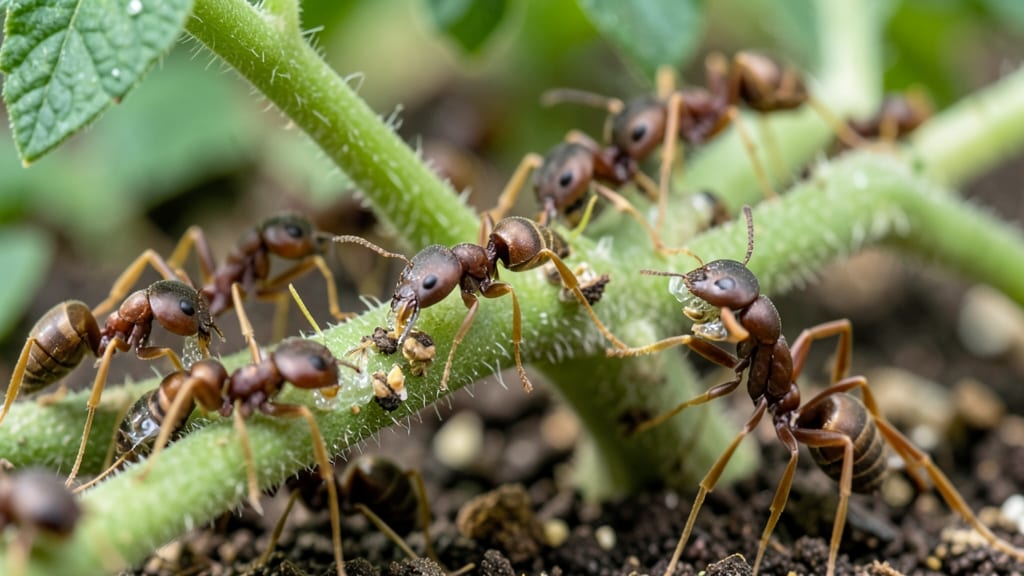
Ants don't eat tomato plants directly, but they create major problems by shielding pests like aphids, whiteflies, and mealybugs that drain nutrients from leaves and fruit. Their honeydew farming habits also attract more pests, turning your garden into an infestation hotspot.
While ants themselves aren't plant-eaters, their protective behavior toward sap-sucking pests creates a domino effect of damage. 🔥 These tiny farmers actually herd aphids and whiteflies, shielding them from predators and creating sticky honeydew trails that attract even more insects.
The result? Weakened tomato plants with yellowing leaves, stunted growth, and fruit that's less productive or even deformed. I've seen gardens where ant trails led to complete crop failure within weeks if left unchecked.
This indirect damage happens because ants establish "farms" where they tend to pests in exchange for honeydew - a sugary waste product that also coats leaves, blocking sunlight and promoting fungal growth.
The more ants you have, the worse the infestation becomes, as they actively recruit more pests to their protected colonies.
💡 In This Article
- How Ants Indirectly Harm Tomato Plants by Protecting Pests
- Natural and Chemical Ways to Remove Ants from Tomato Gardens
How ants indirectly harm tomato plants by protecting pests
Ants don't bite into tomato leaves or fruit, but they act as bodyguards for destructive pests through a fascinating mutualistic relationship.
These tiny insects establish "farms" where they tend to sap-sucking insects like aphids, whiteflies, and mealybugs in exchange for their sugary honeydew secretions. 🔥 The ants stroke the pests with their antennae, protecting them from predators and even carrying them to new feeding sites on your tomato plants.
This relationship creates a perfect storm of damage, as the protected pests can multiply unchecked while draining plant nutrients.
The real damage comes from this honeydew production - a sticky, sugary substance that coats leaves and fruit. Just 0.5 milliliters of honeydew per square foot can reduce photosynthesis by 20%, causing leaves to yellow and stunt growth.
Worse yet, this sticky residue attracts wasps, flies, and sooty mold fungi that further weaken the plant. I've observed gardens where ant trails led to complete leaf drop within 3-4 weeks as the combined effects of nutrient loss and fungal infections overwhelmed the tomato plants.
This pest-ant partnership explains why you might see ants marching along your tomato stems while the leaves develop strange curling patterns or black sooty mold growth.
The ants aren't eating your plants - they're creating an ecosystem that allows other insects to feast on them instead. 🌟 The most vulnerable parts are new growth and developing fruit, where the sap-suckers cause deformities and reduce yield by up to 50% in severe cases.
This indirect damage often goes unnoticed until plants show visible signs of stress.
What makes this relationship particularly insidious is how ants actively recruit more pests to their protected colonies. They use chemical trails to bring in reinforcements, creating what entomologists call "pest amplification." A single ant colony can support thousands of aphids, each capable of producing 20-30 new generations per year.
This exponential growth explains why small ant problems can spiral into full-blown garden infestations within a single growing season.
Understanding this mechanism helps explain why traditional pest control often fails. Simply spraying ants won't solve the problem if their protected pests remain. The key is breaking this symbiotic relationship by targeting both the ants and the insects they're protecting.
This requires a multi-pronged approach that addresses the entire ecosystem rather than just the visible ants. 💫
The visual signs of this damage are telling: look for curled leaves, sticky residue on stems, and black sooty mold growth that appears like someone smeared dirt on your plants.
These symptoms all point to the same underlying problem - ants creating protected pest colonies that are systematically draining your tomato plants of their vitality.