
Plants
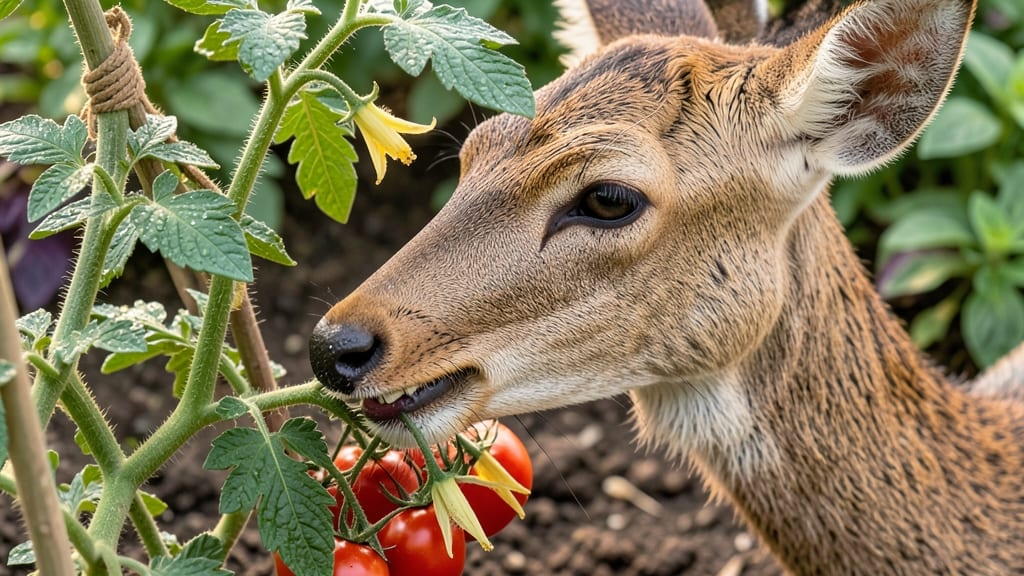
Deer do eat tomato plants, targeting leaves, stems, and sometimes fruit, as the plants contain nutrients and moisture they crave. Young seedlings are especially vulnerable, while mature plants may suffer damage but often recover with protection.
Tomato plants are a deer's garden buffet, especially when they're thirsty for water and protein-rich foliage. 🌱 These hungry browsers often zero in on tender young leaves first, then move to stems and fruit as the plants mature.
I've seen deer completely strip seedlings in a single night, leaving only bare stems behind. Even mature plants can suffer significant damage, though they sometimes bounce back with proper care and protection.
What makes tomato plants so appealing is their high water content and tender growth—both irresistible to deer during dry spells or late summer when natural food sources dwindle. The key to protecting your garden lies in understanding their feeding patterns and acting before they become a regular visitor.
💡 In This Article
- Why Deer Are Drawn to Tomato Plants
- Effective Deer Deterrents for Tomato Gardens
Why deer are drawn to tomato plants
Deer see tomato plants as a nutrient powerhouse, especially during late summer when natural food sources become scarce. These plants contain 85-95% water, which is a critical hydration source for deer during dry periods.
The tender foliage also provides 1.5-2% protein by dry weight, making it an attractive snack compared to mature grasses that offer only 0.5-1% protein. 🌿 The high moisture content in tomato leaves makes them particularly appealing when deer are searching for quick hydration, similar to how they target other succulent plants like lettuce or clover.
The feeding pattern changes dramatically based on plant maturity. Young seedlings, with their delicate stems and leaves, are the most vulnerable—deer can completely devour them in a single night, leaving only the main stem standing.
Mature plants with thicker stems and tougher leaves become less appealing, though deer will still nibble on the fruit when it ripens. What's fascinating is how deer use their 20/20 vision to spot green foliage from up to 100 yards away, making even small gardens visible targets.
Seasonal behavior plays a huge role too. In spring and early summer, deer focus on new growth, while late summer and fall become critical periods when they target ripe tomato fruit.
The smell of fermenting tomatoes can actually attract deer from half a mile away—this is why overripe fruit left on the vine becomes a magnet. 🍅 The key insight here is that deer aren't just eating randomly; they're making calculated choices based on what's most nutritious and hydrating at each stage of plant development.
What most gardeners don't realize is how deer use their sense of smell to identify stressed plants. When tomato plants experience drought or nutrient deficiencies, they emit volatile organic compounds that signal distress to deer.
This is why keeping your plants well-watered and healthy is your first line of defense—it makes them less attractive targets. The contrast between healthy, vibrant plants and those under stress is what deer use to decide where to feed.
Interestingly, deer have a preference hierarchy when it comes to tomato plant parts. Here's what they prioritize:
- New growth: The most tender leaves and stems (highest protein and moisture)
- Fruit: Especially when ripe or overripe (sweetness attracts them)
- Mature leaves: Only when other options are scarce (lower nutritional value)
This hierarchy explains why you might see deer completely ignoring your tomato plants one week, then suddenly stripping them the next—it's not random behavior, but a response to changing nutritional needs and availability of other food sources in their environment. 🌱