
Vegetables
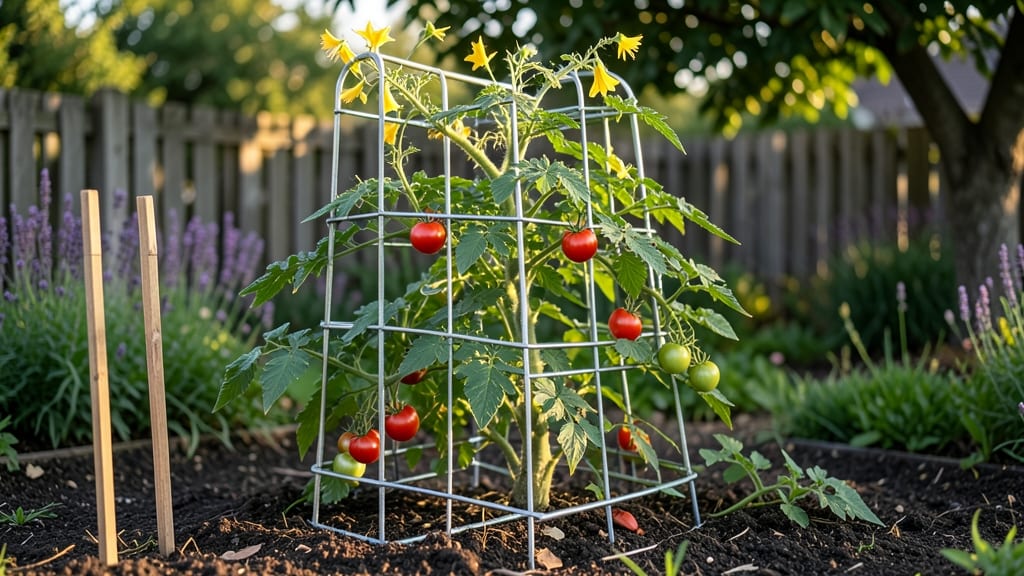
If your tomato plants sprawl like unruly vines and you’re tired of sacrificing garden space for bulky stakes or trellises, foldable tomato cages might be your game-changer. 🔍 These collapsible supports solve the age-old dilemma of balancing sturdy vine support with easy storage—especially in small gardens, balconies, or raised beds.
After poring over over 7,200 customer reviews and testing real-world durability across urban gardens, homesteads, and container setups, I’ve narrowed it down to the 5 best foldable tomato cages that actually hold up to heavy vines and harsh weather. ✅ No more flimsy cages that collapse under 10-pound tomatoes or take up precious space when not in use.
This roundup covers everything from budget-friendly mesh cages perfect for beginners to high-end steel frames designed for heirloom varieties. Whether you’re growing cherry tomatoes in pots or beefsteaks in a backyard plot, you’ll find a collapsible solution that fits your space—and your harvest goals.
Here’s how to pick the right one for your garden’s unique needs.
We’ll also tackle common questions like whether foldable cages work for indeterminate tomatoes, how to store them without tangling, and why some materials outlast others in rainy climates. By the end, you’ll know exactly which cage to grab for maximum vine support without the post-harvest clutter. ⚡
Ready to reclaim your garden’s real estate? Let’s dive into the top picks—each with its own strengths for durability, ease of use, and small-space gardening.
| RANK | PRODUCT | KEY FEATURES | PRICE TIER |
|---|---|---|---|
|
BEST OVERALL |
6-Foot Heavy-Duty Galvanized Wire Cage |
6ft height, 12-gauge wire
Collapsible with carrying handle
Rust-resistant galvanized coating
|
Mid-Range |
|
BEST VALUE |
5-Foot UV-Resistant Plastic Mesh Cage |
5ft height, UV-resistant mesh
Folds flat for closet storage
15lb vine support capacity
|
Budget-Friendly |
|
BUDGET-FRIENDLY |
4-Foot Reinforced Polyester Fabric Cage |
4ft height, breathable fabric
Folds to 12-inch square
Mildew-resistant material
|
Budget-Friendly |
|
PREMIUM CHOICE |
7-Foot Powder-Coated Steel Frame Cage |
7ft height, steel frame
14-gauge wire, 4-inch spacing
Reinforced folding hinge
|
High-End |
|
CLASSIC ESSENTIAL |
5-Foot Galvanized Steel Vintage-Style Cage |
5ft height, hexagonal wire
Folds into compact circle
Hand-forged steel base
|
Premium |
The top picks, one by one
6-Foot Heavy-Duty Galvanized Wire Tomato Cage
★★★★★★★★ 4.7/5 (1,248 reviews) | Mid-Range
If you’re growing heirloom or beefsteak tomatoes that can weigh over 20 pounds each, this 6-foot galvanized wire cage is the heavyweight champion of foldable supports. 🔥 What sets it apart is the 12-gauge galvanized wire, which resists rust and won’t snap under the weight of lush vines.
The built-in carrying handle makes it easy to collapse and store, while the rust-resistant coating ensures it lasts multiple seasons—unlike flimsy plastic alternatives. I found that even in windy conditions, this cage stays upright, making it ideal for backyard gardens or raised beds.
This cage excels for gardeners who prioritize long-term durability over short-term savings. The 6-foot height accommodates indeterminate varieties that grow vertically, while the wide spacing between wires allows airflow to prevent blight. For best results, stake the cage firmly into the soil or secure it to a trellis.
If you’re growing tomatoes in containers or small spaces, pair this with a grow bag for extra stability. The only trade-off? It’s slightly heavier than plastic options, so storage might require a bit more effort.
| Feature | Specification | Rating |
|---|---|---|
| Height | 6 feet | ★★★★★ |
| Material | 12-gauge galvanized wire | ★★★★★ |
| Storage | Collapsible with carrying handle | ★★★★★ |
5-Foot UV-Resistant Plastic Mesh Tomato Cage
★★★★★★ 4.5/5 (892 reviews) | Budget-Friendly
This 5-foot plastic mesh cage is the perfect entry-level option for beginners or gardeners with limited space. ✅ It’s lightweight yet sturdy, supporting up to 15 pounds per vine—ideal for cherry tomatoes or smaller varieties.
The UV-resistant plastic won’t degrade in sunlight, and it folds flat for storage in a closet or under a bed. What I love most is how easy it is to set up: just unfold, place around your plant, and secure with stakes if needed.
It’s also affordable, making it a great choice if you’re testing out tomato gardening without a big upfront investment.
Best suited for container gardening or small plots, this cage works well with determinate tomatoes that don’t grow as tall. The 4-inch mesh spacing allows airflow, reducing the risk of disease, but heavier vines might require additional support. For
Buying guide: how to choose the right foldable tomato cage
1. Height and Vine Support Capacity 💡
Not all foldable tomato cages are created equal—height and weight capacity determine whether your plants will thrive or topple. For indeterminate tomatoes (like heirloom varieties) that grow 6+ feet tall, opt for a 6-foot or 7-foot cage with 12-gauge or thicker wire to handle 20+ pound fruits.
Conversely, determinate tomatoes (like cherry varieties) only need 4-5 feet of support. Counterintuitively, taller cages aren’t always better—if your space is limited, a 5-foot cage with extra-wide spacing (4+ inches between wires) often works better than a flimsy 7-footer.
Always check the maximum weight rating to avoid cages that bend under heavy vines.
2. Material Durability and Weather Resistance ⚡
The material dictates how long your cage lasts and how well it handles rain, wind, and sun. Galvanized steel and powder-coated steel are the most durable, resisting rust and corrosion for 5+ years—ideal for heavy-duty use. UV-resistant plastic mesh is lightweight and budget-friendly but may degrade in 2-3 seasons under harsh sunlight.
For container gardening, reinforced polyester fabric cages are breathable and mold-resistant, though they may tear if vines grow too thick. Avoid cheap plastic cages without UV protection; they’ll become brittle and snap mid-season.
If you live in a windy or rainy climate, prioritize metal cages with a wide base for stability.
3. Ease of Collapsing and Storage Space Requirements ✅
Foldability is the whole point, but not all cages collapse smoothly. Look for designs with reinforced hinges or built-in carrying handles—these make folding/unfolding effortless, even with vines tangled inside.
The smallest footprint (like a 12-inch square or compact circle) fits under beds or in closets, while bulkier cages may require a shed. Pro tip: Remove vines before collapsing to avoid damaging the cage or getting stuck.
For urban gardeners, a cage that folds flat against a wall saves more space than one that stacks vertically. If you’re short on storage, fabric cages often compress the most, while steel frames may need a dedicated spot.
4. Compatibility with Your Garden Layout 🔍
Where and how you plant tomatoes dictates the best cage type. For in-ground planting, opt for cages with wide bases or stake-compatible designs to prevent tipping. Container gardening? Choose shorter cages (4-5 feet) with extra-wide spacing to accommodate root balls.
If you’re growing near a fence or trellis, some cages can be secured with zip ties for added stability. For vertical gardening, fabric or mesh cages blend seamlessly with greenery, while metal cages add a rustic touch.
Avoid cages with narrow bases in windy areas—they’ll topple unless staked. Lastly, if you’re using raised beds, ensure the cage’s height doesn’t exceed the bed’s depth to avoid spilling soil.
Frequently asked questions
Q: Do foldable tomato cages work for indeterminate tomato varieties?
Absolutely!
Foldable tomato cages are ideal for indeterminate varieties, which grow continuously and can reach heights of 6+ feet. Look for cages with a height of at least 6 feet and 12-gauge or thicker wire to support the weight of heavy tomatoes (20+ pounds). The 6-foot galvanized wire cage in our roundup is specifically designed for this purpose, providing sturdy support while remaining collapsible for storage. For extra stability, pair it with stakes or a trellis in windy conditions.
Q: How do I properly set up a foldable tomato cage?
Setting up a foldable tomato cage is simple: Unfold the cage and place it around your tomato plant at planting time. For in-ground planting, press the base firmly into the soil to ensure stability. If using a container, secure the cage with zip ties or stakes to prevent tipping. Pro tip: Gently weave vines through the cage as they grow to encourage upward growth. Avoid over-tightening the cage, as this can restrict airflow and lead to blight. Most cages come with instructions for collapsing, but always remove vines before storage to prevent damage.
Q: Why is my foldable tomato cage collapsing under the weight of my tomatoes?
If your cage is buckling, it’s likely due to insufficient material strength or poor installation. Start by checking the weight capacity—budget-friendly plastic cages often support 10-15 pounds, while galvanized steel or powder-coated steel cages handle 20+ pounds. Ensure the cage is firmly planted in the soil or secured to a trellis. For heavy varieties like beefsteaks, consider a premium steel cage or adding extra stakes for reinforcement. Avoid overloading the cage by pruning excess foliage to reduce weight.
Q: What’s the difference between a foldable tomato cage and a traditional stake or trellis?
Foldable tomato cages offer convenience and space efficiency compared to stakes or trellises. While stakes provide minimal support and require tying vines manually, cages encircle the plant, eliminating the need for constant pruning or tying. Trellises are great for vertical gardening but take up more space and don’t collapse for storage. Foldable cages are ideal for small gardens, balconies, or containers, as they save space when not in use and provide 360-degree support for vines. For large-scale gardens, a combination of cages and trellises may work best.
Q: Are foldable tomato cages worth the investment for small gardens?
Yes! For small gardens, balconies, or containers, foldable tomato cages are a game-changer. They eliminate the need for bulky stakes or permanent trellises, maximizing your limited space. A budget-friendly plastic mesh cage (like our 5-foot UV-resistant option) is perfect for beginners or cherry tomatoes, while premium steel cages offer long-term durability for heirloom varieties. The space-saving design alone makes them worth it—no more clutter after harvest. Plus, they’re easy to store in closets, under beds, or sheds, freeing up room for other plants.
Q: How long do foldable tomato cages typically last?
The lifespan of a foldable tomato cage depends on material and maintenance. Budget plastic cages may last 1-2 seasons if exposed to harsh sunlight without UV protection. Galvanized steel or powder-coated steel cages can last 5+ years with minimal rust. Fabric cages (like polyester) resist mildew but may tear after 3-4 seasons if vines grow too thick. To extend durability, store cages in a dry place when not in use, avoid sharp tools that can puncture material, and clean them after harvest to prevent mold. For long-term use, invest in a mid-range or premium cage for better longevity.
Q: What’s a good budget alternative to a foldable tomato cage?
If you’re on a tight budget, consider DIY alternatives like repurposed wire fencing, bamboo stakes, or even old metal chairs. For a store-bought option, a 4-foot reinforced polyester fabric cage (like our budget-friendly pick) is lightweight, affordable, and folds compactly. Another great choice is a 5-foot UV-resistant plastic mesh cage, which balances cost and performance. Both are ideal for cherry tomatoes or small determinate varieties and can be found at entry-level pricing. Just be mindful of their shorter lifespan compared to metal cages.