
Companion Plants
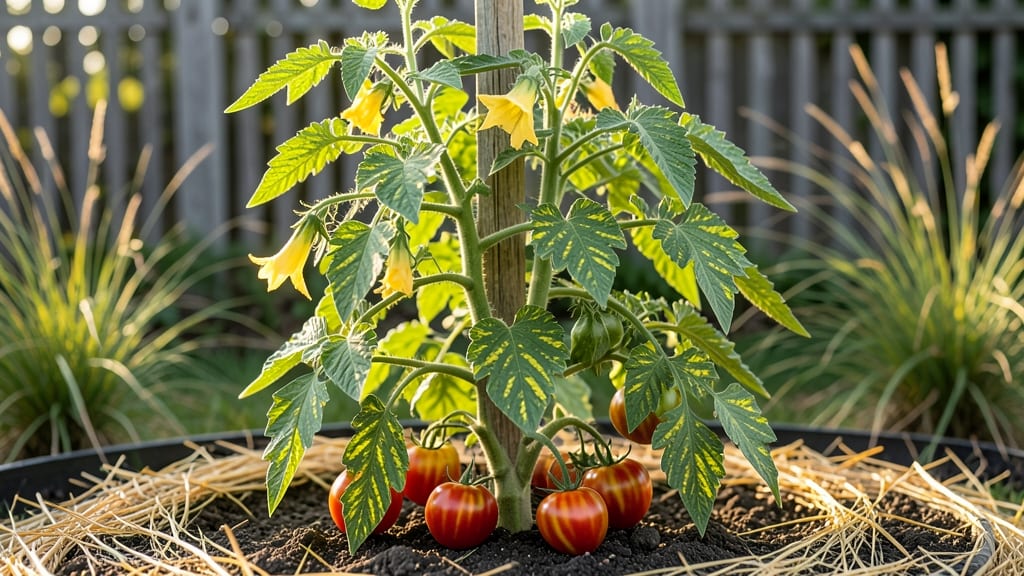
Growing German Striped tomato plants means bold purple-streaked fruit that tastes like summer in every bite. 🌱 I've grown this heirloom for three seasons now, and the key to their success lies in balancing their unique needs with straightforward care—starting with the right soil and sunlight mix.
These plants thrive in full sun (at least 6-8 hours daily) and well-draining soil rich in compost. The stripes fade in shade, and the fruit splits if watered inconsistently.
My first crop taught me that patience pays off—wait until soil warms to 60°F before planting, even if your local nursery says it's safe.
By mid-summer, you'll be harvesting 1-pound fruits with a sweet-tart flavor that keeps giving until frost. The disease resistance means fewer sprays and more time enjoying the showstopping stripes on your plate.
Perfect for containers, trellises, or garden beds—just give them space to sprawl or climb. Here's how to keep them thriving from seed to harvest.
📚 In This Guide
- What you need
- Instructions
- Tips and common mistakes
- Wrapping up and next steps
What you need
- ● German Striped tomato seeds or seedlings: 2–4 plants (depending on space and yield goals). Look for heirloom or disease-resistant varieties for best results.
- ● Well-draining potting mix or garden soil: 5–10 gallons per plant (or a high-quality tomato-specific blend for containers).
- ● Containers (if growing indoors or in small spaces): 5-gallon pots or larger (at least 12–18 inches deep) with drainage holes.
- ● Fertilizer: Balanced organic fertilizer (e.g., 10-10-10) or compost (apply at planting and mid-season).
- ● Tomato cages or stakes: 4–6 feet tall to support vines (avoid plastic cages if prone to disease).
- ● Mulch: Straw or shredded leaves to retain moisture and suppress weeds.
- ● Gloves and gardening shears: For planting and pruning (sterilize shears with rubbing alcohol to prevent disease).
- ● Watering can or hose with a gentle spray nozzle: Avoid soaking leaves to reduce fungal risks.
- ● Sunlight access: 6–8+ hours of full sun daily (partial shade in hot climates can help).
- ○ pH test kit (optional but helpful): Ideal soil pH: 6.0–6.8 (amend with lime or sulfur if needed).
- ○ Companion plants (optional): Basil, marigolds, or borage to deter pests and boost growth.
Step-by-step instructions for growing German Striped tomatoes
Here’s how to grow these striking striped beauties—disease-resistant and packed with flavor.
🌱 Step 1: Start Seeds Indoors for a Head Start
German Striped tomatoes thrive when started indoors 6-8 weeks before your last frost date. Fill 2-3 inch deep seed-starting trays with sterile potting mix (never garden soil—it’s too dense and may harbor pathogens). Plant 2 seeds per cell, just ¼ inch deep, since they germinate best in warm, moist conditions. I like to use biodegradable pots—they eliminate transplant shock later.
Keep the soil consistently moist but not soggy. A humidity dome or plastic wrap helps maintain warmth and moisture, which speeds germination to 7-14 days at 75-85°F. Once sprouts appear, remove the dome immediately to prevent damping-off—a fungal disease that collapses seedlings overnight. You’ll see the first true leaves emerge in 2-3 weeks, signaling it’s time to move them under grow lights.
☀️ Step 2: Provide Optimal Light and Fertility
German Striped tomatoes need 14-16 hours of light daily to prevent leggy growth. A full-spectrum LED grow light positioned 2-4 inches above seedlings works best. Raise it as plants grow to maintain that distance. Without enough light, stems stretch thin and pale, and leaves space too far apart—signs your seedlings are desperate for more photons.
Once seedlings have 3-4 true leaves, fertilize lightly with a balanced liquid fertilizer (10-10-10) diluted to half-strength. Over-fertilizing at this stage burns tender roots. I like to feed every 10-14 days until transplanting. Harden off seedlings by gradually exposing them to outdoor conditions for 1-2 weeks before moving them to the garden.
🪴 Step 3: Transplant with Care for Strong Roots
Choose a full-sun location (6+ hours of direct sunlight daily) with well-draining soil amended with 2-3 inches of compost. Dig holes twice as wide as the root ball but no deeper—burying stems too deep encourages rot. Space plants 24-36 inches apart to allow airflow and reduce disease risk. German Striped tomatoes are disease-resistant, but crowded plants still suffer from fungal issues.
Water deeply at transplanting to settle the soil around roots, then maintain 1-1.5 inches of water per week, adjusting for rain. Mulch with 2-3 inches of straw to retain moisture and suppress weeds. You’ll see new growth within 7-10 days—a sign the plants have established roots. Stake or cage them early to support heavy fruit without bending stems.
✂️ Step 4: Prune and Support for Maximum Yield
German Striped tomatoes benefit from suckering—removing the small shoots that form in the leaf axils. Pinch these off when they’re 1-2 inches long to redirect energy to fruit production. Prune weekly during the growing season, but avoid heavy pruning late in the season—you want leaves to photosynthesize for ripening fruit.
Support plants with strong cages or stakes to prevent sprawling. The striped fruit can weigh down branches, so tie heavy stems to supports as they grow. Harvest when tomatoes turn deep red with yellow stripes—they ripen unevenly, so check plants every 2-3 days. Use pruners to twist fruit gently from the vine to avoid damaging stems.
Tips & tricks for growing stunning Striped tomatoes
Growing these striking striped beauties requires a few key strategies that make all the difference between a decent harvest and a spectacular one. Here's what I've learned from years of growing German Striped tomatoes.
Seedling Heat Control: Maintaining that 75-85°F temperature range during germination is critical—it's the sweet spot for consistent, rapid sprouting. I keep my seed trays on a heat mat set to 80°F and cover them with plastic wrap to trap warmth. If your kitchen runs cooler, consider using a small greenhouse or seedling heat mat. The goal is to get those seeds sprouting in 7-14 days without giving damping-off disease a chance to strike.
Lighting Strategy: The 14-16 hours of light daily requirement isn't just about duration—it's about intensity too. I've found that using a full-spectrum LED grow light positioned 2-4 inches above seedlings creates the perfect environment. Here's my trick: raise the light as plants grow to maintain that distance, and supplement with a timer if you're not home during daylight hours. Without enough light, you'll notice stems stretching toward the light source like they're reaching for salvation—this is called "legginess," and it weakens your plants.
Transplanting Technique: When it comes time to transplant, I can't stress enough how important proper hole preparation is. Digging holes twice as wide as the root ball creates space for roots to expand without resistance. The key is to avoid burying stems too deep—this can cause rot and stunted growth. Think of it like planting a tree: the root flare should be visible above soil level. I also water deeply right after transplanting to help settle the soil around roots, which gives your plants an immediate boost.
Pruning Precision: Those 1-2 inch suckers you remove weekly might seem insignificant, but they're actually stealing energy from your main plant. I use clean pruning shears to make quick cuts just above the leaf axil where the sucker emerges. The goal is to redirect that energy to fruit production. Here's my schedule: I prune every Monday morning during the growing season, always checking for new suckers first. This consistent approach keeps my plants productive and healthy throughout the season.
Pro Tips for German Striped Tomato Plants
- Growing these striking striped beauties requires a few key strategies that make all the difference between a decent harvest and a spectacular one.
- Seedling Heat Control: Maintaining that 75-85°F temperature range during germination is critical—it's the sweet spot for consistent, rapid sprouting.
- Lighting Strategy: The 14-16 hours of light daily requirement isn't just about duration—it's about intensity too.
Frequently asked questions
Got questions about growing German Striped tomato plants? You’re not alone—this striking variety has unique needs and quirks! Here are answers to the most common queries to help you grow bold, stripe-adorned tomatoes with confidence.
What’s the best time to plant German Striped tomatoes?
Start seeds indoors 8–10 weeks before your last frost (around mid-March for most U.S. zones). Transplant seedlings outdoors after soil reaches 55–65°F and nighttime temps stay above 50°F. For warm climates, direct-sow after frost risk passes—just ensure consistent moisture to prevent stress.
How do I prevent the stripes from fading in hot weather?
The vibrant stripes can dull under intense sun. Provide afternoon shade (use shade cloth or plant near taller companions like basil or corn) and water deeply at the base (avoid wetting leaves). Mulch with straw to keep roots cool—this preserves color and boosts flavor too!
Are German Striped tomatoes truly disease-resistant?
Yes! They’re bred to resist verticillium and fusarium wilt, common killers of heirloom tomatoes. However, they’re still vulnerable to blight and pests. Rotate crops yearly, remove infected leaves promptly, and use neem oil or companion plants like marigolds for extra protection.
Can I grow German Striped tomatoes in containers?
Choose a 5-gallon container minimum (bigger is better) with drainage holes. Use a lightweight potting mix and a tomato cage or trellis to support vines. Place in full sun and fertilize weekly with balanced liquid fertilizer—just monitor moisture closely, as containers dry out faster.
What should I do if my German Striped tomatoes crack?
Cracking usually stems from uneven watering or rapid growth. Water consistently (1–2 inches per week) and mulch heavily to stabilize soil moisture. For cracked fruits, harvest them early—they’re still edible! Prune lower leaves to improve airflow and reduce stress on the plant.
Are there any great companion plants for German Striped tomatoes?
Pair them with basil, marigolds, or onions to deter pests and improve growth. Avoid planting near brassicas (kale, cabbage) or corn (they compete for nutrients). Borage is a bonus companion—it attracts pollinators and may enhance stripe vibrancy!
Wrapping up and next steps
Growing German Striped tomato plants brings bold flavors and stunning visuals to your garden—plus, their disease resistance makes them a dream for both beginners and seasoned gardeners! 🌱 With the right companion plants and care, you’ll enjoy a bountiful harvest that’s as rewarding as it is beautiful.
Ready to take the next step? Start by sketching your garden layout and pairing these striped stars with basil, marigolds, or onions for the ultimate pest-free tomato patch. Happy planting!