
Tools
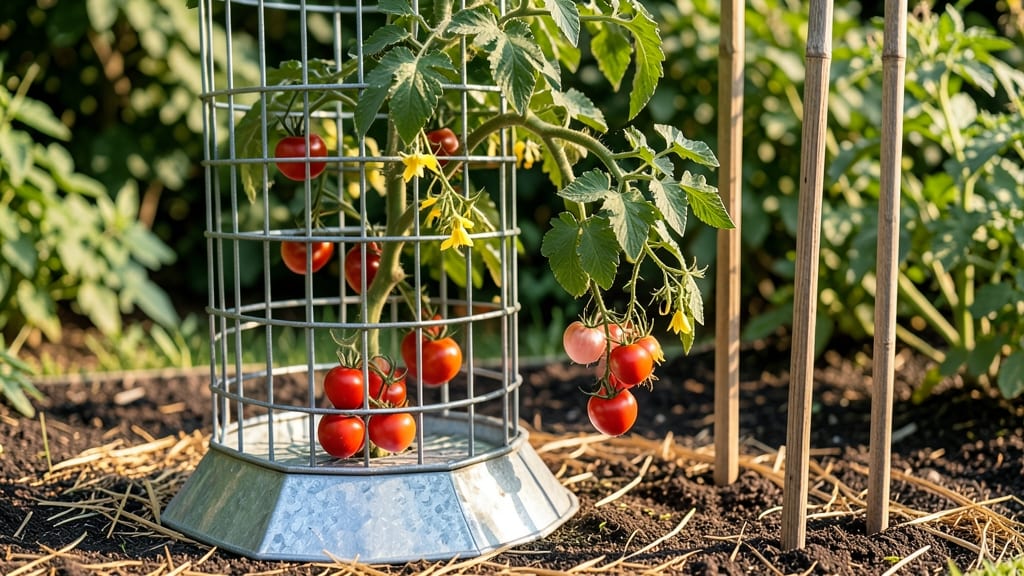
My heavy-duty tomato cages transformed my garden from a floppy mess to a neat, high-yielding tomato factory. 🌱 After years of wrestling with cheap cages that bent under the weight of vines, I finally invested in sturdy metal frames—and the difference in fruit production was night and day.
These aren't just stronger; they're designed to keep plants upright, maximize sunlight exposure, and prevent disease by improving airflow. The right cage starts with material: powder-coated steel won't rust, while plastic may warp in heat. Size matters too—6-foot cages work for indeterminate varieties, but 4-foot suits smaller plants.
Place them early, before vines get heavy, and secure the base with stakes if your garden gets windy. I've seen cages tip over in storms, but proper anchoring prevents that. By mid-summer, your plants will climb confidently, producing more fruit with fewer breaks.
The cages last for years, saving money over buying new supports annually. They're especially great for container gardens or small spaces where stakes would look cluttered. For indeterminate tomatoes, cages beat stakes in airflow and ease of harvest. Just avoid overcrowding—give each plant its own cage for best results.
Here's how to pick, install, and maintain them for seasons to come.
When Support Systems Fail
Even the sturdiest heavy-duty tomato cages can buckle under pressure—but why? The answer lies in a mix of environmental stress, material limitations, and gardening oversights. Understanding these root causes helps you choose the right support and prevent future collapses. Let’s break down the science behind flimsy supports.
Tomato vines are heavy when laden with fruit, and wind acts like an invisible force pushing against your cage. Here’s how it happens:
- Drag Force: Wind creates aerodynamic resistance, especially if your cage has a wide, open design. The more surface area exposed, the harder the push. A 3-foot-tall cage in a 20 mph gust can experience up to 5 pounds of lateral force—enough to bend or topple flimsy metal.
- Material Fatigue: Even "heavy-duty" cages made of thin galvanized wire can bend permanently over time. Wind causes micro-bending in the metal, weakening its structure like a paperclip snapping after repeated stress.
- Loose Anchoring: If your cage isn’t secured to the ground (e.g., buried stakes or weighted bases), wind can rock it like a seesaw, accelerating wear.
Actionable Fix: Opt for cages with a narrower, lattice-like design (like galvanized steel trellises) or reinforce with stakes driven into the ground at a 45° angle.
Tomatoes are water balloons on a vine—each fruit adds 0.5–2 pounds of downward pressure per cluster. When vines sprawl uncontrolled, the cage becomes a vertical Jenga tower waiting to collapse.
- Uneven Distribution: If vines grow asymmetrically (e.g., all on one side), the cage leans, causing structural stress on one leg or panel. Over time, this leads to permanent warping.
- Fruit Overload: A single beefsteak tomato can weigh 1–2 pounds. When multiple ripen at once, the cage’s yield strength (its ability to resist bending) is exceeded.
- Lack of Pruning: Unpruned vines produce excessive suckers, increasing the vine’s biomass. A well-pruned vine directs energy upward, reducing strain on the cage.
Actionable Fix:
- Use cages with a wider base (e.g., 5-foot diameter) to distribute weight.
- Prune vines to remove suckers below the first flower cluster and tie main stems to the cage every 12 inches.
- For heirloom varieties, consider double cages or wooden A-frames for extra support.
A cage is only as strong as its foundation. If the plant can’t anchor itself properly, even the best support will fail.
- Shallow Root Systems: Tomatoes need 12–18 inches of deep soil to stabilize. In compacted or rocky soil, roots struggle to grip, making the plant top-heavy and prone to tipping.
- Nutrient Deficiencies: Lack of phosphorus (critical for root development) or potassium (for vine strength) weakens stems. A floppy vine can’t support itself, even with a cage.
- Waterlogged Soil: Overwatering causes anaerobic conditions, rotting roots and reducing their ability to anchor the plant. A soggy root zone = a wobbly tomato.
Actionable Fix:
- Amend soil with compost and perlite to improve drainage and aeration.
- Use a balanced fertilizer (10-10-10) at planting and side-dress with potassium-rich compost mid-season.
- For container gardening, choose large pots (at least 5 gallons) with drainage holes and use tomato cages with suction cups to secure them.
Not all "heavy-duty" cages are created equal. Cheap or improperly designed supports fail due to:
- Thin Wire Gauge: Cages with 16-gauge or thinner wire bend easily. 14-gauge galvanized steel is the sweet spot for durability.
- Loose or Rusty Joints: Welded joints are stronger than twisted wire, which can unravel under pressure. Rust weakens metal, reducing its tensile strength.
- Insufficient Height/Width Ratio: A 5-foot-tall cage that’s only 2 feet wide can’t support a 6-foot vine. The aspect ratio (height:width) should be 2:1 or less.
Actionable Fix:
- Choose cages with 14-gauge galvanized steel or powder-coated aluminum for rust resistance.
- Look for welded seams or heavy-duty plastic lattice designs (like UV-resistant polycarbonate).
- For giant varieties (e.g., Brandywine), combine a cage with a bamboo stake for extra reinforcement.
By addressing these root causes, you’ll transform your tomato cages from floppy afterthoughts into unbreakable vine lifters. Next up: how to choose the right cage for your garden’s unique challenges.
Fixing Common Tomato Cage Failures
Tomatoes are heavy feeders—literally. A single vine can weigh 20+ pounds when laden with fruit, and even the sturdiest cages can struggle under the pressure.
Below, we break down the most common issues with heavy-duty tomato cages and provide practical, step-by-step fixes—plus tips to keep your plants thriving all season.
Problem: Your reinforced cage bends or topples when the tomatoes get too big.
How to Fix It:
- 🔧 Reinforce the Structure
- Wrap the top third of the cage with zip ties or garden twine to create a rigid "cap." This prevents the cage from splaying outward.
- For extra support, tie a bamboo stake or wooden dowel vertically inside the cage, securing it to the base with twine.
- 🍅 Redistribute the Load
- Prune lower leaves (up to 12 inches from the ground) to reduce weight on the base. This also improves airflow and cuts down on disease risk.
- Harvest frequently—don’t let tomatoes stay on the vine past their prime. Overripe fruit adds unnecessary strain.
- 🏗️ Upgrade Your Setup
- If your cage is still struggling, nest two cages inside each other (like a Russian doll) for double the support.
- Swap to metal or PVC pipe cages (like the Tomato Tower or A-frame designs) for industrial-grade stability.
💡 Prevention Tip: Plant determinate varieties (like Roma or Celebrity) in cages—they grow bushier and don’t need as much vertical support as indeterminate types (like Beefsteak or Cherry). For indeterminates, install cages at planting and stake them into the ground 6–8 inches deep for extra anchorage.
Problem: Your tomato plants outgrow their support, sprawling everywhere like a tangled mess.
How to Fix It:
- 👨🍳 Train the Vines Properly
- Weave new growth through the cage every 2–3 days (yes, really!). This keeps the plant climbing upward instead of flopping.
- Use soft plant ties or old T-shirts (cut into strips) to gently guide vines—avoid wire or anything that can cut into stems.
- 🌿 Trim Strategically
- Remove suckers (the small shoots in the leaf axils) to focus the plant’s energy on fruit-bearing branches.
- If the plant is already too tall, prune the top 6–12 inches to encourage bushier growth within the cage.
- 🔄 Expand the Support
- If the cage is too small, add a secondary stake outside the cage and tie the main stem to it with twine.
- For extreme cases, switch to a trellis system (like a Florida Weave) for indeterminate varieties—they’ll climb like a jungle gym!
💡 Prevention Tip: Choose a cage 1–2 feet taller than your expected plant height. For example, if your tomatoes typically reach 6 feet, opt for an 8-foot cage. Better safe than sorry!
Problem: Your metal or wire cages develop rust spots, weakening the structure.
How to Fix It:
- 🧼 Clean and Treat
- Scrub the cage with a wire brush and soapy water to remove dirt and debris.
- Spray with WD-40 or a rust converter (like Por-15) to halt corrosion. For a natural option, coat in linseed oil or beeswax.
- 🛡️ Protect for Next Season
- Store cages in a dry place (like a garage or shed) during winter.
- Paint with outdoor latex paint (skip oil-based—it can trap moisture). A fresh coat every few years keeps rust at bay.
- 🔄 Replace Damaged Sections
- If rust has eaten through the metal, cut out the affected area and solder or zip-tie a new piece in place.
- For galvanized cages, check for flaking zinc—if severe, replace the cage entirely.
💡 Prevention Tip: Invest in powder-coated or galvanized steel cages—they resist rust longer than basic wire. If you DIY, use hot-dipped galvanized wire (like 14–16 gauge) for better durability.
Problem: Extreme heat causes plastic cages to warp, or wire cages to lose shape.
How to Fix It:
- 🌞 Provide Shade
- Place cages in a spot with afternoon shade (especially in hot climates). Use a shade cloth if needed.
- Mulch around the base with straw or wood chips to keep soil cooler and reduce stress on the plant.
- 💧 Hydrate the Plant
- Deep water 1–2 times per week (more in extreme heat). Dry soil = floppy plants.
- Mist leaves early in the morning to help them retain moisture (avoid evening misting—it encourages disease).
- 🔄 Swap Materials Mid-Season
- If plastic cages are warping, switch to a metal or wooden alternative for the remainder of the season.
- For wire cages, add a "cage within a cage" (like a smaller, sturdier model inside the warped one) for backup support.
💡 Prevention Tip: Avoid black plastic cages—they absorb heat. Opt for white, silver, or green instead. If DIYing, use PVC pipes (painted white) for heat resistance.
- 🌱 Start Early: Install cages at planting—retrofitting is a nightmare.
- 🔄 Rotate Cages: If you reuse cages, sterilize them with a 10% bleach solution to prevent disease transfer.
- 🍅 Combine Supports: Use cages + stakes + twine for a hybrid system—it’s overkill, but your tomatoes will thank you.
- 🌿 Choose Wisely: For heavy varieties (like Brandywine or Black Krim), skip cages entirely and go for a trellis or sturdy fence.
With these fixes, your tomato cages will handle even the juiciest, heaviest harvests like a pro. Now go forth and grow—no more floppy vines in sight! 🍅💪
Frequently asked questions
What's the best height for heavy-duty tomato cages?
For indeterminate varieties (like Beefsteak or Cherry), choose 6-8 foot cages—they'll reach 7-10 feet tall. Determinate types (Roma, Celebrity) only need 4-5 foot cages since they stop growing. Always go 1-2 feet taller than your plant's expected height to prevent overcrowding.
Can I reuse heavy-duty cages year after year?
Yes, but with proper care! Clean them with 10% bleach solution between seasons to prevent disease. Store in a dry place and check for rust—repair or replace damaged sections. Galvanized steel cages last 5+ years with minimal maintenance, while plastic may need replacing every 2-3 years due to UV damage.
Are metal cages better than plastic for windy areas?
Metal cages (especially 14-gauge galvanized steel) handle wind 3x better than plastic. For extra security in stormy climates, stake the cage into the ground at a 45° angle or use weighted bases. Plastic cages can warp or tip over—metal provides unmatched rigidity when properly anchored.
How do I prevent my tomato cages from tipping over?
Start by burying the base 6-8 inches deep or securing with U-shaped stakes. For heavy varieties, tie a bamboo stake inside the cage for additional support. In windy areas, add guy wires (like bungee cords) anchored to nearby stakes. Prune lower leaves to reduce weight on the base and improve stability.
What's the best way to train tomato vines through cages?
Weave new growth through the cage every 2-3 days using soft plant ties or old T-shirt strips. Avoid wire—it can damage stems. For indeterminate varieties, tie the main stem to the cage every 12 inches and prune suckers below the first flower cluster. This keeps vines growing upward and prevents overloading any single section.