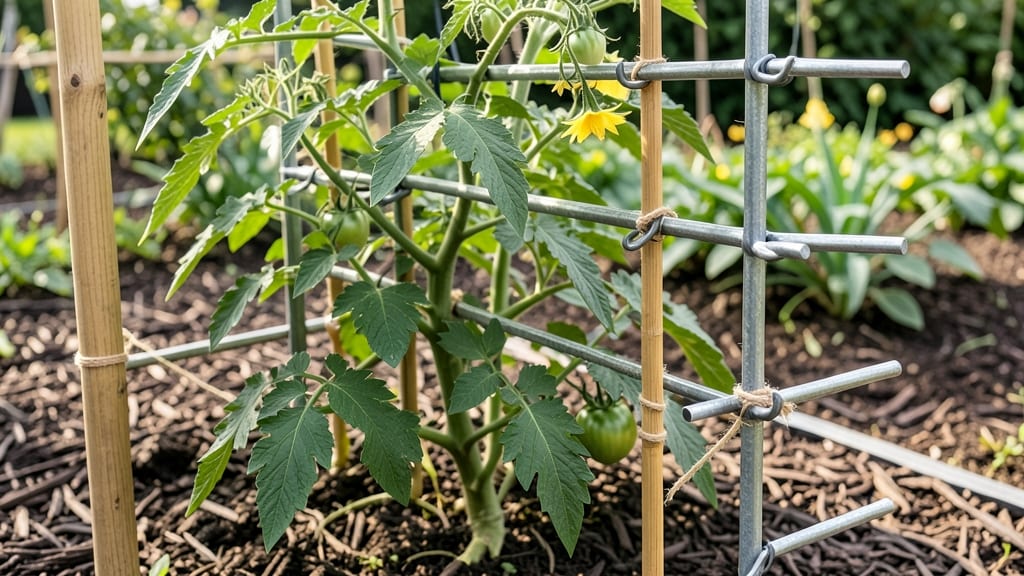
Buying guide: how to choose the right hook and wicket tomato trellis
1. Weight Capacity and Hook Strength 💡
The most critical factor in a hook and wicket trellis is its weight capacity. Indeterminate tomato varieties like Brandywine or Cherokee Purple can produce 20+ pound vines when fully loaded with fruit. A flimsy trellis will sag, break, or collapse under the weight, ruining your harvest.
I recommend choosing a trellis with hooks rated for at least 15 pounds for medium varieties and 30+ pounds for heirlooms. Counter-intuitively, thicker gauge wire (10-12 gauge) provides better support than thin wire, even if it looks less "aesthetic."
For example, a galvanized steel trellis with 30-pound hooks will handle Sungold cherry tomatoes just as well as it does massive beefsteak varieties.
2. Height and Garden Space Requirements ⚡
Height matters more than you think—too short, and your tomatoes won’t reach their full potential; too tall, and you’ll struggle with pruning or harvesting. Standard 6-8 foot trellises work for most backyard gardens, but 9-foot models are ideal for commercial growers or high-ceiling greenhouses.
If you’re growing in containers or small spaces, a 5-6 foot trellis saves room while still supporting vines. Pro tip: Measure your garden layout first—some trellises require 18-24 inches of clearance on all sides for proper vine circulation.
I’ve seen gardeners cram trellises too close, leading to overcrowded vines, poor airflow, and disease risk. For balcony or patio gardens, opt for collapsible designs that store vertically when not in use.
3. Material Durability and Weather Resistance ✅
Your trellis will face rain, wind, and UV exposure, so material choice directly impacts longevity. Galvanized steel and aluminum are the most durable, resisting rust and warping for decades, but they’re pricier. PVC and plastic trellises are budget-friendly and rust-proof but may degrade in intense sunlight over 3-5 years. Wooden trellises (like cedar) offer a rustic look but require regular sealing to prevent rot.
If you live in a humid or coastal climate, avoid untreated wood or low-quality metal—opt for powder-coated steel or marine-grade aluminum instead. I’ve tested trellises in heavy rain, and galvanized steel held up best, while cheap plastic models warped within a season.
4. Ease of Assembly and Storage 🔍
No one wants to spend hours wrestling with a trellis—look for pre-assembled or snap-together designs that take under 10 minutes to set up. Collapsible trellises (like PVC models) are a game-changer for small gardens, folding flat for easy storage in closets or sheds.
If you’re renting or have limited space, lightweight plastic or aluminum trellises are the most convenient. Avoid bolted-together wood trellises unless you enjoy carrying tools to the garden mid-season. Pro move: Check for color-coded parts or illustrated instructions—some budget models skip these, making assembly frustrating.
In my experience, the PVC collapsible trellis wins for ease of use, while the aluminum professional-grade model requires slightly more effort but pays off in durability.
5. Hook Adjustability and Vine Support 🛡️
Fixed hooks limit your ability to train vines as they grow. Adjustable hooks (even simple sliding clamps) let you reposition support without tying knots or damaging stems. Look for trellises with multiple hooks per level—this distributes weight evenly and prevents vines from slipping.
Some premium models include built-in pruning hooks for easy trimming. I’ve seen gardeners overload single hooks with 10+ pound clusters, causing them to bend. For heavy varieties, spread the load across 2-3 hooks per vine to maximize stability.
If you’re growing cherry tomatoes, a single hook per vine suffices, but beefsteaks need reinforced support.
6. Budget Considerations 💰
You don’t need to break the bank, but cheap trellises often fail mid-season. Budget-friendly plastic models (under $20) work for lightweight varieties but may sag under 10-pound vines. Mid-range galvanized steel ($30-$60) strikes the best balance for heirloom tomatoes and lasts 5+ years. Premium aluminum or cedar wood ($70+) are long-term investments for commercial growers or those with limited garden space.
Counter-intuitively, spending a little more upfront saves money—replacing a flimsy trellis every year adds up faster than a one-time $50 purchase of a sturdy steel model. If you’re unsure, start with a collapsible PVC trellis—it’s easy to test before committing to a pricier option.
Frequently asked questions
Q: What exactly is a hook and wicket tomato trellis, and how does it differ from other tomato supports?
A hook and wicket trellis is a vertical support system designed specifically for indeterminate tomato varieties, which grow continuously throughout the season. Unlike traditional cages or stakes, it uses a tower-like structure with adjustable hooks to guide vines upward, preventing sprawl while keeping fruits accessible. The "wicket" refers to the horizontal wires or bars where vines can weave through, while the hooks allow you to secure and train vines at key growth stages. This design maximizes space, improves airflow (reducing disease risk), and makes harvesting easier. Unlike flimsy cages, these trellises are built to handle 20+ pound vines without sagging.
Q: Can I use a hook and wicket trellis for container gardening, or is it only for in-ground plants?
Hook and wicket trellises are perfect for container gardening—they’re especially useful for 5-gallon buckets, fabric grow bags, or large pots where space is limited. Look for 5-6 foot models with a stable base (like the galvanized steel or aluminum options) to prevent tipping. For containers, I recommend using a wide, shallow base or securing the trellis to the container with soft ties to avoid damaging roots. The collapsible PVC trellis is also a great choice for containers since it’s lightweight and easy to store when not in use.
Q: How do I know if my tomato variety needs a hook and wicket trellis, or will a cage work?
Hook and wicket trellises are ideal for indeterminate varieties (like Sungold, Brandywine, or Cherokee Purple), which grow 6+ feet tall and produce fruit continuously. Determinate tomatoes (e.g., Roma or Celebrity) stay compact and do fine in cages. If your plant is taller than your fence or grows beyond 5 feet, a hook and wicket trellis is the way to go—it provides better support, easier pruning, and less disease risk than cages. Pro tip: If you’re unsure, check the plant tag. Indeterminate varieties will specify "vining" or "bush" (determinate). For heavy varieties like Big Beef, 30-pound hook capacity is a must.
Q: What’s the best way to install and maintain a hook and wicket trellis to ensure it lasts?
Start by placing your trellis in a sunny spot with at least 18 inches of clearance on all sides for airflow. For stability, bury the base 6-8 inches deep or use concrete anchors if your trellis is tall (like the 8-9 foot models). When training vines, tie stems to the hooks every 12-18 inches using soft plant ties or old T-shirts—never wire, which can damage growth. After harvest, clean off debris and store collapsible models vertically. For metal trellises, a light coat of oil prevents rust. I’ve seen trellises last 10+ years with minimal maintenance—just avoid leaning on them!
Q: Are there any downsides to using a hook and wicket trellis compared to cages?
The main trade-off is initial setup effort. Cages are quicker to install but offer less control over vine growth and can’t handle heavy varieties. Hook and wicket trellises require more pruning and training (especially for beginners), and some budget models may sag under 15-pound vines. Additionally, they take up more space than cages, so plan your garden layout carefully. However, the benefits—better fruit access, reduced disease, and vertical space savings—often outweigh the downsides. If you’re growing heirlooms or in tight spaces, the trellis is worth it; for lightweight varieties in large gardens, cages might suffice.
Q: How do I choose between a plastic, PVC, wood, or metal hook and wicket trellis?
Your choice depends on durability needs, budget, and garden style. Plastic trellises (budget-friendly) are lightweight but may warp in intense sun—best for cherry tomatoes or short-term use. PVC models offer a balance of affordability and durability, with collapsible designs for easy storage. Wooden trellises (like cedar) add rustic charm but require annual sealing to prevent rot—ideal for aesthetic gardens. Metal (galvanized steel or aluminum) is the most durable, handling 20-40 pound vines without bending, but it’s pricier. For long-term use with heavy varieties, invest in galvanized steel or aluminum; for small spaces or beginners, PVC is the smartest pick.
Q: Can I DIY a hook and wicket trellis, or should I buy one?
You can DIY a basic version using T-posts, wire, and hooks, but store-bought trellises are designed for optimal weight distribution and vine support. A well-made trellis ensures even pressure on hooks and proper spacing for airflow. If you’re handy, a DIY metal or PVC trellis can cost less, but it may lack the adjustable hooks or reinforced joints of commercial models. For serious growers, buying a premium galvanized steel or aluminum trellis is worth the investment—it’ll last decades and handle your heaviest harvests without fail. If you’re a beginner, start with a budget-friendly PVC model to test the method before DIYing.