
Companion Plants
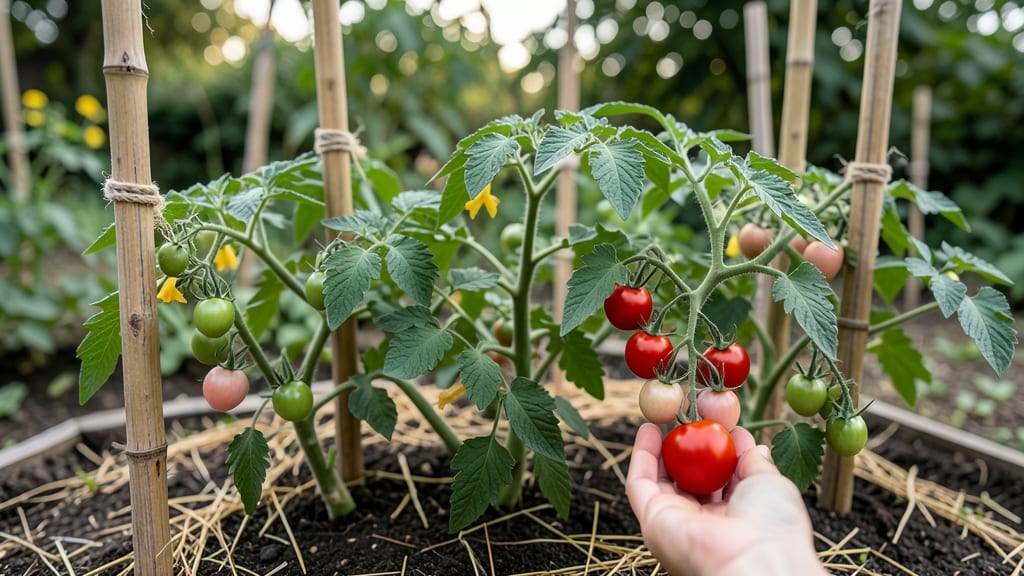
To determine how many cherry tomato plants per person you need, plan for 2–4 plants per individual for fresh eating or snacking, since each plant typically yields 10–20 pounds annually. In efficient garden setups, you might only need 1 plant per 2–3 people, while container gardens often require 1 plant per person due to limited growing space.
Determining the right number of cherry tomato plants starts with understanding their prolific nature—these compact varieties pack flavor into every bite. 🌱 The key factors are your garden's space, the specific variety (determinate types produce heavier clusters but stay bushier, while indeterminate vines yield continuously but need more room), and your sunlight exposure.
A single well-cared-for plant can easily feed a family of four throughout summer, but if you're growing for salads or snacks, you'll want more frequent harvests, hence the wider range.
For container gardens, dwarf varieties like 'Tiny Tim' or 'Balcony Red' are perfect, often producing 5–10 pounds per plant in just a few square feet.
What many gardeners overlook is how spacing affects both yield and plant health. Crowding plants too closely leads to poor air circulation, increasing disease risk and reducing fruit production. The 18–24 inch spacing rule isn't just about aesthetics—it's about giving each plant room to thrive.
In small spaces, vertical trellises can double your effective growing area, while companion plants like basil or marigolds help deter pests and improve overall productivity. The right layout can turn even a tiny balcony into a cherry tomato powerhouse.
💡 In This Article
- Cherry Tomato Plant Yield Factors: Space, Variety, and Sunlight
- Optimal Spacing and Layout for Cherry Tomato Gardens
Cherry tomato plant yield factors: space, variety, and sunlight
Cherry tomatoes thrive on balance—too much space wastes potential, but too little stifles growth. Determinate varieties like 'Sweet Million' produce 10–15 pounds per plant in concentrated clusters, while indeterminate types such as 'Sun Gold' can yield 20–30 pounds over a 6–8 week season by continuously vining.
The difference lies in their growth habits: determinate plants stop growing after flowering, while indeterminate ones keep producing until frost. Sunlight exposure amplifies this—plants receiving 6–8 hours of direct sun daily produce 30–50% more than those with 4–6 hours due to photosynthesis efficiency.
Soil quality acts as the foundation for these yields. Well-draining, nutrient-rich soil with a pH of 6.0–6.8 maximizes root development, which directly correlates with fruit production. Organic matter like compost boosts yields by 20–40% compared to poor soil.
Watering also plays a critical role: consistent moisture (about 1–1.5 inches per week) prevents blossom-end rot and ensures steady fruit set. Overwatering, however, can lead to fungal diseases like early blight, which reduces harvests by up to 50% if unchecked.
Seasonal variations further complicate yield predictions. Early spring plantings in cooler climates may produce 20–30% less than summer plantings due to slower growth rates. Conversely, extended summer heat can stress plants, reducing yields unless you provide shade cloth or mulch to retain moisture.
The key is matching your planting schedule to your local frost dates—most gardeners aim for 2–3 weeks after the last frost when soil temperatures reach 60°F or higher.
Container gardening presents unique challenges. Dwarf varieties like 'Tumbling Tom' yield 5–10 pounds per plant in 5-gallon containers but require frequent watering (often daily in hot weather) due to limited root space. The trade-off is portability—you can move containers to optimize sunlight or protect from afternoon heat.
For urban gardeners, this flexibility often means 1 plant per person is more realistic than in-ground gardens, where space isn't the limiting factor.
Companion planting can further boost yields by up to 15–25%. Basil, for example, repels thrips and improves tomato flavor, while marigolds deter nematodes. In high-density setups, interplanting with lettuce or radishes uses vertical space efficiently, allowing you to fit more plants in the same area without sacrificing sunlight.
The science behind this is simple: healthier plants with fewer pests devote more energy to fruit production.
What most gardeners don't realize is how pruning affects yield. Indeterminate varieties benefit from pruning suckers (side shoots) to direct energy toward fruit production rather than foliage. Studies show pruned plants can yield 10–20% more cherry tomatoes by reducing competition for nutrients.
The trick is to balance pruning with enough leaves to photosynthesize—remove no more than 20–30% of the foliage to maintain plant health.
For maximum efficiency, consider succession planting. Staggering plantings every 2–3 weeks ensures a continuous harvest, extending your season by 4–6 weeks in most climates. This approach works especially well for indeterminate varieties, which can produce fruit until the first hard frost.
The result? A steady supply of 1–2 pounds of cherry tomatoes per plant per week during peak season—enough to satisfy even the hungriest snackers.