
How To
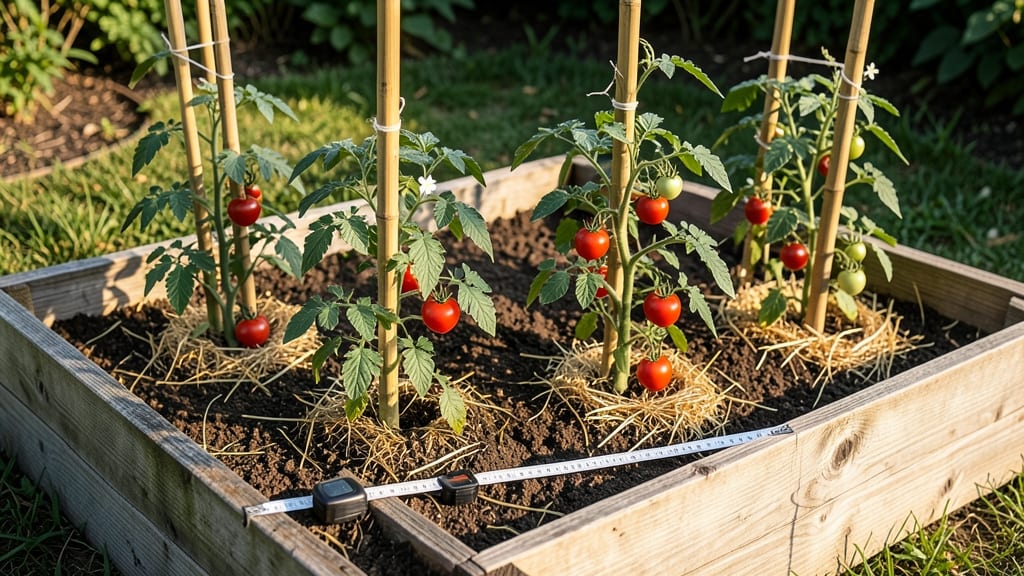
To fit tomato plants in a 4x8 raised bed, plan for 4 to 6 plants spaced 18–24 inches apart, or 6 to 8 plants for compact bush varieties spaced 12–18 inches. Indeterminate varieties require wider spacing for sprawling vines, while determinate types can be planted closer for higher density.
A 4x8 raised bed's size gives you flexibility, but proper spacing is key to preventing disease and maximizing fruit production. 🌱 Indeterminate tomatoes—like heirlooms—need more room because their vines grow continuously, while determinate types (like Roma) stay compact.
I've found that using a grid layout with 24-inch spacing often works best for indeterminate plants, allowing each vine to spread without crowding neighbors.
For bush varieties, you can squeeze in more plants since they stay smaller. However, even with closer spacing, ensure good airflow between plants to prevent fungal issues.
Consider adding a trellis system to save space and keep vines off the ground, which also makes harvesting easier. 🌿 The right spacing isn't just about how many plants fit—it's about how well they'll grow and produce.
💡 In This Article
- Tomato Plant Spacing Science: Why Proper Distance Boosts Yield
- Raised Bed Tomato Planting Layouts for Small-Space Gardens
Tomato plant spacing science: why proper distance boosts yield
Proper spacing isn't just about fitting more plants—it's about creating an ecosystem where each tomato thrives. Roots compete for nutrients and water, so spacing prevents overcrowding that leads to stunted growth.
When plants are too close, their root zones overlap, forcing them to "fight" for resources. This competition reduces fruit size and yield, sometimes by up to 30% in dense plantings. 🌱
Airflow is another critical factor. Tomato plants need space between leaves to dry quickly after watering, which prevents fungal diseases like early blight and powdery mildew. Indeterminate varieties, which grow continuously, require 18–24 inches of space to allow their sprawling vines room to breathe and access sunlight from multiple angles.
Determinate types, which grow to a fixed height, can tolerate closer spacing (12–18 inches) because their compact growth habit reduces shade competition.
Sunlight exposure plays a surprising role too. When plants are spaced too closely, the inner leaves become shaded, reducing photosynthesis and weakening the plant’s ability to produce fruit. This is why staggered or grid layouts work best—they ensure every plant gets equal access to light.
For example, a 4x8 raised bed with plants spaced 24 inches apart in a grid pattern allows sunlight to reach all sides of each vine, maximizing energy production for fruit development.
Soil nutrient distribution also changes with spacing. In crowded conditions, roots can’t spread out, leading to nutrient depletion in the immediate area. Wider spacing allows roots to explore more soil volume, accessing deeper moisture and nutrients.
This is especially important in raised beds, where soil volume is limited compared to in-ground gardens. Proper spacing ensures each plant gets its own "territory" to thrive, rather than competing for the same small area.
Finally, vine support needs vary by type. Indeterminate tomatoes often require cages or trellises, which take up additional space. If you're using a 4x8 bed, placing these supports 18–24 inches apart gives vines room to climb without tangling.
Determinate varieties may not need trellises, but even they benefit from 12–18 inches of space to prevent overcrowding and improve air circulation. 🌿
Think of spacing as an investment in plant health. The right distance reduces stress, prevents disease, and ensures every plant has the resources it needs to produce a bountiful harvest. It’s not just about how many plants you can fit—it’s about how well they’ll grow.