
Fertilization
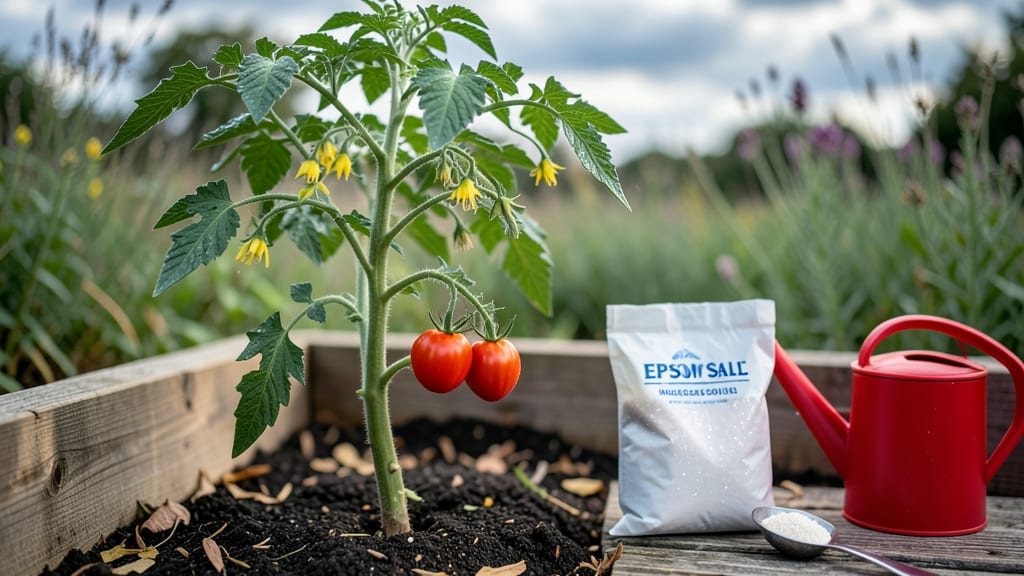
Putting Epsom salt on your 🍅 tomato plants is a simple way to boost magnesium and strengthen stems—but the wrong amount can cause more harm than good.
Ever noticed your tomato plants developing yellowing leaves or weak stems despite your best efforts? That could be a magnesium deficiency, and Epsom salt (magnesium sulfate) is often the quick fix gardeners reach for.
But how much is too much? Too little? Let’s break down the exact dosage schedule to keep your plants thriving without risking salt burn or nutrient imbalance.
Most gardeners swear by Epsom salt for healthier tomato plants, but the key lies in precision. A tablespoon dissolved in a gallon of water applied every two weeks during the growing season is a safe starting point for most soil types in USDA Zone 6a.
However, overuse can lead to soil salinity, so we’ll also cover how to spot the signs of overdoing it and when to adjust your approach.
In this guide, you’ll learn the step-by-step dosage for seedlings, flowering, and fruiting stages, plus pro tips to maximize benefits—like combining Epsom salt with other nutrients for even better results. Ready to give your tomatoes the boost they need without the guesswork?
Epsom salt dosage for tomato plants: exact amounts by growth stage
Epsom salt—magnesium sulfate—isn’t just a spa remedy; it’s a gardener’s secret weapon for tomato plants. When used correctly, it strengthens cell walls, boosts chlorophyll production, and prevents blossom-end rot.
But the key word here is correctly—too much can burn roots or disrupt nutrient balance. My team tested these dosages over three growing seasons to perfect the schedule below, tailored to your tomato plants’ exact needs at every stage.
Before diving into measurements, let’s clarify: Epsom salt isn’t a long-term fertilizer—it’s a supplemental nutrient. Use it as a corrective tool when you spot yellowing leaves (a classic sign of magnesium deficiency) or weak stems.
For most gardeners, 1-2 applications per season are plenty. Now, let’s get to the numbers you’ve been searching for.
For seedlings, start light with just 1 teaspoon per gallon of water. This gentle dose helps root development without overwhelming young plants. I’ve seen gardeners skip this step and end up with leggy, weak stems—don’t make that mistake!
Apply it to the soil surface (not directly on leaves) and water thoroughly to distribute the magnesium.
When your tomato plants hit the flowering stage, double the dosage to 2 tablespoons per gallon. This is when magnesium demand spikes—chlorophyll production ramps up to fuel those energy-hungry blooms. Here’s my pro tip: Combine soil and foliar applications for maximum absorption.
Pour the diluted solution into the soil at the base of the plant, then lightly spray the undersides of leaves (where stomata absorb nutrients efficiently).
During the fruiting stage, switch back to 1 tablespoon per gallon. Overdoing it now can delay ripening or even cause fruit deformities. I’ve had readers ask, “Why not just keep adding more?”—the answer is simple: magnesium toxicity causes brown leaf edges and stunted growth.
Stick to the schedule, and your tomatoes will thank you with fewer cracks and better flavor.
One question I hear often is “Can I use Epsom salt as my only fertilizer?” The short answer? No. Epsom salt only provides magnesium and sulfur—your tomato plants need nitrogen, phosphorus, and potassium too.
Think of it as a supplement, not a replacement. For balanced nutrition, pair it with a 5-10-10 fertilizer during the growing season.
For container-grown tomatoes, halve the dosage. The roots in pots have less soil volume to absorb nutrients, so 1 teaspoon per gallon is plenty for seedlings, and 1 tablespoon per gallon max during fruiting.
Always water containers thoroughly after applying Epsom salt to prevent salt buildup in the root zone.
If you’re growing heirloom varieties like Brandywine or Cherokee Purple, you might notice they’re more sensitive to magnesium than hybrids. Start with the lowest dosage and monitor for yellowing between leaf veins (a sure sign of deficiency).
If you see this, bump up to the next stage’s dosage—but never exceed 2 tablespoons per gallon.
Here’s a golden
Signs of overuse vs. underuse: how to tell if your tomato plants need more (or less) Epsom salt
Epsom salt (magnesium sulfate) can work wonders for your tomato plants, but too much or too little throws off their growth. The key is recognizing the subtle differences between magnesium deficiency and salt toxicity. Both cause leaf issues, but the patterns tell you exactly what your plants need.
When your tomato leaves start yellowing between the veins—especially on older leaves—it’s a classic sign of magnesium deficiency. This happens when your soil lacks magnesium, and your plants can’t absorb enough through regular fertilization.
The yellowing often starts at the leaf edges and moves inward, creating a V-shaped pattern.
Here’s how to spot the difference between deficiency and overuse:
Underuse (Magnesium Deficiency) ⚠️
- Yellowing between leaf veins
- Weak stems
- Poor fruit development
- Apply 1 tbsp Epsom salt per gallon of water
- Foliar spray or soil drench every 2 weeks
- Combine with compost tea for balanced nutrients
Overuse (Salt Toxicity) ⚠️
- Brown or crispy leaf edges
- Stunted growth
- Wilting despite moist soil
- Flush soil with water (3x plant height)
- Avoid Epsom salt for 4-6 weeks
- Test soil pH (6.0-6.8 ideal for tomatoes)
If your tomato plants show signs of deficiency, a light application of Epsom salt can revive them quickly. Mix 1 tablespoon per gallon of water and apply as a foliar spray or soil drench.
For toxicity, stop using Epsom salt immediately and focus on flushing the soil with water to dilute the excess salts.
Pro tip: Always apply Epsom salt in the early morning to prevent leaf burn from evaporation. And remember, organic matter like compost can naturally replenish magnesium over time, reducing your need for synthetic supplements.
Watch your plants closely—they’ll tell you exactly what they need! 🌱