
Plants
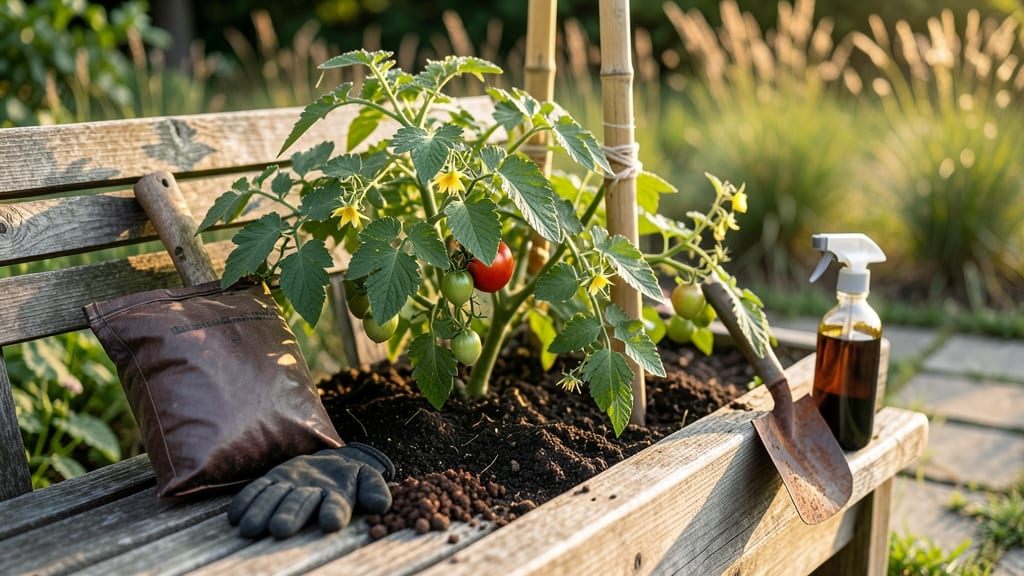
Tomato plants need nitrogen to fuel their growth from seedling to fruit, but too much or too little throws off the whole harvest.
Picture this: you’ve spent weeks nurturing your 🍅 plants, only to watch them produce lush leaves with no fruit—or worse, collapse under weak stems. That’s nitrogen working against you. The key is finding the right balance, and it’s easier than you think.
In this guide, I’ll break down exactly how much nitrogen your tomato plants need at each stage, from sprouting to fruiting, plus the best organic and synthetic sources to use. You’ll also learn how to spot deficiency or overuse before it ruins your crop.
By the end, you’ll know when to feed, what to feed, and how to keep your tomatoes thriving without wasting fertilizer—or your time.
How much nitrogen do tomato plants need for optimal growth?
Tomato plants are heavy nitrogen feeders, but their needs change dramatically throughout the growing season. Too little nitrogen stunts growth, while too much delays fruiting and weakens plant structure.
The key is understanding how much nitrogen your plants need at each growth stage, from seedling to fruiting, to maximize yield without compromising fruit quality.
Nitrogen is the first number in an NPK fertilizer ratio (e.g., 10-10-10). For tomatoes, the ideal nitrogen levels shift from higher early on to balanced later in the season. Most gardeners use 0.5–1.0% nitrogen in the soil during active growth, but this varies by soil type and plant maturity.
Let’s break down the exact nitrogen requirements for each stage of your tomato’s life cycle.
During the seedling stage, your tomato plants need just enough nitrogen to establish strong roots and stems. Over-fertilizing here can lead to excessive leaf growth at the expense of flowers and fruit.
Use a low-nitrogen fertilizer like 5-10-10 or a balanced organic option such as compost tea to avoid stunting later development.
As your plants enter the vegetative stage (4–6 weeks after transplanting), nitrogen demand peaks. This is when you’ll see rapid vine growth and leaf expansion. A 10-10-10 or 8-3-9 fertilizer works well here, but monitor soil moisture—dry soil locks out nutrients, while waterlogged soil leaches nitrogen away.
Side-dress with compost or apply a slow-release organic fertilizer like alfalfa meal to maintain steady nitrogen levels.
The transition to flowering and fruiting is critical. Here, nitrogen needs drop significantly to prevent blossom end rot and poor fruit set. Switch to a lower-nitrogen, higher-phosphorus fertilizer (like 5-10-10) to support flower development.
Too much nitrogen at this stage can delay fruiting and lead to weak stems that struggle to support heavy tomato clusters.
To avoid over- or under-fertilizing, test your soil before planting. A home soil test kit (around $20) will reveal your soil’s nitrogen levels. Aim for 20–60 ppm nitrogen during the growing season, adjusting your fertilizer applications based on the stage of your plants.
If your soil tests high in nitrogen (>80 ppm), reduce synthetic fertilizers and rely on organic matter like well-aged compost to feed your tomatoes naturally.
One common mistake is assuming more nitrogen always equals better growth. In reality, excess nitrogen can lead to lush foliage but fewer tomatoes. Always pair nitrogen applications with phosphorus and potassium to ensure balanced nutrition.
For example, a 5-10-10 fertilizer provides the right balance for fruiting tomatoes, while a 10-10-10 is better suited for leafy growth phases.
For organic gardeners, compost, fish emulsion, and blood meal are excellent nitrogen sources. Apply compost tea as a foliar spray for a quick nitrogen boost, or work compost into the soil before planting.
Fish emulsion (5-1-1) is another great option for the vegetative stage, while blood meal (12-0-0) can be used sparingly for a rapid nitrogen kick during early growth.
Remember, nitrogen isn’t the only nutrient your tomatoes need. Always pair it with phosphorus for roots and flowers and potassium for fruit development and disease resistance. A simple rule of thumb: reduce nitrogen by 25–50% as your plants start flowering to encourage fruiting instead of leafy growth.
This shift often results in heavier, more flavorful tomatoes and fewer problems like blossom end rot.
🌱
Best organic and synthetic nitrogen sources for tomato plants
Choosing the right nitrogen source for your tomato plants can make the difference between lush vines and a bountiful harvest. Organic options like blood meal and fish emulsion feed soil long-term, while synthetic urea delivers fast results.
Each has unique benefits, so let's compare the top choices for every growth stage of your tomatoes.
For seedlings, a gentle nitrogen boost like compost tea (0.5-1%) helps young roots establish without burning tender foliage. As plants transition to flowering, switch to balanced sources like fish emulsion (5-10-5 NPK) to support both leaves and blossoms.
During fruiting, reduce nitrogen and emphasize phosphorus/potassium to prevent leafy growth at the expense of fruit.
Nitrogen Source Comparison for Tomatoes
Blood Meal
- Pros: High nitrogen (12-13%), improves soil structure
- Cons: Can burn plants if overapplied, attracts pests
- Rate: 1 tbsp per plant every 4-6 weeks
- Best for: Seedling stage, organic gardens
Fish Emulsion
- Pros: Balanced nutrients (5-1-1), fast uptake
- Cons: Strong odor, requires dilution
- Rate: 1 tbsp per gallon of water
- Best for: Flowering/fruiting stages
Urea
- Pros: Pure nitrogen (46%), cost-effective
- Cons: Synthetic, can acidify soil
- Rate: 1/2 lb per 100 sq ft
- Best for: Quick leaf growth, large gardens
Compost Tea
- Pros: Gentle, improves soil microbes
- Cons: Low nitrogen content, requires brewing
- Rate: 0.5-1% solution every 2 weeks
- Best for: Seedlings, preventative care
Application Tip: Always water soil thoroughly before and after applying nitrogen fertilizers to prevent root burn.
Timing matters just as much as the source. Apply blood meal at planting and again when plants reach 6 inches tall.
For fish emulsion, use it every 4-6 weeks during the growing season, alternating with phosphorus-heavy fertilizers. Urea should only be used when you need an immediate boost, like after transplanting or during rapid growth spurts.
For container-grown tomatoes, dilute fish emulsion at half-strength to avoid salt buildup in potting mix. Monitor your plants closely—yellowing leaves between veins signal nitrogen deficiency, while excessive leaf growth at the expense of fruit means you're overdoing it. The goal is balanced growth, not just big leaves.
Remember that organic nitrogen sources improve soil health over time, while synthetic options provide quick fixes. For the best results, rotate between organic and synthetic sources throughout the season. This approach ensures your tomato plants get the nitrogen they need without compromising long-term soil fertility.
Pro tip: Mix a handful of alfalfa meal (1-2-2 NPK) into your planting hole for a slow-release nitrogen boost that also attracts beneficial microbes. Your tomatoes will reward you with stronger stems and more abundant fruit sets.