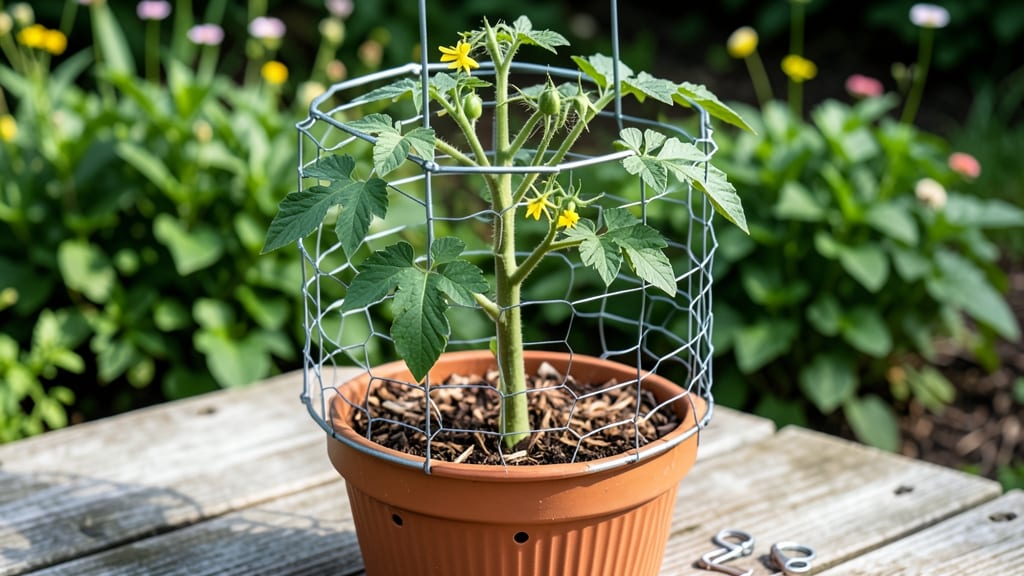
Buying guide: how to choose the right small tomato cage for pots
1. Height and Stability 💡
A small tomato cage for pots must strike the perfect balance between height and stability. For indeterminate tomato varieties (like Sungold or Black Cherry), I recommend a cage that’s at least 48 inches tall to accommodate vertical growth without crowding.
If you’re growing determinate varieties (such as Roma or Bush Early Girl), a 36-inch cage will suffice. However, don’t sacrifice stability for height—look for a base diameter of at least 10-12 inches to prevent tipping, especially in windy conditions.
Counter-intuitively, a wider base doesn’t always mean heavier weight; some lightweight metal cages use galvanized steel with a broad footprint to stay upright without sinking into the soil.
2. Material Durability ⚡
The material of your tomato cage directly impacts its longevity and performance. Galvanized steel or powder-coated metal cages are the most durable, resisting rust and weathering for years. These are ideal for long-term gardeners or those growing heavy-fruiting varieties.
On the other hand, plastic or fabric cages are lightweight and budget-friendly but may degrade faster in harsh weather. If you’re a renter or seasonal gardener, a collapsible fabric cage offers convenience without sacrificing too much durability.
Pro tip: Avoid thin, flimsy plastic cages—they bend under the weight of ripe tomatoes and can break easily.
3. Portability and Storage ✅
If you’re limited on space or need to store your cage between growing seasons, prioritize portability. Collapsible or foldable cages are a game-changer for renters, urban gardeners, or those with small balconies.
Some even fold down to fit in a shoebox, making them easy to transport or store. However, if you’re committed to long-term container gardening, a permanent metal cage offers unmatched stability.
Just ensure it’s lightweight enough to move if needed—nothing’s worse than struggling with a heavy cage during pruning season!
4. Ease of Use and Maintenance 🔍
A great tomato cage should simplify your gardening routine, not complicate it. Look for features like a removable top (for easy pruning and harvesting) or an open-grid design (to encourage airflow and deter pests).
Some cages even come with adjustable heights, allowing you to customize support as your plant grows. Avoid cages with tight grids—they can restrict growth and make maintenance difficult.
If you’re growing indeterminate tomatoes, a cage with modular sections lets you add height as needed, while determinate varieties thrive in simpler, shorter supports. Always choose a cage that makes your life easier, not harder!
Frequently asked questions
Q: What size small tomato cage for pots should I choose for my container garden?
For indeterminate tomato varieties (like Sungold or Black Cherry), opt for a cage that’s at least 48 inches tall to support vertical growth without crowding. If you’re growing determinate types (such as Roma or Bush Early Girl), a 36-inch cage will work perfectly. Always pair the height with a wide base (10-12 inches) to prevent tipping, especially in windy conditions. For cherry tomatoes or dwarf varieties, a 3-foot cage is ideal and more budget-friendly.
Q: Will a lightweight metal cage stay stable in my pot without sinking into the soil?
Yes, but only if it has a wide, flat base (like the 12-inch diameter options in our roundup). Lightweight galvanized steel or powder-coated metal cages are designed to distribute weight evenly, preventing them from sinking. Avoid cages with narrow bases or those made of flimsy plastic—they’ll topple or bend under heavy fruit loads. For extra stability, place your pot on a windbreak or secure it with stakes if needed.
Q: How do I prevent my tomato plant from outgrowing its cage?
Prune your plant regularly to encourage controlled vertical growth and prevent overcrowding. For indeterminate tomatoes, use a cage with modular or adjustable height sections (like our premium choice) to add support as the plant grows. If your cage feels too small, tie the main stem to a taller stake or use tomato clips to guide vines upward. Avoid overloading the cage with too many suckers—focus on 2-3 main stems for optimal airflow and fruit production.
Q: What’s the difference between a fabric cage and a metal cage for potted tomatoes?
Fabric cages (like our best value pick) are lightweight, collapsible, and rust-proof, making them ideal for renters or seasonal gardeners. They’re great for dwarf or bush varieties but may not support heavy indeterminate tomatoes long-term. Metal cages (especially galvanized steel) are sturdier, more durable, and better for heavy fruit loads, but they’re heavier and may require more storage space. Choose fabric for convenience and metal for long-term stability.
Q: Can I reuse a tomato cage for multiple growing seasons?
1
Metal cages
(galvanized or powder-coated) last 5+ years with minimal maintenance—just rinse them with water and store them dry. Fabric cages can also be reused for 3-4 seasons if kept clean and stored properly. Avoid leaving cages in damp conditions, as rust or mildew can weaken them over time. For plastic cages, check for cracks—replace them if they become brittle. Proper storage (collapsed or disassembled) extends their lifespan significantly.
Q: Is there a budget-friendly alternative to a full-size tomato cage?
Yes! If you’re growing small tomato varieties (like Patio or Tiny Tim), a 3-foot plastic or fabric cage is a cost-effective solution. These budget-friendly options (often under $15) are lightweight, foldable, and perfect for 10-15 gallon pots. For extra support, pair them with tomato clips or stakes. If you’re on a tight budget but growing larger varieties, consider a DIY cage using bamboo stakes or wire mesh—it’s a fraction of the cost and just as effective for short-term use.