
Light Requirements
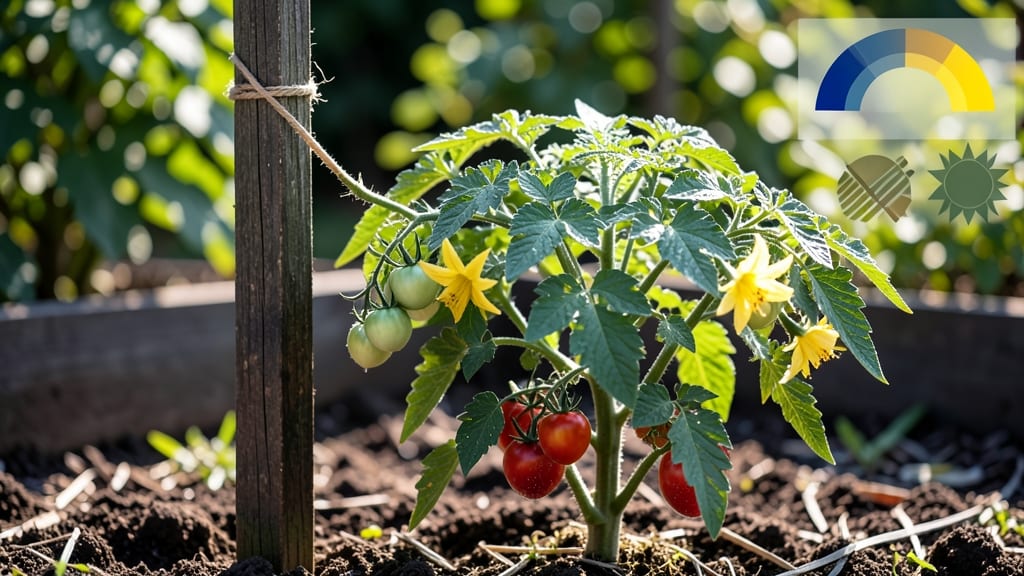
Tomato plants need 6 to 8 hours of direct sunlight daily to thrive and produce the juicy, flavorful fruit you’re dreaming of 🍅.
If your tomato plants aren’t producing the way you hoped, sunlight might be the missing piece—yet too much or too little can ruin your harvest before it even starts.
Most gardeners know tomatoes love sun, but few realize how critical the exact amount is. Too little light leads to weak vines and stunted fruit, while too much can scorch leaves and drop blossoms before they set.
In this guide, I’ll break down the perfect sunlight range, how to spot problems, and practical tips to adjust for your garden—whether you’re dealing with shade, intense heat, or limited space.

Optimal sunlight hours for tomato plants: the science behind 6-8 hours daily
Tomatoes are sun-worshippers, and their fruit production hinges on getting the right amount of light. While most gardeners know tomatoes thrive in full sun, the magic number isn’t just "as much as possible"—it’s 6 to 8 hours of direct sunlight daily.
This range balances photosynthesis, energy storage, and fruit development, ensuring your plants grow strong and productive rather than stressed or weak.
The 6-8 hour rule isn’t arbitrary—it’s rooted in how tomatoes convert sunlight into energy. During these hours, chlorophyll absorbs light to power photosynthesis, while excess sunlight can lead to sunburn or heat stress.
Understanding this science helps you fine-tune your garden layout, especially if you’re in a high-altitude area or a region with shorter daylight hours.
| Growth Stage | Sunlight Needs | Key Effects of Light | Regional Adjustments |
|---|---|---|---|
| Seedling | 4-6 hours | Prevents legginess, strengthens stems | Use grow lights if natural light is low |
| Flowering | 6-8 hours | Boosts pollination, fruit set | High-altitude? Add 1-2 extra hours |
| Fruiting | 8+ hours (ideal) | Maximizes sugar content, size | Cloudy climates? Use reflective mulch |
| All Stages | Minimum 6 hours | Prevents blossom drop, weak growth | Northern latitudes? Extend with south-facing walls |
During the seedling stage, tomatoes need less light—around 4-6 hours—to avoid overheating while their roots establish. Once they transition to flowering and fruiting, the demand spikes to 6-8 hours, with 8+ hours ideal for varieties like Beefsteak or Brandywine.
This extra light fuels photosynthesis, which directly impacts fruit sugar content and size. For example, a tomato getting 8 hours of sun will develop deeper flavor and larger fruit than one with only 4 hours.
Light intensity matters just as much as duration. Tomatoes thrive in full sun, defined as 6+ hours of direct sunlight with minimal obstruction. In partial shade (3-6 hours of sun), growth slows, and fruit may be smaller or misshapen.
However, too much direct sun—especially in hot climates—can cause sunburn (white/yellow patches on fruit) or heat stress, leading to blossom drop. Balancing light exposure is key.
Regional adjustments are critical. In high-altitude gardens (e.g., Denver or Albuquerque), sunlight is 20-30% more intense due to thinner air, so tomatoes may need shade cloth in peak afternoon hours.
Conversely, in cloudy or northern climates (e.g., Seattle or Portland), you might need to supplement with grow lights or choose compact, high-yield varieties like Cherry Tomatoes, which tolerate slightly less light.
Monitor your tomatoes’ light exposure throughout the day. Morning sun (6 AM–12 PM) is gentler, while afternoon sun (12 PM–6 PM) is more intense. If your garden gets strong afternoon sun, consider pruning lower leaves to improve airflow and reduce heat stress.
For container gardens, rotate pots weekly to ensure even light exposure on all sides.
One common misconception is that "morning sun is enough". While morning light is valuable, tomatoes need consistent sunlight throughout the day to maintain energy production.
If your garden only gets morning sun, supplement with a reflective surface (like white mulch or a mirror) to bounce extra light onto the plants.
For urban gardeners or balcony growers, maximizing sunlight becomes a puzzle. Place pots on south-facing ledges or use reflective materials behind containers to redirect light.
If your space gets less than 6 hours of sun, opt for determinate varieties (like Roma or Patio tomatoes), which produce fruit faster in lower light.
Finally, pay attention to seasonal changes. Daylight hours shrink in late summer and fall, so move potted tomatoes to sunnier spots or extend their season with a cold frame.
By understanding how sunlight affects each growth stage, you’ll unlock the secret to bigger, sweeter, and more abundant tomato harvests. ☀️
Signs your tomato plants aren’t getting enough (or too much) sunlight
Tomatoes are sun-worshippers, and when they don’t get enough direct sunlight, their growth and fruit production suffer. Yellowing leaves or stunted stems are classic red flags, but the symptoms can vary depending on whether your plants are under- or over-exposed to light.
I’ve seen firsthand how quickly a thriving tomato plant can decline when its sunlight needs aren’t met.
Even worse, too much sunlight can cause sunburned leaves or blossom drop, leaving you with fewer tomatoes than you’d hoped for. The key is recognizing these signs early so you can adjust your garden setup before it’s too late.
Let’s break down what to watch for and how to fix it.
⚠️ Common Sunlight Mistake: Assuming "Morning Sun" = Full Sun
Tomatoes need 6-8 hours of direct sunlight daily, not just morning light. East-facing gardens often get intense morning sun but afternoon shade, which isn’t enough. South or west-facing spots provide the consistent light tomatoes crave. Test your spot with a sunlight tracker for a week to confirm.
If your tomato plants are underwatered (metaphorically speaking), look for pale green or yellow leaves starting at the bottom of the plant. This is a classic sign of chlorosis, where the plant can’t produce enough chlorophyll without adequate light.
You might also notice long, leggy stems as the plant stretches toward any available light source.
For over-exposed plants, check the leaves for white or brown patches, especially on the upper sides.
These are sunburn marks, and while they won’t kill the plant, they can reduce its ability to photosynthesize. Blossom end rot (a calcium deficiency) can also occur when plants struggle with extreme heat and light stress.
To fix low-light issues, try moving your plants to a sunnier spot or pruning nearby trees/shrubs for better light penetration.
For too much sun, use shade cloth (30-50%) during peak afternoon hours or plant near taller plants that provide natural shade. Reflective mulch can also help bounce extra light away from sensitive leaves.
Don’t forget to monitor your plants after making changes. Adjustments take time, and you may need to experiment with placement or pruning to find the perfect balance. With the right light conditions, your tomato plants will reward you with bountiful, flavorful fruit all season long. 🌱