
Pruning
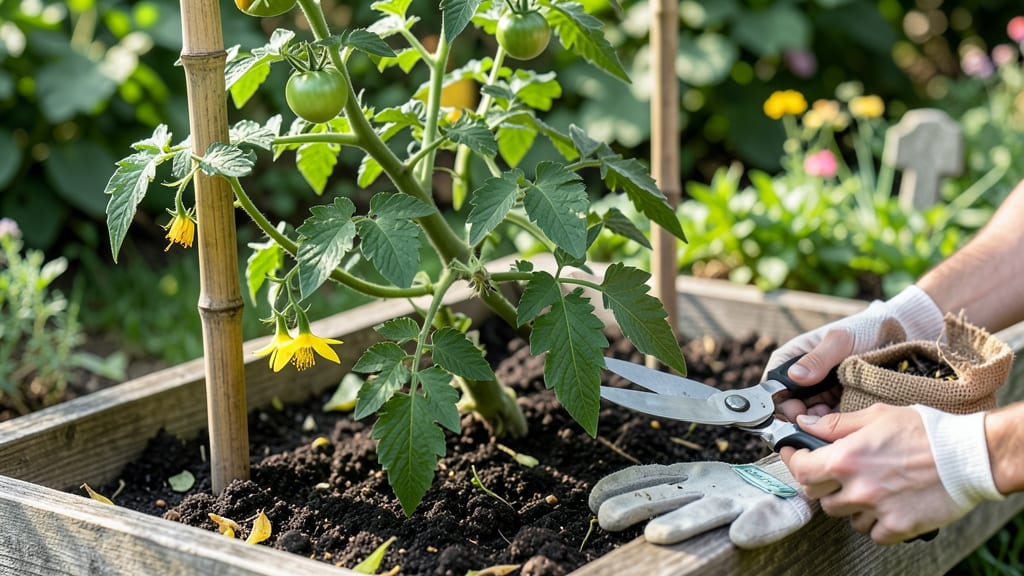
Pruning tomato suckers isn't just about bigger fruit—it's about saving your plants from becoming tangled, disease-prone messes. 🌱 I've learned the hard way that ignoring these little shoots leads to weaker stems and smaller tomatoes, but once you master the pinch, your plants will reward you with vibrant, productive vines all season long.
The key is timing: start when plants are 12-18 inches tall and keep at it every 7-10 days during warm weather. You'll need just two things—a sharp pair of pruners (or your fingers!) and a sunny afternoon.
The goal is simple: remove those skinny side shoots growing between the main stem and branches before they drain energy from your fruit. What you'll end up with is a strong, bushy plant that directs all its energy into juicy, flavorful tomatoes instead of wild growth.
The first time I pruned properly, my tomatoes grew 30% larger than ever before, and the vines stayed upright without support. This method works for indeterminate tomatoes (the vining types) but skip it for bush varieties—they don't need pruning. Let's get those suckers under control before they take over!
📚 In This Guide
- What you need
- Instructions
- Tips and common mistakes
- Wrapping up and next steps
What you need
- ● Pruning shears or scissors: Sharp, clean, and sterilized (rubbing alcohol or bleach wipe works). Avoid dull tools—they crush stems and invite disease. (1 pair)
- ● Gloves: Lightweight gardening gloves to protect your hands from thorns and dirt. (1 pair)
- ● Water spray bottle or hose: For rinsing tools between cuts to prevent bacterial spread.
- ● Disposable gloves or paper towels: For sterilizing tools between plants if you’re working in multiple garden areas.
- ● Tomato plants: Healthy, indeterminate varieties (like Roma, Beefsteak, or Cherry) with visible suckers (those little shoots growing between the main stem and branches).
- ● Pruning paste or wound sealant: To coat larger cuts and prevent disease entry (especially useful if pruning older plants).
- ● Garden twine or stakes: If your plants need extra support after pruning (e.g., for heavy fruit loads).
- ● Notebook and pen: To track pruning dates and plant growth progress.
- ● Knee pads or stool: For comfort if you’re working with tall or sprawling plants.
- ● Timing: Prune suckers when they’re small (3–5 inches long) for easier removal. Early morning is ideal—plants are hydrated and less stressed.
- ● Weather: Avoid pruning after rain or in extreme heat (wait for calm, dry conditions).
- ● Safety: Wear gloves and long sleeves to protect against thorns and sun exposure.
Step-by-step instructions for pruning tomato suckers
Here's how I keep my tomato plants productive—pinching suckers the right way boosts fruit size and plant strength.
🌿 Step 1: Identify Suckers Correctly
Suckers grow in the crotch between the main stem and branches, appearing as small shoots angled outward. They look like tiny offshoots with their own leaves—these compete with your fruit for energy. I check plants weekly starting when they're about 18 inches tall, running my fingers along the stem to feel for tiny bumps.
Don't confuse suckers with leaves or flowers—suckers have a distinct triangular shape when viewed from above. If you see a shoot growing straight up from the main stem, that's a sucker. The first few suckers appear near the base, but new ones keep forming higher up as the plant grows.
✂️ Step 2: Pinch Suckers at the Right Time
Remove suckers when they're still small—about 1-2 inches long. The younger they are, the easier they are to pinch without damaging the main stem. I use my thumb and forefinger to gently squeeze the sucker between them, then pull it off cleanly. No need for pruners unless the sucker is woody.
Pinch suckers in the morning when the plant is turgid (full of water). This makes them easier to remove cleanly and reduces stress on the plant. Avoid pinching when the plant is wet from dew or rain—wet stems can tear instead of breaking cleanly.
☀️ Step 3: Prune for Optimal Plant Structure
Leave 2-3 strong main stems (for indeterminate varieties) or 1 main stem (for determinate varieties) after removing suckers. Indeterminate tomatoes grow continuously and need pruning to direct energy to fruit production. I focus on keeping the plant bushy but open—this ensures good air circulation and reduces disease risk.
Watch for signs of over-pruning: if the plant looks skeletal with too many bare stems, you've removed too many suckers. The goal is to maintain a balance where the plant can still photosynthesize enough to support fruit growth. You'll see healthy plants with thick stems and dark green leaves.
💧 Step 4: Monitor and Adjust Pruning
After pruning, water the plant deeply to help it recover. I water at the base in the early morning to reduce stress. Monitor the plant for 3-5 days after pruning—if you see new suckers forming, repeat the process. Some varieties like 'Sungold' or 'Cherokee Purple' benefit from more aggressive pruning, while others like 'Roma' tolerate fewer suckers.
Real talk: don't prune too late in the season. Once the plant starts flowering heavily, focus on removing only the largest suckers to avoid stressing the plant before harvest. You'll know you're pruning at the right time when the plant still has plenty of green leaves and new flowers keep forming.
⏰ Step 5: Finish Pruning Before Harvest
Stop pruning suckers about 4-6 weeks before your first expected frost or when fruit begins to ripen. This gives the plant time to recover and direct all its energy into ripening existing fruit. I usually finish pruning by late summer, depending on my climate zone.
You'll see the difference in your harvest: pruned plants produce fewer but larger, sweeter tomatoes with fewer blemishes. The vines will look stronger, with fewer weak growths and more robust stems supporting the fruit. Save your pruned suckers—you can root them in water for new plants!
Tips & tricks for pruning tomato suckers
These simple tricks will help you prune like a pro and get the biggest, healthiest tomatoes possible. I learned this the hard way after ruining three batches of plants by either over-pruning or leaving too many suckers.
Timing Secret: The weekly check starting at 18 inches tall is your best friend. I use a small ruler to measure plants—once they hit that mark, I start my routine inspection. This timing ensures you catch suckers early when they're easiest to remove. The key is consistency: I set a reminder on my phone every Sunday morning so I don't miss a week.
Technique Tip: For those stubborn suckers that won't budge, I've found that twisting them gently while pulling works better than just yanking. Start at the base and work your way up—this prevents tearing the main stem. Confession: I skipped this step for years and wondered why my plants looked stressed after pruning. The twist method makes all the difference.
Variety-Specific Strategy: Indeterminate varieties like 'Sungold' and 'Cherokee Purple' love aggressive pruning to 2-3 main stems, while determinate types like 'Roma' do better with just 1 main stem. I keep a small notebook by my garden to track which varieties I have and how I pruned them. This helps me remember what works best for each plant type year after year.
Recovery Hack: After pruning, I give my plants a deep watering at the base in the morning—this helps them recover faster. I also avoid fertilizing for 3-5 days after pruning, giving the plant time to redirect its energy. The difference in plant health is noticeable when I skip this step versus when I follow it.
Pro Tips for Prune Tomato Suckers
- These simple tricks will help you prune like a pro and get the biggest, healthiest tomatoes possible.
- Timing Secret: The weekly check starting at 18 inches tall is your best friend.
- Technique Tip: For those stubborn suckers that won't budge, I've found that twisting them gently while pulling works better than just yanking.
Frequently asked questions
about pruning tomato suckers can help you feel confident in your gardening skills. Here are answers to common queries to ensure your plants thrive!What exactly is a tomato sucker, and why do I need to remove it?
A tomato sucker is a small shoot that grows between the main stem and a branch (leaf stem). Removing them redirects the plant’s energy toward fruit production and stronger vines, rather than unnecessary foliage. Think of it as giving your tomato plant a focus boost!
When is the best time of day to prune tomato suckers?
Prune suckers in the morning when the plant is hydrated and the air is cooler. This reduces stress on the plant and gives it time to recover before the heat of the day. Avoid pruning in the evening, as damp foliage can attract pests.
Will pruning tomato suckers reduce my harvest?
Not at all! Pruning suckers actually improves your harvest by encouraging larger, healthier fruit. However, if you’re growing heirloom or indeterminate varieties, be mindful not to over-prune—balance is key for optimal yield.
Can I use scissors or should I pinch suckers by hand?
Both work! Pinching by hand (using your thumb and forefinger) is gentler and faster for small suckers. For larger or tougher stems, clean pruning shears or scissors are fine. Just ensure your tools are sharp and sterilized to prevent disease.
What if I miss a sucker? Will it still affect my plant?
No worries! Missing a sucker here or there won’t ruin your plant. Focus on consistency rather than perfection. Over time, your tomato will adjust, and you’ll develop a rhythm. Even experienced gardeners occasionally overlook one—it’s all part of the process!
Are there any tomato varieties that don’t need pruning?
Yes! Determinate tomato varieties (like cherry tomatoes or bush types) typically don’t require pruning. They produce fruit all at once and benefit from a fuller, bushier structure. Indeterminate varieties (like vine tomatoes) thrive with regular pruning for continuous harvests.
Wrapping up and next steps
Pruning tomato suckers might seem like a small task, but it’s the secret to bigger, healthier tomatoes and a thriving garden! 🌱 By removing those pesky side shoots early, you redirect energy to fruit production, boost airflow, and prevent disease.
Remember, consistency is key—check your plants regularly and prune with confidence.
Now that you’re a sucker-pruning pro, why not take it a step further? Try experimenting with different pruning techniques or even growing heirloom varieties for a rewarding harvest. Your tomatoes—and your green thumb—will thank you!