
How To
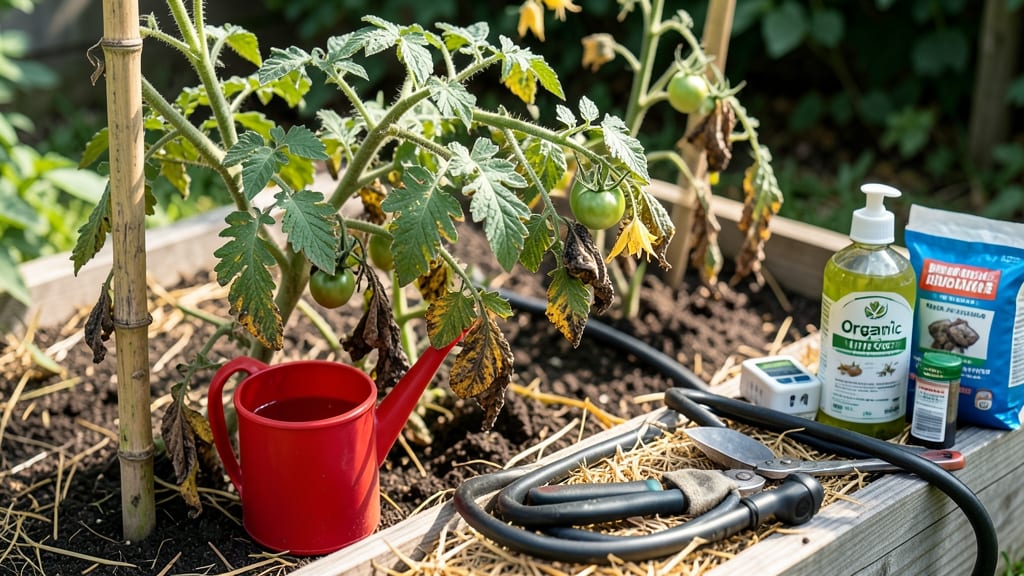
Saving a dying tomato plant starts with a quick check of the soil—because most of the time, it's not the plant's fault. 🌱 I've pulled back more tomato plants from the brink than I'd like to admit, and the fixes are simpler than you think: too much water, not enough nutrients, or pests hiding in plain sight.
The first step is identifying the problem: yellow leaves mean overwatering or nutrient deficiency, while wilting often signals underwatering or root damage. I always check the soil first—if it's dry an inch down, give it a deep drink; if it's soggy, hold off until it dries.
A quick inspection of stems and leaves reveals pests like aphids or signs of disease like spots or mold. Once you've pinpointed the issue, the fixes are straightforward: adjust watering, add compost or fertilizer, or treat pests with neem oil.
Within a week, you'll see new growth pushing through, and your plant will be back on track to producing those juicy tomatoes you love. This method works for backyard gardens, containers, and even raised beds.
The key is acting fast—tomato plants are resilient, but they need your help to bounce back.
Root Causes of Plant Decline
Tomato plants are resilient, but when they start to struggle, it’s often because of a few key factors—some you can see, others lurking beneath the soil. Understanding why your tomato plant is fading helps you target the right fixes.
Below, we break down the most common culprits, from environmental stressors to hidden pests, with the science behind each one.
Tomato roots need oxygen just as much as water. When soil stays soggy for too long, root rot sets in—caused by fungi like Phytophthora or Pythium—which clog root cells and block nutrient uptake.
How it happens:
- Compacted soil (clay-heavy or poorly amended) traps water, suffocating roots.
- Overzealous watering (especially on a schedule) without checking soil moisture.
- No drainage holes in containers, leading to water pooling at the bottom.
Signs to watch for:
- Yellowing leaves (especially lower ones)
- Mushy, dark roots when inspected
- A foul, rotting smell at the base
Tomatoes are thirsty plants, and when they don’t get enough water, they wilts—but not always permanently. However, chronic dehydration weakens the plant, making it susceptible to sunscald or nutrient deficiencies.
How it happens:
- Inconsistent watering (e.g., forgetting for days, then drowning the plant).
- High temperatures (above 90°F/32°C) increase water loss through transpiration.
- Shallow root systems (common in young plants) can’t reach deep moisture.
Signs to watch for:
- Crispy, brown leaf edges
- Leaves curling upward (like a "boat")
- Soil pulling away from pot edges (indicating extreme dryness)
Tomatoes are heavy feeders, and when they lack key nutrients, growth stalls, leaves yellow, or stems weaken. The most critical deficiencies include:
| Nutrient | Role in Plant Health | Deficiency Signs |
|---|---|---|
| Nitrogen (N) | Leaf and stem growth | Yellowing lower leaves (chlorosis) |
| Potassium (K) | Disease resistance, fruit quality | Brown leaf edges, weak stems |
| Phosphorus (P) | Root and flower development | Purple stems/leaves, stunted growth |
| Magnesium (Mg) | Chlorophyll production | Interveinal yellowing (between veins) |
How it happens:
- Poor soil quality (lack of compost or organic matter).
- Overusing synthetic fertilizers (e.g., too much nitrogen, burning roots).
- pH imbalances (tomatoes thrive in 6.0–6.8 pH; acidic or alkaline soil locks out nutrients).
Hidden invaders can drain a tomato plant’s vitality overnight. The most destructive include:
- Aphids/Whiteflies 🐜: Sap-sucking pests that weaken leaves, causing them to yellow and curl.
- Fungal diseases (e.g., early blight, late blight): Thrives in humid conditions, creating dark spots on leaves and stems.
- Root-knot nematodes 🐟: Microscopic worms that burrow into roots, reducing water/nutrient absorption.
How it happens:
- Overhead watering (keeps leaves wet, inviting fungi).
- Crowded plants (poor airflow spreads spores/pests).
- Infected soil or tools (reusing containers or sharing pruners).
Tomatoes are sensitive to sudden changes. Whether it’s a late frost, harsh wind, or transplant shock, stress can halt growth or trigger dieback.
How it happens:
- Transplanting too early (cold soil stunts roots).
- Exposure to wind (dries out leaves, causing sunscald).
- Temperature swings (e.g., moving from greenhouse to hot sun overnight).
Signs to watch for:
- Sudden wilting after a storm or move
- Blackened or blistered leaves (from frost or heat stress)
- Stunted growth despite good care
Even well-meaning gardeners can harm tomato plants. Over-pruning, rough handling, or damage to the main stem disrupts the plant’s ability to transport water and nutrients.
How it happens:
- Cutting too aggressively (removing too many suckers or leaves at once).
- Bruising stems (e.g., from heavy fruit or wind).
- Improper staking (tying too tightly, restricting growth).
Signs to watch for:
- Jagged cuts that don’t heal
- Leaves wilting on one side of the plant
- New growth stalling after pruning
Quick Fixes for Wilted Tomatoes
Now that you’ve identified the root cause of your tomato plant’s distress, it’s time to roll up your sleeves and get to work! 🌱💪 Whether it’s a thirsty root system, a fungal infection, or pests wreaking havoc, these practical, step-by-step solutions will help revive your plant—fast.
And don’t forget the prevention tips to keep your tomatoes thriving long-term.
Signs: Yellowing leaves, mushy stems, or dry, crispy foliage.
How to Revive It:
- Check the Soil 👨🍳 Stick your finger 1-2 inches deep into the soil. If it’s soggy (like a swamp) or bone-dry (like sand), your watering routine is off.
- Adjust Watering Immediately ⏰
- For overwatering: Let the top 2-3 inches of soil dry out before watering again. Use a well-draining pot (if potted) or improve soil drainage with compost or perlite.
- For underwatering: Water deeply (1-2 inches per week, depending on climate) and slowly to encourage root growth. Use a drip irrigation system or water at the base (not leaves) to avoid runoff.
- Aerate the Roots 🌡️ (If Overwatered) Gently loosen compacted soil around the roots with a fork to improve airflow. If roots are rotting, trim away the black, mushy sections with sterilized scissors.
Prevent It: ✅ Water in the morning to reduce evaporation and fungal risks. ✅ Use mulch (straw or wood chips) to retain moisture without over-saturating soil. ✅ Test your soil with a moisture meter for accuracy.
Signs: Brown spots, white powdery coatings, or wilting despite wet soil.
How to Revive It:
- Prune Infected Areas ❌ Snip off yellow or spotted leaves with sterilized pruners (wipe with rubbing alcohol between cuts). Dispose of them in the trash—not the compost!
- Apply Fungicide 🛡️
- Baking soda spray (1 tsp baking soda + 1 quart water + a drop of dish soap) for powdery mildew.
- Copper fungicide (follow label instructions) for blight or root rot.
- Neem oil (1 tbsp per quart of water) as a preventive spray.
- Improve Airflow 🌬️ Space plants 18-24 inches apart and stake or cage them to prevent leaves from touching the ground.
- Adjust Watering 💦 Water only at the base and avoid overhead sprinkling. If root rot is severe, repot in fresh, sterile soil and trim rotten roots.
Prevent It: ✅ Rotate crops—don’t plant tomatoes in the same spot yearly. ✅ Remove debris from the garden to eliminate fungal spores. ✅ Water early in the day so leaves dry quickly.
Signs: Chewed leaves, sticky residue (honeydew), or tiny webs.
How to Revive It:
- Handpick Pests 👨🍳
- Hornworms: Look for green caterpillars with white stripes—squish them or drop them in soapy water.
- Aphids: Blast them off with a strong spray of water.
- Use Natural Repellents 🌿
- Soapy water spray (1 tsp mild soap per quart of water) for aphids and mites.
- Diatomaceous earth (food-grade) around the base to deter crawling pests.
- Beneficial insects like ladybugs or lacewings to eat aphids naturally.
- Apply Organic Insecticide 🛡️ (Last Resort)
- Neem oil or pyrethrin spray (follow instructions carefully).
Prevent It: ✅ Inspect plants weekly for early signs of pests. ✅ Plant companion crops like basil or marigolds to repel pests. ✅ Avoid chemical pesticides, which can harm beneficial insects.
Signs: Bleached or crispy leaf edges, wilting in hot afternoons.
How to Revive It:
- Provide Shade 🌳 Use a light shade cloth (30-50%) during peak sun (10 AM–4 PM), especially in 90°F+ (32°C+) weather.
- Mulch Heavily 🌡️ Apply 2-3 inches of mulch (straw or wood chips) to keep roots cool.
- Water Deeply in Heatwaves 💦 Drip irrigation is best—water early morning or late evening to reduce evaporation.
- Trim Excess Foliage ✂️ Remove lower leaves to improve airflow and reduce water loss.
Prevent It: ✅ Choose heat-tolerant varieties like ‘Solar Fire’ or ‘Heatmaster’ tomatoes. ✅ Avoid fertilizing during extreme heat—focus on water first. ✅ Use black plastic mulch to absorb heat and warm the soil (helpful in cooler climates).
Signs: Yellowing between leaf veins (nitrogen deficiency), purple stems (phosphorus deficiency), or weak, spindly growth.
How to Revive It:
- Test Your Soil 📊 Use a DIY soil test kit (available at garden centers) or send a sample to a local extension office.
- Amend the Soil 🌿
- For nitrogen: Add compost, fish emulsion, or blood meal.
- For phosphorus: Use bone meal or rock phosphate.
- For potassium: Mix in wood ash or greensand.
- Fertilize Correctly 💪
- Organic option: Switch to a balanced tomato fertilizer (5-5-5 or 10-10-10).
- Slow-release: Use granular fertilizer sparingly—too much can burn roots.
- Transplant if Necessary 🌱 If soil is rock-hard or waterlogged, move the plant to a new pot with fresh, well-draining potting mix.
Prevent It: ✅ Mulch heavily to retain nutrients and moisture. ✅ Side-dress with compost every 4-6 weeks during the growing season. ✅ Avoid over-fertilizing—more isn’t always better!
Pro Tip: 💡 Don’t give up too soon! Tomatoes are resilient—with the right care, they can bounce back in 1-2 weeks. Monitor daily, adjust as needed, and soon you’ll be harvesting juicy, vine-ripened tomatoes again! 🍅🎉
Frequently asked questions
My tomato plant leaves are yellowing—is it too late to save it?
Not necessarily! Yellowing leaves often signal overwatering or nutrient deficiency, both of which are reversible. First, check the soil moisture—if it's soggy, let it dry out before watering again. For nutrient issues, add compost or a balanced fertilizer (like 5-5-5) and monitor for improvement within 7-10 days. Severe cases may need repotting in fresh soil.
Can I save a tomato plant with black, mushy stems?
This is likely root rot, but you can still revive it if caught early. Trim away all blackened stems and roots with sterilized scissors, then repot in fresh, well-draining soil. Reduce watering immediately—only water when the top 2 inches of soil feel dry. Add a fungicide like neem oil to prevent further spread.
What’s the fastest way to fix wilting tomato plants?
For quick revival, focus on hydration and airflow. Water deeply at the base (not leaves) in the morning, then prune any crowded or damaged foliage to improve circulation. If wilting persists, check for pests like aphids or fungal infections. In 24-48 hours, you should see leaves perk up if the roots are still healthy.
Should I remove all the flowers if my tomato plant is struggling?
Yes, temporarily! When a tomato plant is weak, it’s better to redirect its energy to recovery rather than fruit production. Prune off all flowers and small fruits until the plant shows new growth (usually 1-2 weeks). Once it’s stronger, it’ll produce healthier tomatoes. Save any nearly ripe fruit to eat immediately.
How often should I fertilize a recovering tomato plant?
Start with a light feeding every 3-4 weeks once the plant shows signs of recovery. Use a balanced organic fertilizer (like fish emulsion) diluted to half strength to avoid burning roots. Over-fertilizing stressed plants can do more harm than good—focus on rebuilding soil health first with compost.