
Shrubs
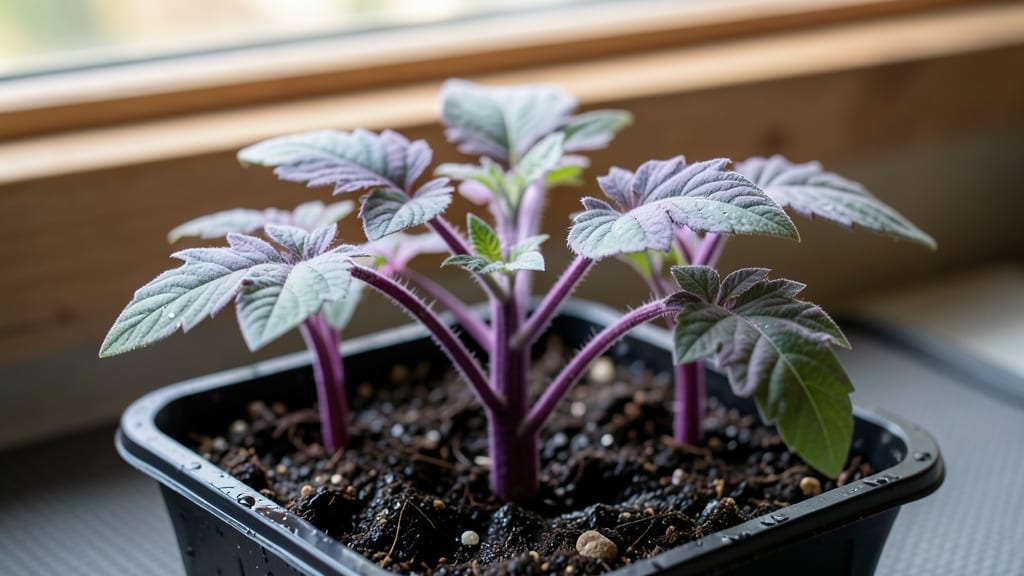
Those deep purple stems mean stronger seedlings fighting off disease from day one. 🌱 I’ve grown purple-stemmed tomatoes for years, and the difference in plant health is night-and-day compared to regular seedlings.
The secret starts with germination—keeping moisture consistent, temperatures steady, and light just right to coax those vibrant stems without leggy weak growth.
You’ll need a seed-starting mix that drains well but holds moisture, a heat mat (optional but helpful), and a sunny windowsill or grow light. The purple stems appear within 7–10 days of germination, signaling healthy, disease-resistant plants.
These seedlings thrive in cooler soils and resist common tomato diseases like early blight, which means fewer chemical sprays and happier plants all season.
By the time you’re transplanting, your seedlings will be stocky with true leaves and those signature purple stems. They handle transplant shock better than standard varieties, and the flavor? Often more complex and sweet. The key is patience—don’t rush the hardening-off process, and space them properly to avoid crowding.
Works in containers or garden beds, from Zone 4 to Zone 10. The same tricks apply whether you’re growing heirlooms or hybrids. Let’s get those seeds started right!
📚 In This Guide
- What you need
- Instructions
- Tips and common mistakes
- Wrapping up and next steps
What you need
- ● Purple-stemmed tomato seeds – Choose heirloom varieties like 'Indigo Rose' or 'Black Krim' (1–2 packets, ~50–100 seeds).
- ● Seed-starting mix – 10–12 quarts of sterile, seedling-specific potting soil (avoid garden soil—it’s too dense!).
- ● Seed trays or small pots – 2–4 inch pots (10–20 total) or a 1020-cell seed tray for efficiency.
- ● Grow lights or sunny windowsill – A full-spectrum LED grow light (12–16 hrs/day) or a south-facing window (6+ hrs of sunlight).
- ● Spray bottle – For gentle watering (avoid over-saturating seeds!).
- ● Plastic wrap or humidity dome – To retain moisture while seeds germinate.
- ● Fertilizer – Balanced, water-soluble fertilizer (5-5-5 or 10-10-10) for seedlings (dilute to half-strength).
- ● Labels & markers – To track varieties and planting dates.
- ○ Tweezers – For careful seed placement (optional but helpful!).
- ○ Heat mat (optional) – Speeds up germination (70–80°F ideal).
- ○ Fungicide (optional) – Like mycorrhizal inoculant or neem oil to prevent damping-off.
- ● Transplanting tools – Small hand trowel or butter knife for moving seedlings later.
Instructions for germinating purple-stemmed tomato seedlings
Here's how to coax those striking purple stems from seed—with tricks that boost vigor and disease resistance from day one.
🌱 Step 1: Prep Seeds for Faster, Stronger Germination
Start by soaking your seeds in lukewarm water for 12 hours—this softens the outer coating and speeds up germination. I use a small bowl with a piece of mesh to keep seeds contained while they soak. The water should feel slightly warm to the touch, not hot.
After soaking, drain the seeds and wrap them in a damp paper towel. Fold the towel loosely and place it in a sealed plastic bag. Store this in a 75-85°F environment—your fridge's warmest shelf or a seedling heat mat works perfectly. Check daily for moisture; the towel should stay damp but not soggy.
This pre-germination step is where the magic happens. You'll see tiny roots emerge within 3-5 days—that's your cue to move to soil. The purple stems develop strength during this phase, setting the stage for disease resistance later.
💧 Step 2: Plant Pre-Germinated Seeds in Sterile Mix
Fill your seedling trays with a sterile seed-starting mix—never garden soil, which carries pathogens that can rot delicate purple stems. Press the mix down lightly to eliminate air pockets, then create small ¼-inch deep indentations with your finger. Place each seed, root-side down, into its own hole.
Cover the seeds with a thin layer of mix, just enough to obscure them. I use a fine-mesh strainer to sift the soil gently—this prevents burying seeds too deep, which delays germination. Water lightly from the bottom of the tray to avoid disturbing the seeds, then cover with a humidity dome or plastic wrap.
Keep the soil consistently moist but never waterlogged. The purple stems need steady hydration to develop properly, but soggy conditions invite damping-off. You'll know moisture is right when the soil surface looks slightly damp but not glistening.
☀️ Step 3: Provide Warmth and Light for Purple Stem Development
Place your trays on a seedling heat mat set to 75-85°F—this warmth triggers the genetic traits that produce those vibrant purple stems. Once seeds sprout (usually within 5-7 days), remove the humidity dome immediately to prevent fungal issues. Purple stems are more susceptible to rot in damp conditions.
Move seedlings under grow lights positioned 2-3 inches above the plants. Purple-stemmed varieties need 14-16 hours of light daily to prevent leggy growth. You'll see the stems start developing their characteristic color within 10-14 days—this is your first visual confirmation that everything is working.
Rotate the trays daily so all seedlings receive even light. Leggy purple stems (thin and stretched) mean your light is too far away. Strong purple stems should be thick at the base and deep purple in color, not pale or green-tinged.
✂️ Step 4: Thin and Harden Off for Transplant Success
When seedlings reach 2 inches tall and show their first true leaves, thin to the strongest seedling per cell. Gently snip the weaker stems at soil level with clean scissors—this prevents disturbing the roots of your purple-stemmed keepers. The remaining plants will develop thicker, more vibrant stems without competition.
Start hardening off 2 weeks before transplanting by placing seedlings outside in a sheltered spot for 1-2 hours daily. Gradually increase exposure over 10 days
Transplant on an overcast afternoon when soil temperatures are below 75°F. Bury seedlings slightly deeper than their original depth—this encourages stronger stem development and disease resistance. Water deeply at the base to settle the soil around the purple stems.
Tips & tricks for germinating vibrant purple-stemmed tomatoes
These targeted strategies will help you coax out those stunning purple stems while avoiding the most common pitfalls that sabotage seedling success.
Pre-Soaking Precision: The 12-hour lukewarm soak is non-negotiable for purple-stemmed varieties—their tougher seed coats need this exact hydration window to trigger germination. I've found that using a mesh strainer in your soaking bowl prevents seeds from floating away while maintaining even moisture distribution. After soaking, give them a quick rinse to remove any residual water that could cause mold during the 75-85°F incubation phase.
Temperature Consistency: Those 75-85°F ranges in Steps 1 and 3 aren't arbitrary—they're the sweet spot where purple stem genetics activate. I recommend using a seedling heat mat with a built-in thermometer to maintain precision. If your kitchen fluctuates, place the sealed bag of seeds near a warm appliance (like the fridge's warmest shelf) rather than relying on ambient room temperature, which can drop below 70°F at night.
Lighting Strategy: The 14-16 hours of daily light in Step 3 is crucial for preventing leggy purple stems, but placement matters just as much. Position your grow lights so they're just 2-3 inches above the seedlings—any higher and you'll get those telltale stretched stems. I've had success with LED grow lights on a timer, but fluorescent bulbs work too if you can't justify the investment. The key is maintaining this distance as your seedlings grow; adjust the light height weekly to keep it consistent.
Transplant Timing: That overcast afternoon transplant window when soil temps are below 75°F is your best shot at minimizing transplant shock for purple-stemmed varieties. I've learned this the hard way—transplanting in hotter conditions causes the stems to blanch out, losing that gorgeous purple pigment. If you must transplant during sunny weather, do it in the late afternoon when temperatures have dropped, and provide shade cloth for the first 24 hours.
Pro Tips for Purple Stems Tomato Seedlings
- These targeted strategies will help you coax out those stunning purple stems while avoiding the most common pitfalls that sabotage seedling success.
- Pre-Soaking Precision: The 12-hour lukewarm soak is non-negotiable for purple-stemmed varieties—their tougher seed coats need this exact hydration window to trigger germination.
- Temperature Consistency: Those 75-85°F ranges in Steps 1 and 3 aren't arbitrary—they're the sweet spot where purple stem genetics activate.
Frequently asked questions
Got questions about growing purple-stemmed tomato seedlings?
You’re not alone! Here are answers to the most common queries—from germination tips to troubleshooting—so you can nurture healthy, vibrant plants with confidence.
Why do purple-stemmed tomato seedlings have purple stems?
Purple stems are a natural trait in certain heirloom varieties like Indigo Rose or Black Krim. This pigment (anthocyanin) acts as a sunscreen, protecting seedlings from UV damage and boosting disease resistance. No extra care is needed—just enjoy the stunning color and extra plant toughness!
How long does it take for purple-stemmed tomato seedlings to germinate?
Germination usually takes 7–14 days at 70–85°F (21–29°C). Keep soil consistently moist (not soggy) and maintain warmth with a heat mat if needed. Purple-stemmed varieties often germinate slightly slower than standard tomatoes, so patience is key!
What’s the best temperature range for growing purple-stemmed tomato seedlings?
Ideal temps are 65–75°F (18–24°C) day/night. Below 50°F (10°C), growth stalls; above 90°F (32°C), seedlings bolt or develop weak stems. Use a grow light or shade cloth in hot climates. Pro tip: A mini greenhouse tray speeds up acclimation!
My purple-stemmed seedlings look leggy—what’s wrong?
Leggy seedlings (tall, weak stems) usually mean too little light or overcrowding. Move them to a sunny window or under grow lights (12–16 hrs/day). Thin seedlings to 2 inches apart and bury stems deeper when transplanting to encourage root growth.
Can I grow purple-stemmed tomatoes from store-bought tomatoes?
Nope! Store-bought tomatoes are hybridized for shelf life, not germination. Save seeds from open-pollinated purple-stemmed varieties (like Cherokee Purple) for true heirloom traits. If you’re starting fresh, buy seeds from a reputable supplier—your future harvest will thank you!
Are purple-stemmed tomatoes more disease-resistant?
Yes! The anthocyanin in purple stems acts as a natural antioxidant, deterring pests and fungal diseases (like early blight). However, proper spacing, airflow, and organic fungicides still prevent issues. Rotate crops yearly to maintain soil health.
What can I do if my purple-stemmed seedlings develop yellow leaves?
Yellow leaves often signal overwatering, nutrient deficiency, or transplant shock. Check soil moisture (top inch should dry between waterings) and fertilize with a balanced tomato feed (10-10-10). If leaves curl, increase humidity with a tray of pebbles and water.
Wrapping up and next steps
Growing purple-stemmed tomato seedlings is a rewarding way to add unique beauty and resilience to your garden! With the right germination tricks—like proper moisture, warmth, and disease prevention—you’ll nurture vibrant, healthy plants that stand out in any patch.
Now that you’re armed with the know-how, it’s time to roll up your sleeves and get planting! 🌱
Start by gathering your supplies, follow the steps with confidence, and soon you’ll be harvesting colorful, flavorful tomatoes that’ll make your garden the talk of the neighborhood. Happy growing!