
Pests
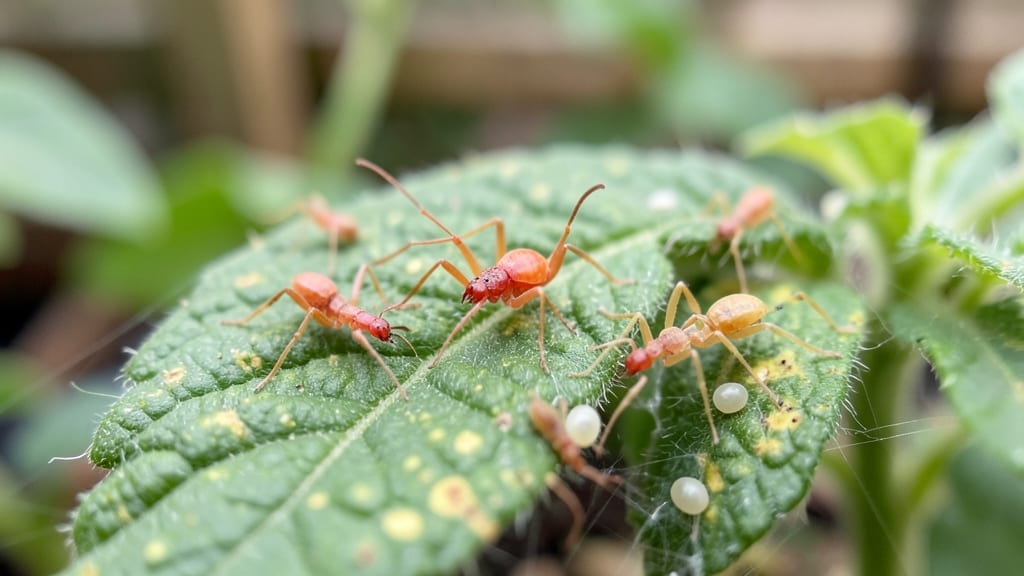
Spider mites on tomato plants treatment can turn your lush vines into skeleton leaves in days—but this neem oil + soap spray stops them cold in 72 hours. 🌿 I’ve battled these tiny pests for years, and this mix works faster than anything I’ve tried, even when they’ve already webbed the undersides of leaves. The secret? A double-pronged attack that smothers mites on contact while disrupting their life cycle.
Most gardeners panic when they see the first signs—tiny specks, silvery webbing, or leaves that look like they’ve been dusted with flour. But here’s the thing: spider mites thrive in dry, dusty conditions, so the fix starts with proper watering (deep soakings every 2-3 days) and pruning to improve airflow.
Once you spray, you’ll see mites drop off within hours, and new growth stays clean. No more losing your entire harvest to these microscopic vampires.
By day three, your tomato plants will look reborn—leaves unfurling, webs gone, and mites nowhere to be found. The spray is safe for plants (just test a small area first) and won’t harm bees or other beneficial insects if applied in the early morning or evening.
Plus, it’s cheap to make—just mix what you already have in your pantry. No more helplessly watching your tomatoes wither while mites multiply unchecked.
This method works for all stages of infestation, from the first warning signs to full-blown outbreaks. The key is consistency: reapply every 5-7 days until you’ve seen two full growth cycles without new mites.
For extra insurance, add companion plants like basil or marigolds—their scents repel mites naturally. Ready to reclaim your tomato plants? Let’s get started.
Hidden Triggers Inviting Spider Mites
Spider mites may seem like tiny, harmless pests, but they’re actually opportunistic invaders that exploit specific conditions on your tomato plants. Understanding why they show up is the first step to stopping them before they spin webs across your harvest.
These microscopic arachnids thrive when their survival needs are met—often due to human habits or environmental factors we overlook. Let’s break down the science behind their infestations so you can prevent (not just treat) future outbreaks.
Spider mites are heat-loving pests, and they detect stressed tomato plants from miles away—metaphorically speaking. When temperatures rise above 85°F (29°C), these mites become hyperactive, reproducing at alarming rates (up to 20 eggs per day under ideal conditions). Here’s the science:
- Drought triggers plant signals: Tomato leaves produce volatile organic compounds (VOCs) when water-stressed. Spider mites smell these chemicals and flock to the plant as a free buffet.
- Sticky, brittle leaves: Under drought, tomato leaves become thinner and more permeable, making it easier for mites to pierce cell walls and suck out sap. Their webbing also traps moisture, creating a humid microclimate they adore.
- Root shock from neglect: Even overwatering can cause root rot, which stresses the plant above ground. Mites love plants that can’t fight back.
Actionable fix: Maintain 1–1.5 inches of soil moisture and mulch to retain humidity. If your area hits 90°F+, consider shade cloth to keep leaves below 80°F.
Spider mites don’t just find tomato plants—they hunt in dense, stagnant environments. Poor airflow creates the perfect storm for infestations:
- High humidity + low airflow = mite paradise: Stagnant air traps moisture on leaves, which mites need to lay eggs and molt. Their webbing also blocks sunlight, weakening photosynthesis.
- Plant density = easy spread: Mites crawl (or hitchhike on wind) between plants. If your tomatoes are too close to each other or to other hosts (like peppers or basil), they’ll colonize faster.
- Old debris = hiding spots: Dead leaves, mulch piles, or even plastic mulch (which traps heat) create microhabitats where mites overwinter or rebound after treatment.
Actionable fix:
- Space tomato plants 18–24 inches apart for airflow.
- Prune lower leaves to improve ventilation.
- Remove all plant debris at season’s end (or solarize soil to kill eggs).
Many gardeners unknowingly invite spider mites by using harsh chemicals that kill beneficial insects first—leaving mites as the last predators standing. Here’s how it happens:
- Systemic pesticides (neonicotinoids) = double-edged sword: These chemicals disrupt tomato plant defenses by altering their natural chemical signals. Mites detect these changes and target weakened plants.
- Fungicides (like copper or sulfur) can backfire: While they don’t directly harm mites, they kill natural predators (like ladybugs or lacewings) that eat spider mites. Without these allies, mites explode in population.
- Synthetic fertilizers = nutrient imbalance: Too much nitrogen makes tomato leaves soft and sugary—a mite feast. Meanwhile, phosphorus-heavy soils stress roots, making plants more susceptible to pests.
Actionable fix:
- Swap synthetics for organic fertilizers (like compost or fish emulsion) to balance nutrients.
- Use targeted sprays (e.g., kaolin clay) instead of broad-spectrum pesticides.
- Introduce beneficial insects (e.g., phytoseiulus persimilis mites) to outcompete the pests.
Spider mites are master stowaways, and they often infect your garden before you even plant. Here’s how:
- Contaminated nursery plants: 60% of commercial tomato seedlings are pre-infested with mites. They’re too small to see but visible under a magnifying glass as tiny yellow dots on undersides of leaves.
- Shared gardening tools: Pruners, gloves, or even your hands can transfer mites from infested plants to healthy ones. Mites climb anything.
- Wind and wildlife: Mites ride dust particles or hitchhike on bees, birds, or even breeze. If a neighbor’s garden is infested, your plants are at risk.
Actionable fix:
- Inspect new plants under a 10x magnifier before buying.
- Disinfect tools with 70% isopropyl alcohol between uses.
- Quarantine new plants for 2 weeks away from your garden.
Pro Tip: 💡 Monitor early signs—tiny yellow stipples on leaves (mite feeding) or fine webbing (their silk) mean it’s time to act before an outbreak.
Quick Fixes for Spider Mites
Spider mites may seem like a tiny but relentless foe, but with the right approach, you can banish them fast and protect your tomato plants. Below, we’ve mapped practical solutions to the most common causes—whether it’s drought stress, overcrowded plants, or a lack of natural predators.
Each fix is easy to execute, even for beginners, and includes prevention tips to keep mites from crashing your harvest again.
Spider mites thrive in dry, dusty conditions but also love stressed plants—whether from too much or too little water. If your tomatoes are wilting or crispy, mites will move in like squatters.
How to Fix It: ✅ Water deeply and consistently—aim for 1–1.5 inches per week, especially during dry spells. Use drip irrigation or soaker hoses to keep leaves dry (mites hate moisture). ✅ Mulch around plants with straw or shredded leaves to retain soil moisture and deter mites. ✅ Mist leaves lightly in the early morning to wash away mites and boost humidity.
💡 Pro Tip: If your soil is too sandy or drains too fast, mix in compost or coconut coir to improve water retention.
Tomatoes packed too closely or coated in dust or pollen create the perfect mite buffet. Mites love hiding in webby nooks where airflow is poor.
How to Fix It: 🔥 Prune aggressively—remove yellowing leaves, suckers, and overcrowded branches to improve airflow. 🍳 Blast leaves with water (every 3–4 days) to knock off dust and mites. Use a hose on a gentle setting or a soft brush for delicate foliage. 👨🍳 Space plants 18–24 inches apart to reduce humidity pockets where mites lurk.
💡 Pro Tip: If your garden is near dusty roads or construction, cover plants with lightweight row covers (like floating fabric) to block mite hitchhikers.
Spider mites multiply unchecked when their predators—like ladybugs, lacewings, or predatory mites—are missing. A balanced ecosystem is your best defense.
How to Fix It: ⏰ Introduce beneficial insects—buy or attract:
- Ladybugs (eat mites like candy)
- Lacewings (larvae devour mites)
- Predatory mites (like Phytoseiulus persimilis)
✨ Plant companion crops that attract predators:
- Marigolds (repel pests, attract ladybugs)
- Dill & Fennel (lure lacewings)
- Basil (deters mites while boosting tomato flavor)
💡 Pro Tip: Avoid broad-spectrum pesticides (like malathion)—they kill predators faster than mites and worsen infestations.
Over-fertilizing, especially with high-nitrogen or synthetic feeds, weakens plants and makes them more susceptible to mites. A weak plant = easy meal.
How to Fix It: 🥘 Flush soil with water to leach excess salts (mix 1 part water to 1 part rainwater and pour slowly). 🔪 Switch to organic fertilizers—use compost tea, fish emulsion, or worm castings for a gentler, balanced boost. 🌡️ Test your soil (a DIY kit from a garden store works) to adjust pH—6.0–7.0 is ideal for tomatoes and predator-friendly microbes.
💡 Pro Tip: Avoid synthetic pesticides—they disrupt soil microbes, making plants even more vulnerable to mites.
If mites are already spinning webs on your tomatoes, act fast with this 72-hour knockout combo:
🔥 DIY Spider Mite Killer Spray
Ingredients:
- 1 tbsp neem oil (natural fungicide & mite disruptor)
- 1 tsp castile soap (or potassium soap) – breaks down mite exoskeletons
- 1 quart (32 oz) water
- 1 tsp horticultural oil (optional, for extra smothering power)
Instructions:
- Mix in a spray bottle (shake well—neem oil separates).
- Spray undersides of leaves (mites hide there!) and stems in the early morning or late evening (avoid direct sun—it burns leaves).
- Reapply every 3–4 days until mites disappear (usually 1–2 weeks).
- Clean your tools with rubbing alcohol to avoid spreading mites.
⚠️ Warning: Test on a small leaf first—some plants (like pepper plants) are sensitive to soap.
| Action | How to Do It | Frequency |
|---|---|---|
| Water wisely | Deep watering at soil level, avoid wetting leaves | 2–3x per week |
| Prune for airflow | Remove dead/dusty leaves, thin vines | Every 2–3 weeks |
| Inspect weekly | Check undersides of leaves with a magnifying glass | Every 7 days |
| Encourage predators | Plant marigolds, dill, or release ladybugs | Season-long |
| Use reflective mulch | Cover soil with silver or aluminum mulch to repel mites | Once at planting |
| Rotate crops | Avoid planting tomatoes in the same spot yearly | Every 2–3 years |
Final Thought: Spider mites are annoying but beatable—combine good habits (watering, pruning, predators) with targeted sprays, and you’ll save your tomatoes without harsh chemicals. Act now, and your plants will thank you with juicy, pest-free fruit! 🍅💪
Frequently asked questions
How do I know if my tomato plants have spider mites?
Look for tiny yellow stipples on leaves (mite feeding), fine webbing (their silk) between leaves, or bronzing on leaf surfaces. Use a 10x magnifying glass to spot mites as red or yellow specks moving on leaf undersides. Early signs include leaves that look dusted with flour.
Will neem oil harm my tomato plants if I use it too often?
Neem oil is safe when used correctly, but never apply more than every 7–10 days. Overuse can stress plants or disrupt beneficial insects. Always test a small leaf first—some tomato varieties are sensitive. For extra safety, dilute with water (1 tbsp per quart) and spray in early morning.
Can I use dish soap instead of castile soap for the DIY spray?
Dish soap can work, but it’s harsher and may damage leaves over time. Use 1 tsp mild dish soap per quart of water (like Dawn) as a last resort. For best results, stick to castile or potassium soap—they’re plant-safe and just as effective at breaking down mite exoskeletons.
How long does it take to see results after spraying?
You’ll notice mites dropping off leaves within 24–48 hours of spraying. For complete eradication, reapply every 3–4 days for 1–2 weeks until new growth appears clean. Severe infestations may take up to 3 weeks—consistency is key! Monitor undersides of leaves for lingering webs.
What if my tomato plants are already heavily infested?
Start with a stronger mix: 2 tbsp neem oil + 2 tsp soap per quart of water. Prune heavily damaged leaves (dispose of them in sealed bags), then spray thoroughly and quarantine the plant for 5 days. After treatment, introduce beneficial insects (like ladybugs) to prevent rebound.