
Vegetables
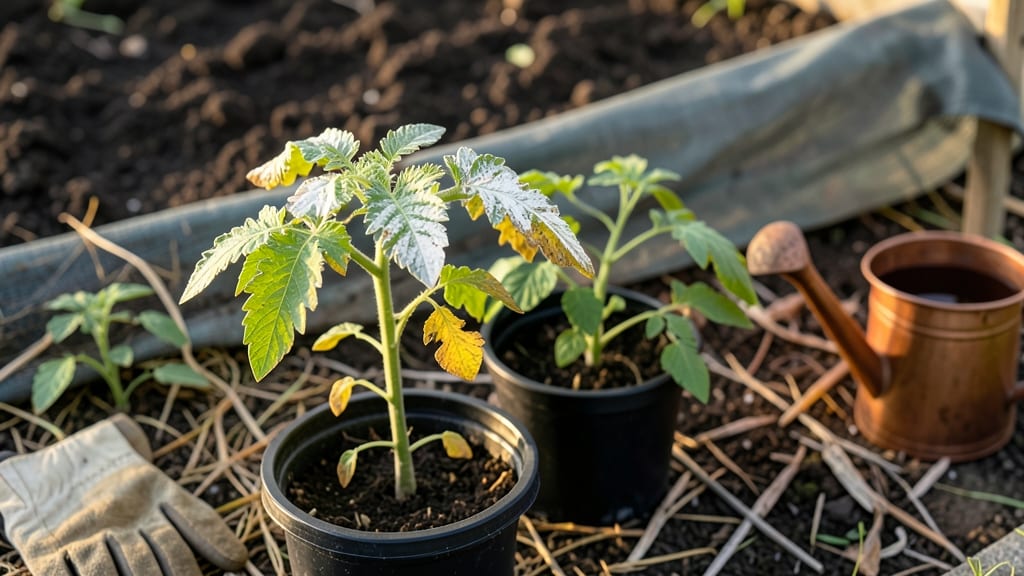
Your tomato seedlings look like they’ve been through a sauna instead of a sunny day. 🌱 Sunburned tomato seedlings happen when young plants get too much direct sunlight too soon—leaving them wilted, crispy, or even dead.
The good news? Most can bounce back with the right care, and you can prevent it next time with simple adjustments.
First, move them to partial shade immediately—use shade cloth, a nearby tree, or even a white sheet draped over a frame. Water deeply at the base (not overhead) to help them recover and keep soil moist but not soggy.
Within 24-48 hours, you’ll see them perk up as they start to adjust.
Long-term, harden off seedlings gradually over 7-10 days before transplanting, exposing them to sunlight in 1-2 hour increments. Space them properly (18-24 inches apart) to avoid overcrowding, which traps heat and stress. With these steps, your seedlings will thrive instead of crisp up.
This fix works for all tomato varieties, whether you’re growing heirlooms or hybrids. The key is acting fast and giving them time to adjust—no more sad, sun-scorched starts. Let’s get those plants back in shape!
📚 In This Guide
- What you need
- Instructions
- Tips and common mistakes
- Wrapping up and next steps
What you need
- ● Sunburned tomato seedlings – 1 or more (check for crispy leaves, yellowing, or wilting 🌿)
- ● Water – Room-temperature (1 gallon or enough to lightly mist)
- ● Shade cloth or lightweight fabric – 1 piece (to block 50-70% sunlight temporarily)
- ● Pruning shears or scissors – 1 pair (sterilized with rubbing alcohol)
- ● Well-draining potting mix – 1 bag (or enough to refresh their soil)
- ● Balanced liquid fertilizer (5-5-5 or 10-10-10) – 1 small bottle (diluted to half-strength)
- ● Spray bottle – For gentle hydration (avoid over-saturating roots)
- ● Hydrogen peroxide (3%) – 1 small bottle (1 tsp per gallon of water for root soak)
- ● Aspirin or ibuprofen (1/4 tablet crushed) – 1 dose (mixed into water for anti-inflammatory benefits 💊)
- ● Humidity dome or plastic bag – 1 (to retain moisture while recovering)
- ● pH test kit – 1 (to check soil pH; tomatoes prefer 6.0–6.8)
How to revive sunburned tomato seedlings in minutes
Here's my go-to method for rescuing tomato seedlings that've taken too much sun—fast, effective, and no special supplies needed.
🌿 Step 1: Identify and Isolate the Damage
First, examine your seedlings closely. Sunburned leaves appear white, gray, or crispy along the edges, often with a papery texture. These areas won't recover, but the rest of the plant can. Gently pinch off or snip the damaged leaves with clean scissors—this prevents disease from entering through the damaged tissue.
Move the seedlings to a shadier spot immediately. Even an east-facing windowsill or under a sheer curtain provides enough relief. If you're outdoors, create shade with a lightweight row cover or even a piece of white fabric draped loosely over a frame. Avoid direct sunlight until new growth appears.
💧 Step 2: Hydrate and Cool the Plants
Sunburn weakens the plant's ability to retain moisture, so water deeply but gently. Use room-temperature water to avoid shocking the roots further. Water at the base rather than overhead—this prevents additional stress from water droplets acting like tiny magnifying glasses on the sunburned leaves.
Place a small fan on low speed nearby to improve air circulation. This helps the plant cool down and reduces the risk of fungal infections that often follow sun damage. Keep the seedlings in this shaded, breezy environment for at least 24 hours—you'll notice the leaves start to perk up within a few hours.
☀️ Step 3: Protect and Gradually Reintroduce Light
After 24 hours, check the seedlings again. If the remaining leaves are still firm and green, you can begin reintroducing indirect light. Start with 2-3 hours of morning sun on the first day, then gradually increase exposure by 1 hour daily over the next 3-5 days. This slow reintroduction prevents further damage.
If the seedlings show new signs of stress (wilting, yellowing), return them to full shade for another day. Avoid afternoon sun entirely for at least 48 hours—this is when UV intensity peaks and can worsen damage. Use a 50% shade cloth if you're working outdoors to filter the light further.
🌱 Step 4: Boost Recovery With Supportive Care
Give your seedlings a light feeding with a half-strength liquid fertilizer (like a 10-10-10 diluted to 5-5-5) to help them recover. Focus on nitrogen to promote leaf regrowth, but avoid high-phosphorus fertilizers, which can stress the plant further. Water the fertilizer into the soil rather than applying it to the leaves.
Monitor the seedlings for new growth. Healthy recovery looks like new leaves emerging from the stem, often smaller at first but with a vibrant green color. If you see no improvement after 5-7 days, the plant may need to be replaced—sometimes the damage is too severe for recovery. But in most cases, seedlings bounce back surprisingly well with this method.
⏰ Step 5: Prevent Future Sunburn
Once your seedlings are recovered, take steps to prevent future sun damage. If growing indoors, keep them 6-12 inches away from the window—closer than that risks another burn. Use a grow light instead of natural light if possible, as it provides consistent, controlled illumination without the risk of overheating.
Outdoor seedlings need gradual acclimation. Harden them off by moving them to partial shade for 1-2 hours daily before transitioning to full sun. Watch the weather—sudden heatwaves or clear skies can still cause issues, so always have shade options ready. A simple white umbrella or pop-up shade tent works perfectly for outdoor setups.
Tips & tricks for reviving sunburned tomato seedlings
Here's what I've learned from rescuing dozens of tomato seedlings—these small tweaks make all the difference between recovery and loss.
The Damage Assessment: When you're pinching off those crispy leaves in Step 1, look for the "V" shape where the leaf meets the stem. If the damage stops cleanly at this junction, the rest of the plant has a good chance of recovery. If the entire leaf is uniformly white or gray, it's beyond saving—but the stem itself might still produce new growth. This is why immediate action matters most!
Hydration Hack: In Step 2, instead of just watering at the base, try the "soak-and-drain" method for severely sunburned seedlings. Place them in a shallow tray of room-temperature water for 10 minutes, then let them drain completely. This helps rehydrate the roots without shocking them, and the 24-hour recovery window becomes even more effective when you start with properly hydrated plants.
Light Reintroduction Strategy: The gradual light increase in Step 3 is critical, but timing matters more than you'd think. Morning sun is gentler because the UV index is lower—think of it as the plant's physical therapy session. If you're working outdoors, position seedlings so their strongest side (the side that faced away from the sun during the burn) gets the most light first. This helps them rebuild strength asymmetrically.
Fertilizer Timing: In Step 4, I recommend waiting until you see the first signs of new growth before fertilizing. This usually happens around day 3-4 of recovery. Too-early feeding can overwhelm the plant's already compromised system. When you do fertilize, mix the half-strength solution with water first, then water it into the soil—never apply it directly to leaves, especially if they're still recovering from sun damage.
Pro Tips for Sunburned Tomato Seedlings
- Here's what I've learned from rescuing dozens of tomato seedlings—these small tweaks make all the difference between ...
- The Damage Assessment: When you're pinching off those crispy leaves in Step 1, look for the "V" shape where the leaf ...
- Hydration Hack: In Step 2, instead of just watering at the base, try the "soak-and-drain" method for severely sunburn...
Frequently asked questions
Got questions about sunburned tomato seedlings?
You’re not alone! Here are answers to the most common concerns—so you can save your plants and still enjoy a bountiful harvest.
How do I know if my tomato seedlings are sunburned?
Look for white or grayish patches on leaves, stems, or even fruit—these are classic signs of sun scald. You might also spot brittle, crispy edges or leaves that feel dry to the touch. If the damage is severe, the plant may wilt or develop blistered spots.
Can I still save my seedlings if they’re already sunburned?
Act fast—trim the damaged leaves (use clean scissors ) and apply the 5-minute fix in this article. Keep seedlings in partial shade (like under a sheer cloth ) for 2–3 days to prevent further damage. Most sunburned seedlings bounce back within a week!
Will sunburned seedlings still produce fruit?
Yes, but mild sunburn may reduce yield slightly. If the damage is on leaves/stems, the plant will redirect energy to new growth. For fruit already sunburned, harvest early—they’ll soften faster but are still edible (just avoid the damaged spots!).
How can I prevent sunburn in the future?
Start by hardening off seedlings gradually (expose them to sunlight for 1–2 hours daily, increasing time weekly). Use shade cloth (30–50%) during peak sun (10 AM–4 PM). Pro tip: Water seedlings early in the day so droplets act like tiny prisms, diffusing sunlight!
Are there sunburn-resistant tomato varieties?
Yes! Opt for heat-tolerant varieties like ‘Heatmaster,’ ‘Solar Fire,’ or ‘Black Krim’—they handle high temps better. Indeterminate tomatoes (like ‘Brandywine’) also recover faster from sun stress because they produce new leaves continuously.
Still stumped? Drop your specific issue below—we’re happy to help!
Wrapping up and next steps
Don’t let sunburned tomato seedlings discourage you—with the right care, they can bounce back stronger than ever! 🌱 Your quick fix using shade, hydration, and gentle pruning gives these little plants a fighting chance, ensuring a bountiful harvest ahead. Now’s the time to act: monitor them daily, adjust their environment, and watch them thrive.
Ready to turn your sunstruck seedlings into resilient growers? Start by implementing your plan today—your future tomatoes will thank you!