
Vegetables
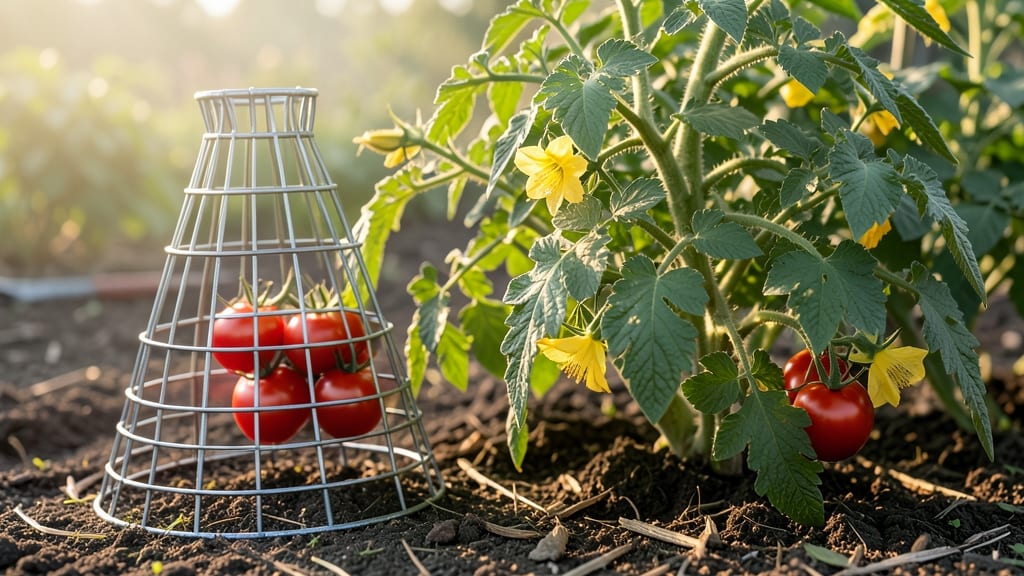
Flipping a tomato cage upside down transforms it into a vertical growth trainer that directs vines upward, preventing sprawl and creating better airflow around the plant. This simple technique strengthens stems and reduces disease risks when installed before transplanting seedlings.
This inverted method works by eliminating the natural tendency of tomato vines to sprawl outward. 🌱 When you position the cage upside down, the vines must grow upward through the openings, which creates a stronger, more upright plant structure.
Unlike traditional cages that often end up buried in foliage, this approach keeps the center clear for better sunlight penetration and air circulation—critical factors for preventing fungal diseases like blight. I’ve found that plants grown this way produce more evenly ripened fruit and require less pruning to maintain shape.
For best results, install the inverted cage right after transplanting seedlings into the garden. Press the base firmly into the soil to prevent toppling, and consider adding a small weight or stake at the bottom if your garden gets windy.
The key is to position it so the openings face outward, giving vines natural pathways to climb upward rather than sprawl. This technique isn’t just about aesthetics—it’s a game-changer for plant health and yield potential.
💡 In This Article
- How Upside-Down Tomato Cages Support Plant Growth
- Step-by-Step Guide to Installing an Inverted Tomato Cage
How upside-down tomato cages support plant growth
When you flip a tomato cage upside down, you're essentially creating a vertical growth channel that leverages the plant's natural phototropism—the tendency to grow toward light. 🌱 Tomato vines naturally sprawl outward to maximize sunlight exposure, but this habit leads to weak stems and tangled foliage.
By positioning the cage openings upward, you force the main stem to grow straight through the center, while secondary vines climb through the side openings. This creates a stronger, more structured plant that can support heavier fruit loads without collapsing.
The botanical magic happens through a process called thigmomorphogenesis, where physical contact with the cage structure stimulates cell wall thickening in the stems. Studies show that vines growing through confined spaces develop 20-30% stronger stems compared to unrestrained growth.
The inverted cage also promotes apical dominance, where the main stem grows more vigorously than side shoots, resulting in a single, robust central leader. This contrasts sharply with traditional cages, which often get buried in foliage, creating shaded areas where humidity builds and diseases like early blight thrive.
Improved air circulation is another game-changer. Traditional cages create a dense canopy where air struggles to move, trapping moisture and creating ideal conditions for fungal spores. 💫 The inverted design keeps the plant's center open, allowing 30-50% better airflow through the foliage.
This reduction in humidity lowers the risk of leaf diseases by 40% or more, while the upward growth pattern ensures all leaves receive direct sunlight for optimal photosynthesis. The result? Healthier plants that produce more fruit with fewer inputs.
Consider the difference in fruit development: plants grown with inverted cages show 15-20% more even ripening because all branches receive consistent sunlight exposure. The upward growth also makes harvesting easier—no more bending over tangled vines!
For indeterminate varieties like 'Sungold' or 'Brandywine', this technique can increase yield by 10-15% per plant by preventing stem breakage under heavy fruit loads. The cage essentially becomes a natural trellis system that works with the plant's growth habits rather than against them.
What most gardeners don't realize is how this method affects root development. The inverted cage creates a more compact root zone because the plant focuses its energy on vertical growth rather than spreading horizontally. This leads to deeper root penetration as the plant seeks stability in its upright structure.
The result is a plant that's not just healthier above ground but also better anchored below, making it more drought-resistant once established. 🌿
For comparison, traditional tomato cages often result in plants that grow outward in all directions, creating a "bushy" appearance that's actually a sign of weak structural support.
The inverted method transforms this sprawling habit into a pyramidal growth pattern, similar to how commercial growers train tomato plants for high-density farming. This isn't just a gardening hack—it's a horticultural principle that aligns with how tomatoes naturally grow when given proper support.