
Companion Plants
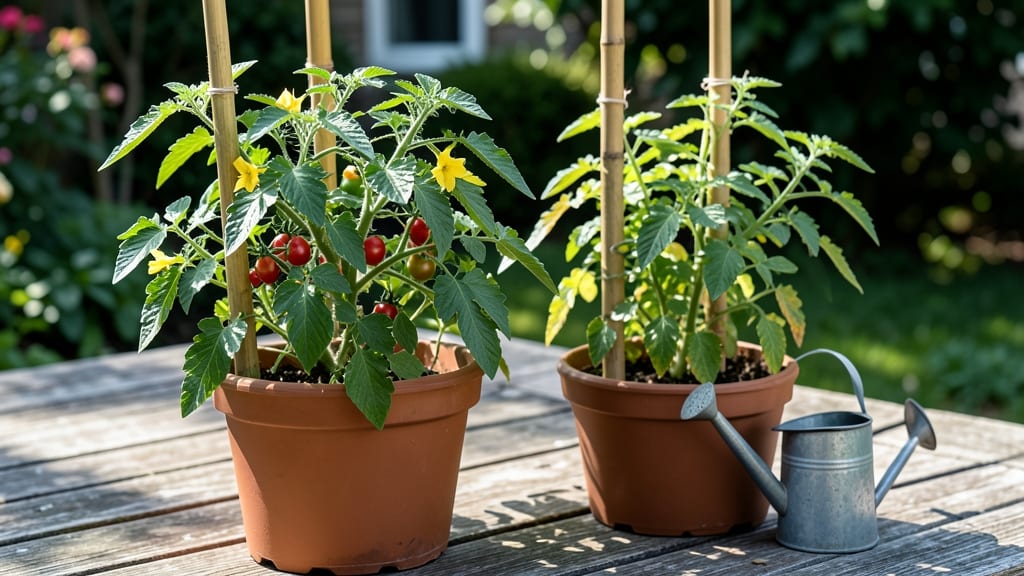
Tomato plants thrive in full sun or shade with the right balance—6 to 8 hours of direct light is the sweet spot for juicy, productive harvests 🍅.
Struggling to decide whether your tomato plants need full sun or can tolerate shade? The right light balance isn’t just about survival—it’s the key to juicy, abundant harvests that outperform store-bought tomatoes by miles.
Too much shade weakens stems, stunts growth, and reduces fruit production, while too much sun can scorch leaves and stress plants in hot climates. The trick is finding that perfect middle ground where your tomatoes get enough energy for strong vines and heavy yields.
In this guide, I’ll break down exactly how much sun tomato plants need, when partial shade is okay, and how to adjust for different varieties—whether you’re growing in containers or in-ground. You’ll also learn to spot the warning signs of poor lighting and fix them fast.
 Best Window Placement
How much sun do tomato plants actually need for optimal growth?
Tomatoes are sun-hungry plants—6 to 8+ hours of direct sunlight daily is their sweet spot for maximum fruit production. Without enough light, photosynthesis slows, leading to weak stems, poor flowering, and bland-tasting tomatoes.
Think of sunlight as their energy drink: the more they get, the juicier and sweeter your harvest will be.
Many gardeners assume partial shade is acceptable, but tomatoes are finicky about light. Even 4 hours of shade daily can reduce yields by 30-50%. The golden window for photosynthesis—when the sun’s rays are strongest—typically falls between 10 AM and 4 PM.
This is when your plants are most active in converting light into energy for fruit development.
Here’s the science: Tomatoes need full-spectrum sunlight to produce chlorophyll and carotenoids, the compounds that give fruits their color and flavor. Without enough light, plants divert energy to leaf growth instead of fruit production, resulting in smaller, less flavorful tomatoes.
Even determinate varieties (bush tomatoes) won’t compensate for low light.
Indeterminate varieties, like 'Sungold' or 'Brandywine', are even more demanding—they grow continuously and need consistent sunlight to support their vining habit. If you’re growing these in containers, ensure they get unobstructed southern exposure to avoid leggy, weak plants that flop over.
| Tomato Type | Minimum Sunlight | Ideal Sunlight | Shade Tolerance | Fruit Quality Impact |
|---|---|---|---|---|
| Determinate (Bush) | 6 hours | 8+ hours | Low (≤2 hours shade) | Reduced yield, smaller fruit |
| Indeterminate (Vining) | 7 hours | 10+ hours | None (avoid shade) | Leggy growth, poor flowering |
| Cherry Tomatoes | 6 hours | 8+ hours | Moderate (≤3 hours shade) | Slower production, less sweet |
| Heirloom Varieties | 7 hours | 10+ hours | Low (≤1 hour shade) | Blossom drop, weak stems |
Note: Shade tolerance varies by climate—hotter regions may benefit from afternoon shade to prevent sunscald.
A common misconception is that partial shade is fine if your tomatoes are in a hot, dry climate. While afternoon shade can protect leaves from sunscald, morning sun is non-negotiable. The first 4-5 hours of sunlight are critical for kickstarting photosynthesis and setting the stage for fruit development.
If your plants are in deep shade for more than 2 hours daily, they’ll start stretching toward light, a condition called etiolation.
Etiolated plants have long, weak stems and small leaves, making them prone to snapping under fruit weight. To fix this, move your plants to a sunnier spot immediately and prune leggy growth to encourage bushier, stronger plants.
If relocating isn’t possible, consider grow lights for 12-14 hours daily to supplement natural light.
For container-grown tomatoes, sunlight needs are even more critical because pots heat up faster and dry out quicker. Place containers on a south-facing patio or balcony where they can soak up unfiltered sunlight.
If your space only gets 4-5 hours of sun, choose compact varieties like 'Tiny Tim' or 'Patio Princess', which tolerate slightly less light than standard types.
One trick I’ve used with success is the "sun rotation" method for urban gardeners. If your balcony or windowsill only gets morning sun, rotate your containers every few hours to ensure all sides get equal exposure.
This mimics the full-sun experience and prevents one-sided growth. Pair this with a reflective surface (like a white wall or aluminum foil) to bounce extra light onto your plants.
Monitor your tomatoes’ leaf color as a quick health check. Deep green leaves indicate optimal light, while yellowing or pale leaves signal insufficient sunlight. If you notice fewer flowers or blossoms dropping off, it’s a red flag that your plants aren’t getting enough light.
In such cases, supplement with a high-phosphorus fertilizer (like 10-20-10) to encourage flowering, but don’t rely on it as a fix—light is the real game-changer.
Remember, tomatoes are not shade-loving plants like hostas or ferns. They’re sun worshippers, and the more light they get, the better your harvest will be. With 6+ hours of direct sunlight daily, you’ll be rewarded with vibrant, flavorful tomatoes that put grocery-store varieties to shame. 🌱☀️
Shade solutions for tomato plants: when and how to use it
Tomatoes thrive in full sun, but sometimes partial shade becomes necessary—whether due to extreme heat, limited space, or harsh afternoon rays. The key is balancing light exposure to prevent stunted growth while protecting plants from stress.
I’ve found that strategic shade placement can actually improve fruit quality in scorching climates by reducing sunburn and slowing ripening too quickly.
Not all shade is created equal. Natural shade from trees or structures offers gradual light filtering, while artificial shade cloth provides precise control. For example, a 30% shade cloth blocks 30% of UV rays while still allowing photosynthesis.
I recommend starting with lighter coverage (20-30%) during peak summer months, then adjusting based on plant response.
Shade Solutions Comparison
Natural Shade
- Pros: Free, natural filtering
- Cons: Uneven coverage, limited control
Artificial Shade Cloth
- Pros: Adjustable, consistent protection
- Cons: Requires setup, can trap heat
Morning Sun/Afternoon Shade
- Best for: Hot climates (Zones 8-10)
- Benefit: Cooler temps during fruiting
Full Afternoon Shade
- Best for: Containers or urban gardens
- Risk: Leggy growth if overused
For container-grown tomatoes, I’ve had success using reflective surfaces (like white walls) to redirect light. Place pots near south-facing walls to maximize exposure while shielding from harsh afternoon sun. In-ground plants benefit from dappled shade—think partial coverage from nearby trees—especially during the hottest hours (12 PM–4 PM).
Watch for these red flags of too much shade: elongated stems, pale yellow leaves, and sparse flowering. If you notice these, move plants to a sunnier spot immediately.
I once had a determinate variety (like 'Roma') nearly fail because I assumed partial shade was sufficient—until I noticed the stems stretching toward any available light.
Pro tip: Use shade cloth stakes to create adjustable canopies. Start with 50% coverage during heatwaves, then remove it as temperatures drop. For indeterminate varieties (like 'Cherry Tomatoes'), I’ve found they tolerate slightly more shade than their determinate cousins, thanks to their continuous growth habit.
Remember, shade isn’t a permanent fix—it’s a tool. Rotate plants occasionally to ensure even light exposure, and always prioritize morning sun for optimal photosynthesis. With the right balance, your tomatoes can thrive even in less-than-ideal light conditions! 🌱☀️