
How To
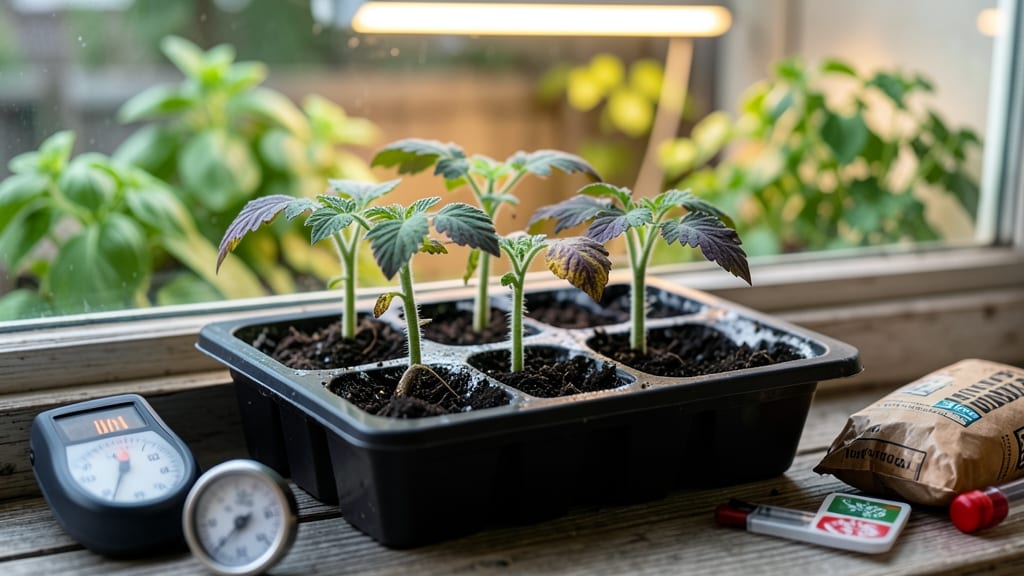
Tomato seedlings turning purple isn’t just a weird color—it’s a cry for help from your plants. 🌱 I’ve seen this happen after a cold snap, when seedlings get too much nitrogen, or when they’re struggling with disease, and fixing it early can save your entire harvest.
The purple stems usually appear on the undersides of leaves first, then creep up the stems. Cold stress causes a buildup of anthocyanins (that’s the purple pigment), while nutrient deficiencies or fungal infections can make the problem worse. The good news? Most cases are reversible with the right care.
You’ll need to adjust light, water, and nutrients within 24-48 hours to stop the spread. Start by moving seedlings to a warmer spot (above 60°F at night) and avoid overwatering—soggy soil worsens the issue. A balanced fertilizer (like 10-10-10) can also help if the problem is nutrient-related.
Once you fix the underlying issue, the purple should fade within 5-7 days. Keep an eye out for mold or wilting, though—those mean you might need to treat for disease. Prevention is key: use heat mats in cool weather and avoid overcrowding seedlings.
Root Causes Of Purple Seedling Stems
When your tomato seedlings start showing off that unexpected purple hue, it’s usually a sign that something fundamental is off—often tied to their core needs. Understanding the exact trigger helps you address the issue before it stunts growth or weakens your plants.
Let’s break down the most common culprits and why they turn your seedlings into tiny purple puzzles.
Phosphorus is the "P" in NPK (Nitrogen-Phosphorus-Potassium), and it’s critical for root development, flowering, and overall energy transfer in plants. When seedlings lack phosphorus, they can’t efficiently produce the red/purple anthocyanin pigments they normally store as a protective measure.
Why it happens:
- Poor soil quality: Many starter soils or potting mixes are nitrogen-heavy but phosphorus-light, especially if they’re made from composted materials without added bone meal or rock phosphate.
- Overwatering or leaching: Excessive watering flushes out phosphorus faster than other nutrients, leaving seedlings starved.
- Cold soil temperatures: Phosphorus becomes less available to roots when soil temps drop below 55°F (13°C). Seedlings in cool greenhouses or early spring gardens often suffer.
Actionable clue: Purple appears first on the stem near the soil line and may spread upward. Leaves stay green but look dull or stunted.
Tomato seedlings are tropical babies—they hate cold. When nighttime temps dip below 50°F (10°C) or daytime temps struggle to stay above 65°F (18°C), they trigger anthocyanin production as a survival mechanism. This pigment acts like sunscreen, protecting cells from UV damage when growth slows.
Why it happens:
- Early planting: Seedlings moved outdoors too soon (before last frost) face temperature swings.
- Drafty environments: Placing trays near windows, doors, or AC vents creates microclimates that fluctuate wildly.
- Inadequate heat mats: Without bottom heat (especially for indoor starts), roots struggle to absorb nutrients efficiently.
Actionable clue: Purple starts at the stem base and may appear mottled (not uniform). Leaves may also look cupped or wilted during the day but perk up at night.
Ironically, excess nitrogen can cause purple stems by creating a secondary deficiency. When nitrogen (N) floods the system, seedlings prioritize leafy growth over root development, starving phosphorus and other micronutrients in the process. This forces them to produce anthocyanins for protection.
Why it happens:
- Over-fertilizing: Using high-nitrogen fertilizers (like blood meal or fish emulsion) too early or at high concentrations.
- Synthetic fertilizers: Fast-release formulas (e.g., Miracle-Gro) can burn roots if not diluted properly.
- Compost overload: Fresh, unaged compost releases nitrogen rapidly, overwhelming seedlings.
Actionable clue: Purple appears along veins and stems, while leaves grow dark green and lush (a classic "burned" look). Roots may look yellowish or mushy if checked.
Seedlings deprived of 12–16 hours of light daily can’t photosynthesize efficiently, leading to a buildup of sugars and stress hormones. As a defense, they produce anthocyanins to shield themselves from oxidative damage.
Why it happens:
- Insufficient grow lights: LED or fluorescent bulbs too far away (over 12–18 inches) or running for <12 hours.
- Cloudy weather: Natural light gets blocked, especially in overcast climates.
- Shade from other plants: Competitive seedlings or nearby trees cast shadows, limiting access to light.
Actionable clue: Purple shows up along stems and between leaf veins. Leaves may look small, yellow-edged, or stretched (a sign of "etiolation").
When seedlings experience physical stress (like rough handling, overcrowding, or root pruning during transplanting), they release stress hormones that trigger anthocyanin production. This is a last-ditch effort to protect damaged cells.
Why it happens:
- Overcrowded trays: Roots compete for space/nutrients, leading to weak stems.
- Poor transplanting technique: Burying stems too deep or disturbing roots during repotting.
- Drought stress: Letting seedlings dry out completely before watering causes root desiccation.
Actionable clue: Purple appears randomly on stems (not uniform) and may be paired with wilting or stunted growth. Leaves might crisp at the edges if roots are struggling.
Tomato seedlings thrive in slightly acidic soil (pH 6.0–6.8). Outside this range, nutrient uptake—especially phosphorus and micronutrients like iron—grinds to a halt. Without these, anthocyanins flood the stems as a protective pigment.
Why it happens:
- Peat-heavy soils: Pure peat moss can acidify soil over time (pH <5.5).
- Lime or fertilizer buildup: Overusing lime (to raise pH) or synthetic fertilizers can push soil pH above 7.0.
- Rainwater runoff: Acidic rainwater leaches nutrients and lowers pH in containers.
Actionable clue: Purple stems paired with yellowing leaves (chlorosis)—especially between veins. Soil tests confirm pH outside the ideal range.
Need a fast way to narrow it down? Use this cheat sheet:
| Symptom Location | Likely Cause | First Fix to Try |
|---|---|---|
| Stem base (uniform purple) | Phosphorus deficiency | Add bone meal or rock phosphate |
| Stem + mottled purple | Temperature stress | Move to warmer spot or use heat mat |
| Purple veins + dark leaves | Nitrogen overload | Flush soil with water, reduce fertilizer |
| Stems + between veins | Light deficiency | Adjust grow lights or thin seedlings |
| Random purple patches | Transplant shock | Water deeply, avoid handling roots |
| Purple + yellow leaves | pH imbalance | Test soil, amend with sulfur or lime |
How to solve it
If your tomato seedlings are showing off those unexpected purple hues, don’t panic—there are simple, effective ways to turn things around. The key is identifying the root cause (which we covered in the Why It Happens section) and applying the right remedy.
Below, we’ve broken down solutions by the most common triggers, along with proactive tips to keep your seedlings healthy and vibrant.
If your seedlings are struggling from chilly temperatures, they need a cozy environment to bounce back.
- Move them indoors: Place seedlings near a sunny window or under grow lights (12–16 hours of light daily). Avoid drafty spots like near doors or AC vents.
- Use a heat mat: If you’re still hardening them off, a seedling heat mat (set to 70–75°F) can provide consistent warmth at the roots.
- Cover with row fabric: If outdoors, drape a lightweight frost blanket over seedlings during cool nights to trap heat.
💡 Pro Tip: Purple from cold stress usually fades within 3–5 days once temperatures stabilize. Monitor closely—if new growth stays green, you’re on the right track!
Too much moisture can suffocate roots and trigger purple stems. Here’s how to fix it:
- Let the soil dry slightly: Stick your finger 1 inch into the soil—if it’s soggy, hold off on watering for 1–2 days. Seedlings prefer slightly dry soil over soggy conditions.
- Check your pots: Ensure containers have drainage holes. If not, repot into ones with holes or add a layer of perlite to improve airflow.
- Use well-draining soil: Mix in perlite, vermiculite, or coconut coir (20%) to improve drainage. Avoid compacted or clay-heavy soils.
- Water at the base: Avoid wetting the leaves or stems, which can promote fungal issues. Use a watering can with a narrow spout for precision.
✨ Prevention Tip: Water seedlings only when the top inch of soil feels dry. Overwatering is a common rookie mistake—better to underwater than drown!
Purple stems from phosphorus or potassium deficiencies? A quick nutrient boost can revive your seedlings.
- Use a balanced fertilizer: Dilute a water-soluble fertilizer (like 10-10-10 or 5-5-5) to half-strength and apply it to the soil. Avoid overdoing it—too much salt can harm seedlings.
- Try compost tea: A gentle, organic option rich in micronutrients. Steep compost in water for 24–48 hours, strain, and use as a soil drench.
- Target-specific deficiencies:
- Phosphorus (P) deficiency: Mix 1 tbsp of bone meal per gallon of water and apply sparingly.
- Potassium (K) deficiency: Use a banana peel tea (steep peels in water for 24 hours) or wood ash (sprinkle lightly around the base).
🎯 Prevention Tip: Start with a high-quality seedling mix (like a 50/50 blend of peat moss and perlite) to avoid deficiencies from the get-go. Over-fertilizing is worse than under-fertilizing—go slow!
If purple stems are accompanied by mold, wilting, or stunted growth, a fungal infection might be the culprit. Act fast to save your seedlings.
- Remove affected seedlings: Snip off severely infected plants (including roots) and dispose of them in the trash—not the compost—to prevent spread.
- Spray with fungicide: Use a copper-based fungicide or a mix of 1 tsp baking soda + 1 quart water + a drop of dish soap. Spray the soil and undersides of leaves.
- Improve airflow: Space seedlings 2–3 inches apart to reduce humidity. If growing indoors, use a small fan on low setting for 1–2 hours daily.
- Sterilize tools and pots: Wash containers with a 10% bleach solution (1 part bleach to 9 parts water) and rinse thoroughly. Sterilize shears with rubbing alcohol.
🔥 Prevention Tip: Avoid overhead watering and water early in the day so foliage dries quickly. Healthy seedlings with strong stems resist fungi better!
If purple stems appeared after transplanting, your seedlings might be stressed. Give them TLC to recover.
- Shade them temporarily: Use a shade cloth (30–50%) for 3–5 days to reduce stress from direct sunlight.
- Water deeply: Soak the soil around the roots to help them re-establish. Use a root stimulator (like seaweed extract) to encourage regrowth.
- Avoid fertilizing yet: Wait 1–2 weeks before adding nutrients. Focus on hydration and recovery first.
- Check the roots: Gently pull a seedling to inspect for circling or damaged roots. If roots are tangled, trim them and replant.
💡 Pro Tip: Harden off seedlings gradually before transplanting—expose them to outdoor conditions for 1–2 hours daily over 5–7 days to reduce shock.
With these fixes, your tomato seedlings should bounce back to their usual green selves in no time. Monitor them closely after applying any solution, and don’t hesitate to adjust if symptoms persist. A little patience and care go a long way in growing strong, healthy tomato plants!
Frequently asked questions
Will my tomato seedlings recover if the purple stems spread to the leaves?
If purple reaches the leaves, recovery becomes harder but isn't impossible. The key is acting fast—reduce stress immediately by moving seedlings to warmer temperatures (above 60°F at night) and providing 14-16 hours of light daily. Apply a diluted balanced fertilizer (5-5-5) to address potential deficiencies. Monitor for 5-7 days; if new growth stays green, your seedlings will likely recover.
Can I still transplant tomato seedlings with purple stems?
Transplanting is risky but possible if you address the underlying issue first. First, diagnose the cause (cold stress? nutrient deficiency?) and fix it for 3-5 days before transplanting. Use shade cloth for the first week outdoors to reduce stress. Avoid fertilizing immediately—wait until new green growth appears. Purple from cold stress often fades within days of transplanting to warmer conditions.
Is purple from cold stress different than purple from disease?
Yes! Cold-stress purple appears uniform and mottled along stems, often with leaves that wilt slightly during the day but recover at night. Disease-related purple usually comes with yellowing leaves, mold spots, or stunted growth. Check the soil: cold stress happens in cool conditions, while disease thrives in damp, crowded environments. If you see both purple AND mold, treat with a copper fungicide immediately.
How can I prevent purple stems in future seedlings?
Prevention starts with consistent warmth and proper nutrition. Use heat mats for indoor starts (keep soil at 70-75°F) and avoid placing seedlings near drafts. Start with a balanced seedling mix (like 50% peat/50% perlite) and fertilize lightly with a 5-5-5 formula every 2-3 weeks. Harden off seedlings gradually before transplanting, and never let soil stay soggy—drainage is your best friend!
Can I use coffee grounds to fix purple stems?
Coffee grounds can help but aren't a magic fix. While they add potassium (which may address deficiencies), they're acidic and can worsen pH issues if overused. For best results, mix 1 tablespoon of used coffee grounds per gallon of soil and water lightly. Combine this with other fixes (warmth, proper light) for the best chance of recovery. Test soil pH first—if it's below 6.0, coffee grounds could make it worse.