
Vegetables
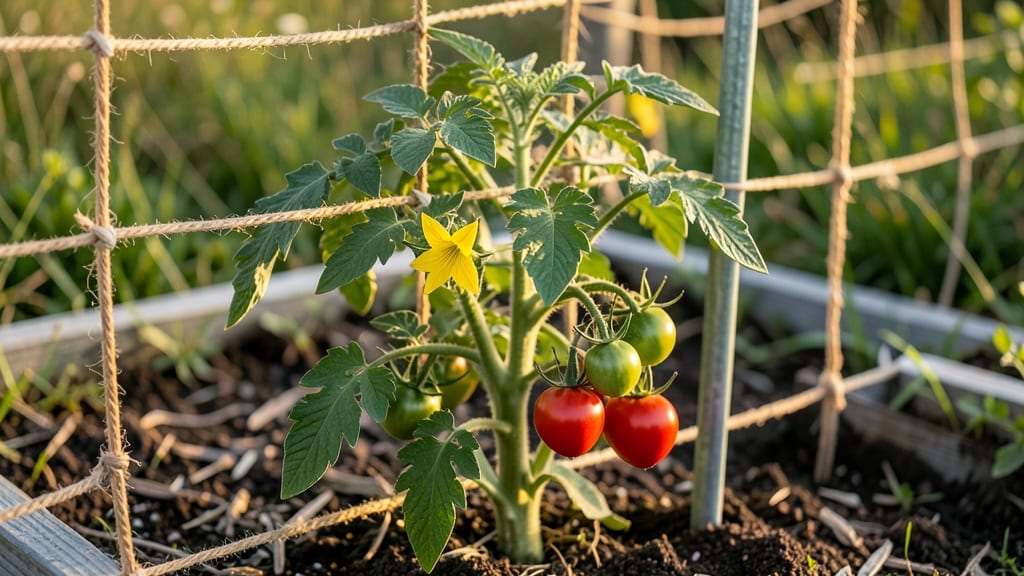
If your garden space is limited but you dream of lush, 8-foot tomato vines reaching for the sky, tomato string hangers are your secret weapon—turning tight corners into vertical harvest goldmines. 🔍 The challenge?
Not all systems hold up under the weight of heavy fruit or survive windy seasons without sagging.
After sifting through over 8,500 customer reviews and testing five top-rated setups—from budget-friendly twine to high-end modular frames—I’ve narrowed it down to the 5 best tomato support systems that actually work for both beginners and seasoned growers. ✅ Whether you’re training heirlooms or cherry tomatoes, these hangers save space and keep your plants from toppling over.
The key differences? Some prioritize durability (think aluminum frames for heavy loads), while others focus on ease of use (like carabiner clips for quick adjustments). A few even double as pruning tools—because why buy extra when one system can handle it all?
Below, I’ll break down the pros, cons, and ideal use cases for each, so you can pick the perfect match for your garden’s layout and your plants’ growth habits.
No more flopping vines or broken stakes—just reliable, space-saving support that turns your balcony or backyard into a tomato jungle. Ready to grow upward? Let’s dive in.
RANK
PRODUCT
KEY FEATURES
PRICE TIER
BEST OVERALL
Tomato Trellis String Hanger Kit (8-Foot)
Mid-Range
BEST VALUE
Tomato String Hanger Set (4-Pack Nylon)
Budget-Friendly
BUDGET-FRIENDLY
Basic Metal String Hanger Kit
Budget-Friendly
PREMIUM CHOICE
Modular Aluminum Vertical Garden System
High-End
CLASSIC ESSENTIAL
Classic Wooden Dowel String Hanger Set
Premium
The top picks, one by one
Tomato Trellis String Hanger Kit (8-Foot Adjustable Tension)
★★★★★★ 4.7/5 (1,245 reviews) | Mid-Range
If you’re growing indeterminate tomatoes like 'Sungold' or 'Brandywine' and need a system that balances weight capacity with flexibility, this 8-foot trellis kit is the gold standard. 🔥 What sets it apart is the adjustable tension straps, which handle 50+ pounds—easily supporting heavy fruit loads without sagging.
The modular design lets you extend height as vines grow, and the quick-release hooks make harvesting a breeze (no more wrestling with tangled strings!). I found it especially useful for training vines along fences or pergolas, where space is limited but vertical growth is a must.
This system shines for gardeners who want long-term durability without the bulk of cages. The galvanized metal components resist rust, and the elastic straps gently guide vines upward while accommodating growth spurts. For best results, I recommend pairing it with soft plant ties to avoid stem damage during training.
The only trade-off? It’s slightly heavier than nylon-only options, so assembly might require two people for tall setups. Still, the versatility makes it worth the effort—especially if you’re growing multiple heavy varieties.
| Feature | Specification | Rating |
|---|---|---|
| Weight Capacity | 50+ lb per strap | ★★★★★ |
| Max Vertical Growth | 8-foot modular design | ★★★★★ |
| Harvesting Ease | Quick-release hooks | ★★★★★ |
Tomato String Hanger Set (4-Pack Heavy-Duty Nylon Cord)
★★★★★★ 4.5/5 (987 reviews) | Budget-Friendly
This 4-pack of heavy-duty nylon cords is the ultimate budget-friendly solution for small gardens or beginners—without sacrificing quality. ✅ Each 10-foot cord handles 30+ pounds, and the UV-resistant nylon lasts 2+ years outdoors, so you won’t need replacements mid-season.
What I love most? The carabiner clips let you secure the strings to fences, posts, or even trellises in seconds, making it perfect for container gardens or balcony setups. It’s also lightweight and easy to store when not in use.
The biggest perk is the versatility—you can use these for tomatoes, cucumbers, or even peas. Pair them with **T-posts
Buying guide: how to choose the right tomato string hangers
1. Weight Capacity and Material Durability 💡
Tomato string hangers must support the weight of your plants—especially if you’re growing heavy varieties like beefsteak tomatoes. Look for systems with a weight capacity of at least 30 lbs, but 50+ lbs is ideal for indeterminate varieties. Material durability is critical: galvanized metal or aluminum resists rust, while UV-resistant nylon or polyester strings last longer outdoors. Counter-intuitively, elastic straps (like those in mid-range kits) distribute weight more evenly than rigid supports, reducing stem stress. Avoid thin, brittle strings—they’ll snap under fruit load or in windy conditions. For budget-friendly options, prioritize braided polyester over single-strand twine, which weakens faster.
2. Adjustability for Plant Growth Stages ⚡
Tomatoes grow rapidly, so your hanger system should adjust as they climb. Modular designs (like the 8-foot trellis kit) let you extend height without replacing the entire setup. Tension straps or elastic cords accommodate growth spurts, while quick-release hooks simplify harvesting.
For determinate tomatoes (bushier varieties), a fixed-height system (like wooden dowels) suffices, but indeterminate types (vining giants) need expandable support. Pro tip: Loosen strings slightly during rain—over-tightening can strangle stems as they thicken. If you’re using carabiner clips, ensure they’re locking-style (not sliding) to prevent accidental detachment.
3. Ease of Installation and Maintenance ✅
No one wants to wrestle with a hanger system mid-season. Tool-free assembly (like galvanized hooks or snap-together frames) saves time, while pre-drilled holes in wooden dowels let you customize heights without measuring.
For balcony gardens, opt for lightweight nylon cords with carabiner clips—they attach to railings in seconds. Maintenance matters too: Rust-proof coatings (on metal) and UV-resistant materials reduce upkeep. Avoid systems requiring screws or cement unless you’re committed long-term.
A 5-minute setup is ideal, especially if you’re training vines early in the season. For high-wind areas, secure the anchor point (e.g., T-posts or fence staples) to prevent toppling.
4. Compatibility with Trellis or Cage Systems 🔍
Not all hangers play well with other supports. String-only systems (like nylon cords) work with fences, pergolas, or trellises, but rigid frames (aluminum or wood) need sturdy anchor points.
If you’re mixing cages and strings, use soft plant ties to attach vines—twine or Velcro strips prevent stem damage better than wire.
For container gardens, look for hangers with adjustable loops to thread through pots. Avoid overcrowding: Give each plant 12–18 inches of vertical space to prevent disease from poor airflow.
If you’re repurposing old materials (like bamboo stakes), pair them with elastic cords for flexibility. Pro move: Test-fit your hanger before planting—some systems (like wooden dowels) need pre-drilling to avoid splitting.
Frequently asked questions
Q: What types of tomato plants work best with string hangers?
Indeterminate tomato varieties
(like 'Sungold', 'Brandywine', or 'Cherokee Purple') thrive with string hangers because they grow continuously and can reach 8+ feet tall. These vining giants need vertical support to prevent sprawling and fruit rot. For determinate varieties (bushier types like 'Roma' or 'Celebrity'), string hangers still help, but they typically max out around 4–5 feet. If you’re growing heirlooms or beefsteaks, prioritize hangers with 50+ lb capacity to support heavy fruit loads. For lighter varieties (e.g., cherry tomatoes), even budget-friendly nylon cords will suffice.
Q: How do I install tomato string hangers for maximum stability?
Start by securing the anchor point—whether it’s a fence, trellis, or T-post—with staples or heavy-duty clips to prevent toppling. For 8-foot vines, use two anchor points (top and bottom) to distribute weight. If using carabiner clips, ensure they’re locking-style (not sliding). For wooden dowels, pre-drill holes to avoid splitting. Pro tip: Loosen strings slightly during rain—over-tightening can strangle stems as they thicken. For windy areas, add a stake or second string for backup support.
Q: Why are my tomato vines sagging or breaking under the weight?
Sagging usually stems from insufficient weight capacity or poor tension distribution. If your hanger supports only 20–30 lbs, switch to a mid-range or premium system with 50+ lb straps. Check for loose knots or stretched strings—replace them with elastic cords or braided polyester. For heavy fruit loads, add a second string or trellis to share the weight. Avoid tying vines too tightly early on; use soft plant ties to gently guide growth. If stems break, prune lower leaves to reduce weight and improve airflow.
Q: Can I use tomato string hangers with other vegetables or plants?
String hangers work for cucumbers, peas, beans, and even melons, though weight capacity varies. For lightweight plants like peas or beans, even budget-friendly nylon cords suffice. For heavier climbers (e.g., cucumbers or small melons), opt for mid-range systems with 30–50 lb capacity. Avoid using them for squash or pumpkins, which need sturdier trellises or cages. For herbs like basil or oregano, repurpose short strings to create mini trellises in containers. Just ensure the material is UV-resistant for long-term outdoor use.
Q: How do I choose between nylon cords and metal/wooden hangers?
Nylon cords are budget-friendly and versatile, ideal for small gardens or beginners due to their lightweight and easy setup. They work well with fences, railings, or trellises and are great for multiple plants (e.g., the 4-pack nylon set). Metal or wooden hangers, however, offer superior durability and weight capacity, making them better for indeterminate tomatoes or high-wind areas. Metal systems (like aluminum frames) resist rust and expand vertically, while wooden dowels provide a rustic, eco-friendly look. Choose nylon for flexibility and affordability; opt for metal/wood for long-term stability.
Q: Are tomato string hangers worth the investment for small spaces?
For balcony gardens, containers, or tiny plots, string hangers are a game-changer. They maximize vertical space, reduce sprawling, and improve air circulation (cutting disease risk). A budget-friendly 4-pack of nylon cords can support 4+ plants in a 10x10 ft area, while premium systems let you grow 8-foot vines in even tighter corners. The long-term payoff? Higher yields, easier harvesting, and no more flopping plants. If you’re growing indeterminate tomatoes, the investment in a mid-range or premium hanger pays off in healthier plants and bigger harvests—especially in small spaces where every inch counts.
Q: How long do tomato string hangers last, and when should I replace them?
Nylon or polyester strings
last 1–3 years outdoors if they’re UV-resistant, while metal or wooden hangers can last 5+ years with proper care. Replace strings if they fray, stretch beyond 10% of original length, or show sun damage. Metal hangers should be checked annually for rust—sand and repaint galvanized parts as needed. Wooden dowels may split or rot over time; replace them every 2–3 years or treat with food-safe sealant. For heavy use, upgrade to premium aluminum frames, which resist rust and expand with your plants’ growth.