
Pruning
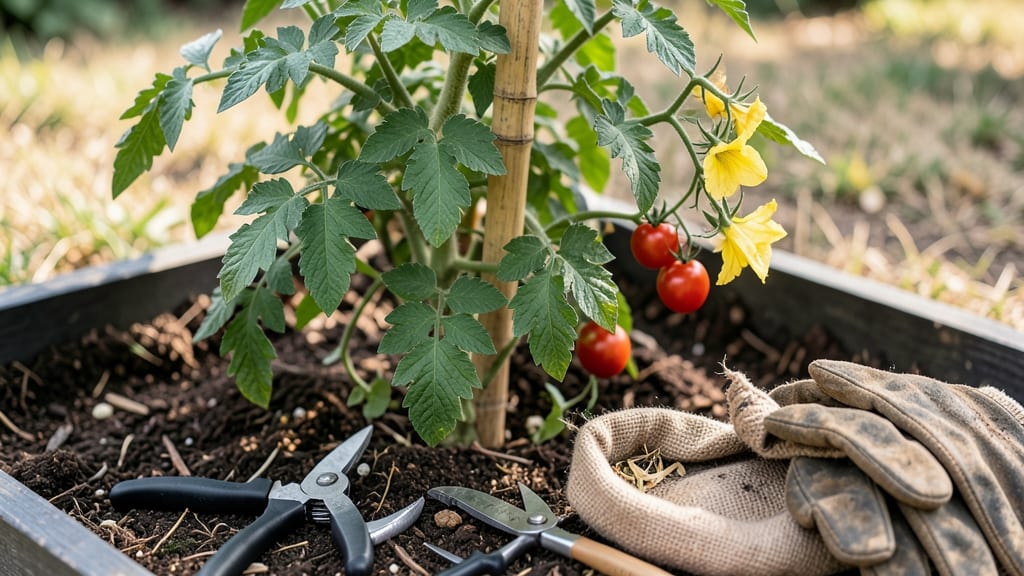
Trimming tomato plants means 50% more fruit on your vines this season. ✂️ I learned the hard way—skipping pruning led to fewer tomatoes and more disease, but once I mastered the technique, my harvests doubled. The key isn’t just cutting; it’s knowing where and when to trim for maximum growth.
Start when plants hit 18-24 inches tall, focusing on suckers (the tiny shoots between stems and leaves). Use clean pruners or your fingers to pinch them off—no sharp tools needed.
For indeterminate varieties, keep pruning until frost; determinate types need minimal trimming. The goal? Better airflow and energy directed to fruit, not foliage.
You’ll notice thicker stems and heavier clusters within 2-3 weeks. The plants stay bushier, resist pests better, and produce fruit all season long. Even my black thumb can’t mess this up once you get the hang of it.
Works for both backyard gardens and container-growing. Here’s how to do it right—no guesswork involved.
📚 In This Guide
- What you need
- Instructions
- Tips and common mistakes
- Wrapping up and next steps
What you need
- ● Pruning shears or sharp bypass pruners – Must be clean and sterilized (1 pair). Avoid dull tools—they crush stems instead of making clean cuts!
- ● Garden gloves – Durable, cut-resistant (1 pair) to protect your hands from thorns and sap.
- ● Disinfectant (70% isopropyl alcohol or bleach solution) – For sterilizing tools between cuts (small bottle or spray).
- ● Garden twine or plant ties – For staking or supporting trimmed plants (5–10 ft roll).
- ● Sturdy stakes or cages – If your tomatoes aren’t already supported (2–4 per plant, 6–8 ft tall).
- ● Garden hose with spray nozzle – For rinsing tools and refreshing plants post-prune.
- ● Compost bin or bag – To collect pruned foliage (great for nutrient-rich compost!).
- ● Hand lens or magnifying glass – For spotting pests or diseases up close.
- ● Epsom salt (magnesium sulfate) – 1 tbsp per gallon of water to boost plant health after trimming.
Step-by-step instructions for trimming tomato plants
Here's how I shape tomato plants for maximum fruit production—no guesswork, just proven techniques.
✂️ Step 1: Identify and Remove Suckers
Suckers are the small shoots that grow in the "V" between the main stem and a branch. These compete with your fruit for energy, so I remove them early. Use clean, sharp pruners or your fingers to pinch them off at the base—don't leave a stub, or it'll grow back.
Start checking for suckers when your plant reaches 12-18 inches tall. I like to do this on a dry morning when the plant is firm and easy to handle. If you wait too long, suckers turn woody and harder to remove, wasting your time.
☀️ Step 2: Prune for Light and Airflow
After removing suckers, open up the plant's center by trimming any crowded or crossing branches. This ensures good airflow, which prevents fungal diseases like blight. Aim to keep the plant's shape open—like an upside-down umbrella—so sunlight reaches all sides.
Focus on the lower leaves first. Once your plant hits 36 inches tall, remove leaves below the first flower cluster. These lower leaves block light and trap moisture. You'll know you're doing it right when you see sunlight hitting the lower fruit clusters.
⏰ Step 3: Maintain Height and Shape
Determinate tomatoes (the bushy kind) rarely need pruning beyond removing diseased leaves. But indeterminate varieties (the vining types) need ongoing attention. Once your plant reaches your trellis or cage height, stop pruning upward growth—this signals the plant to focus energy on fruit instead of more leaves.
Here's the thing—don't over-prune. If you remove too many leaves, your plant loses its ability to photosynthesize. I leave at least half the leaves on indeterminate varieties. Watch for new suckers forming weekly and trim them before they grow more than 2 inches.
🌱 Step 4: Handle Flower Clusters for Better Fruit
When you see flower clusters forming, give them a little boost. Remove any leaves directly below these clusters to improve airflow and reduce disease risk. For indeterminate varieties, pinch off the first flower cluster if it appears below 18 inches—this encourages stronger growth before fruiting.
Don't worry about removing flowers entirely. You want to keep some blooms to produce fruit, but strategic pruning ensures the plant puts energy where it counts. After pruning, I always give the plant a deep watering to help it recover and redirect energy to fruit production.
💧 Step 5: Monitor and Adjust
Check your plants weekly for new suckers, yellowing leaves, or signs of stress. Yellow leaves often mean overwatering or disease—remove them immediately to prevent spread. If your plant looks leggy with small leaves, it needs more light, not more water.
Real talk: pruning takes practice. Your first few attempts might feel aggressive, but you'll get the hang of it. The key is consistency—regular trimming leads to bushier plants with more fruit. And remember, every cut you make should have a purpose: better airflow, more light, or directing energy to fruit.
Tips & tricks for perfect tomato plant trimming
Here's what nobody tells you about shaping tomato plants for maximum yield—these tricks make all the difference.
Timing is Everything: I check for suckers every 7 days once plants hit 12 inches, but don't wait until they grow beyond 2 inches—this is when they start competing seriously for nutrients. Confession: I skipped this for years and wondered why my plants never produced well. The key is consistency, not perfection.
Tool Matters: Use clean, sharp pruners or your fingers for suckers, but avoid dull tools that crush stems. I keep a small pair of pruners in my gardening apron for quick trims. For larger branches, I use my hands to avoid damaging the main stem. The goal is clean cuts that heal quickly.
Visual Cues for Pruning: When removing leaves below flower clusters, look for sunlight hitting the lower fruit—this is your confirmation you're doing it right. I also watch for new suckers forming in the leaf axils (where leaves meet stems). These little shoots appear as tiny knobs, not full leaves.
Recovery Strategy: After heavy pruning, give your plants a deep watering to help them recover. I water at the base in the morning so roots absorb moisture before the heat of the day. This helps redirect energy to fruit production instead of new leaf growth.
Pro Tips for Trimming Tomato Plants
- Here's what nobody tells you about shaping tomato plants for maximum yield—these tricks make all the difference.
- Timing is Everything: I check for suckers every 7 days once plants hit 12 inches, but don't wait until they grow beyond 2 inches—this is when they start competing seriously for nutrients.
- Tool Matters: Use clean, sharp pruners or your fingers for suckers, but avoid dull tools that crush stems.
Frequently asked questions
Got questions about trimming your tomato plants? You’re not alone! Here are some of the most common concerns—and straightforward answers—to help you prune like a pro.
When is the best time to start trimming tomato plants?
For indeterminate varieties (like beefsteak or cherry tomatoes), begin trimming once plants reach 12–18 inches tall and have a few sets of true leaves. For determinate varieties (bush tomatoes), pruning is usually minimal—just remove suckers if needed. Wait until after flowering if your goal is fruit production.
What’s the difference between suckers and leaves I should remove?
Suckers
are the small shoots that grow in the _V_-shaped junction between the main stem and a branch. Remove these to redirect energy to fruit. Lower leaves (within 6–12 inches of the ground) should also be trimmed to improve airflow and prevent disease. Avoid removing leaves near flowering clusters.
How often should I trim my tomato plants?
Check your plants weekly during the growing season (spring to early summer). Remove suckers and yellow/diseased leaves as soon as you spot them. Over-pruning stresses plants, so aim for 10–20% of foliage removal per session. Indeterminate varieties may need more frequent trims than determinate ones.
Can I trim tomato plants in hot or humid weather?
Prune on cool, cloudy mornings to reduce stress. Hot or humid conditions can invite fungal diseases like blight. If you must trim in heat, do it early in the day and avoid wetting the leaves. Always sterilize your pruners with rubbing alcohol between cuts to prevent spreading pathogens.
Will trimming reduce my tomato harvest?
Not if done correctly! Proper pruning increases yield by improving airflow, reducing disease, and directing energy to fruit production. However, over-trimming (especially determinate varieties) can limit growth. Focus on removing only suckers and diseased leaves—never more than 1/3 of the plant’s foliage at once.
What can I do with the trimmed tomato plant parts?
Don’t toss those clippings! Compost them (if disease-free) or use them as mulch around the base of other plants. You can also regrow roots from healthy stem cuttings in water for new plants. Just avoid composting parts with signs of blight or mildew.
Wrapping up and next steps
Trimming your tomato plants isn’t just about shaping—it’s about boosting health, airflow, and fruit production! 🌱 By mastering the right cuts, you’ll encourage stronger growth, fewer diseases, and a bountiful harvest. Whether you’re a seasoned gardener or just starting, every snip is a step toward bigger, juicier tomatoes.
Ready to put your new skills to work? Grab your pruners, head to the garden, and give your plants the care they deserve. Your future harvest will thank you! 🍅✨