
Planting
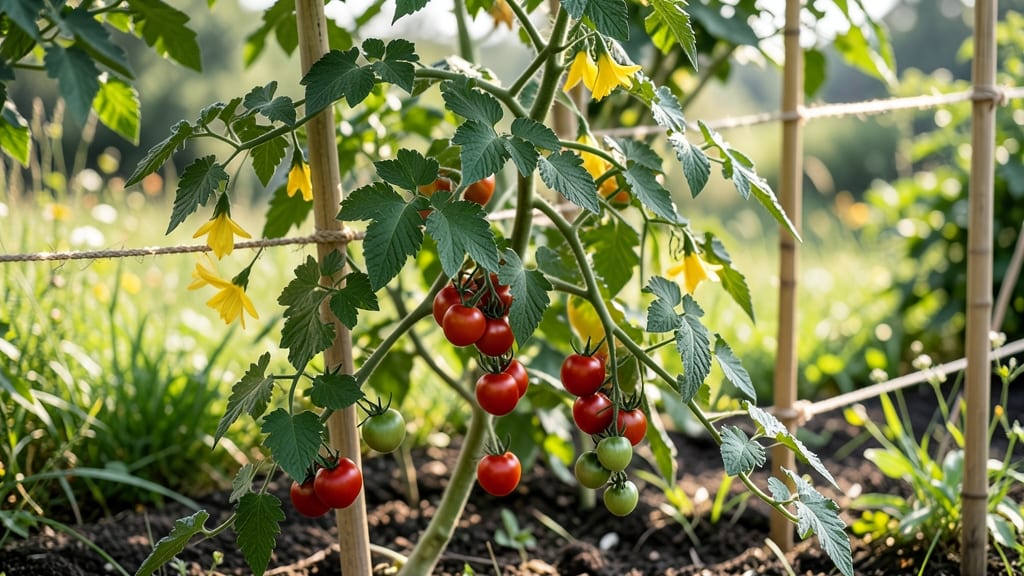
An indeterminate tomato plant is a type of vine that grows continuously throughout the season, producing fruit until frost kills the plant, and can reach heights of 6 to 10 feet or more with sprawling vines requiring sturdy support or trellising.
These plants are the gardener's gift for extended harvests, since they don't set all their fruit at once like their determinate cousins. 🌱 Instead, they keep producing new flowers and tomatoes from the tips of their vines—sometimes until the first hard frost. The trade-off?
Their sprawling growth means you'll need to dedicate space or invest in a strong trellis system to keep them contained and healthy. I've seen some varieties grow over 12 feet tall with proper care, making them perfect for large gardens or vertical growing setups.
What makes them special is their genetic ability to keep growing and fruiting all season long, unlike determinate varieties that stop after their main stem finishes flowering. This continuous growth pattern makes them ideal for warm climates where the growing season stretches well into fall.
💡 In This Article
- How Indeterminate Tomato Plants Differ From Determinate Varieties
- Cultivating Indeterminate Tomatoes: Support Systems and Pruning Tips
How indeterminate tomato plants differ from determinate varieties
The key difference lies in their genetic growth patterns. Indeterminate varieties carry a mutation in their SINGLE FLOWER TRUSS (sft) gene, which prevents them from developing a terminal flower cluster. This allows them to keep growing upward indefinitely, producing new leaves, stems, and flower clusters from their tips.
Determinate plants, on the other hand, have a fixed growth habit—they grow to a specific size (usually 3-5 feet tall) and produce all their fruit in one flush before stopping.
This genetic difference translates to dramatic differences in vine length and fruiting patterns. While determinate plants produce fruit in clusters along the main stem and stop growing after their first flush, indeterminate varieties can grow 10-12 feet tall with continuous flowering and fruiting.
For example, the popular 'Sungold' cherry tomato vine can reach 8 feet with proper support, while a determinate variety like 'Roma' typically maxes out at 4 feet. The continuous growth means indeterminate plants can produce fruit for 6-8 weeks longer in warm climates.
Yield potential is another major distinction. Indeterminate plants may produce fewer tomatoes per cluster (usually 4-6 fruit per truss), but their extended season often results in a higher total yield.
A single indeterminate plant can produce 20-30 pounds of tomatoes over the season, while determinate plants typically yield 10-15 pounds in a concentrated harvest period. This makes indeterminate varieties ideal for gardeners who want fresh tomatoes throughout summer and fall.
Their growth habit also affects how they handle heat and cold. Indeterminate plants thrive in warm climates because they can keep producing as long as temperatures stay above 50°F. They're more sensitive to cold snaps, which can damage their growing tips.
Determinate varieties, while more cold-hardy, produce all their fruit at once, making them better suited for shorter growing seasons where you want a concentrated harvest before frost.
Visually, you can spot the difference easily. Indeterminate vines grow like a sprawling vine, while determinate plants grow bushier with a more compact shape. The continuous growth means you'll need to prune indeterminate plants regularly to direct energy toward fruit production rather than excessive foliage.
This pruning also improves air circulation, reducing disease risk in the dense foliage.
One fascinating aspect is how indeterminate plants respond to stress. When you prune the growing tips, they'll often send out lateral shoots that can also produce flowers and fruit. This adaptive growth pattern is what allows them to keep producing even when damaged.
In contrast, determinate plants have a more rigid growth pattern and can't compensate for pruning in the same way.
For gardeners, this means indeterminate varieties require more attention but reward you with a longer harvest season. The trade-off is worth it for those who love fresh tomatoes straight from the vine all summer long. 🌿