
Companion Plants
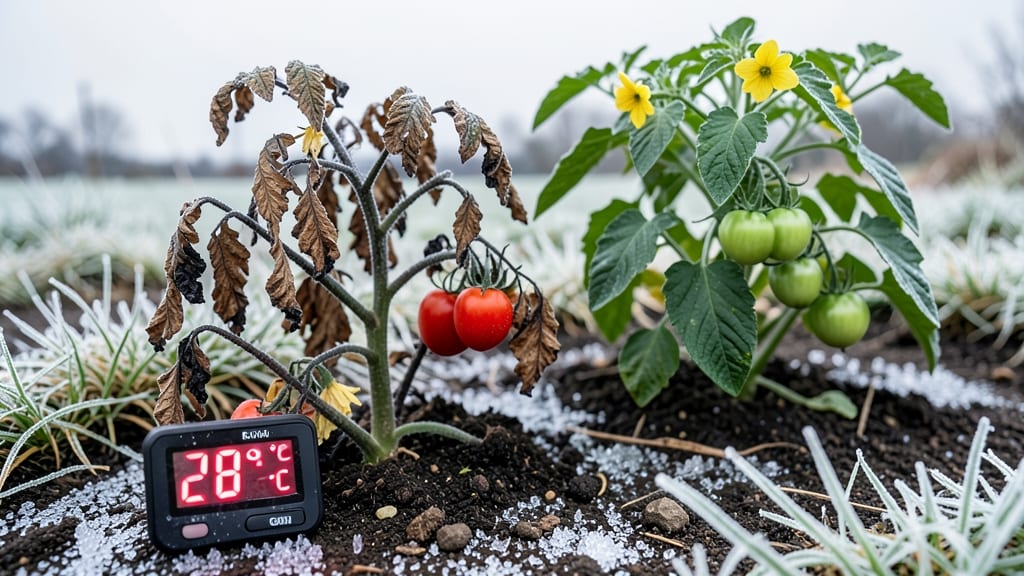
This temperature kills tomato plants when consistently above 105°F (40.5°C), though wilting and stress begin at 90°F (32°C). Extreme heat disrupts photosynthesis, dehydrates foliage, and causes fruit to split or drop prematurely. Shade, mulching, and watering at soil level can help mitigate damage.
This temperature kills tomato plants doesn't just wilt them—it triggers a chain reaction that starts with stunted growth at 90°F (32°C) and escalates to irreversible cell damage by 105°F (40.5°C).
The real danger lies in prolonged exposure, where heat stress forces plants to divert energy away from fruiting. 🌡️ I've seen firsthand how even brief spikes above 95°F (35°C) cause blossom drop, reducing your harvest potential. The key is understanding your plants' limits and acting before symptoms appear.
For example, in my garden last summer, I noticed leaves curling at 92°F (33°C)—a clear warning sign. By adjusting my watering schedule to early morning and adding a 30% shade cloth, I prevented total crop loss.
The difference between survival and failure often comes down to these small, proactive steps rather than waiting for the damage to show.
💡 In This Article
- How Heat Damages Tomato Plants at Different Temperature Ranges
- Protecting Tomato Plants from Extreme Heat: Practical Solutions
How heat damages tomato plants at different temperature ranges
At 90°F (32°C), tomato plants begin showing early stress symptoms like leaf curling and wilting.
This temperature triggers a physiological response where stomata (tiny pores on leaves) close to prevent water loss, but this also restricts carbon dioxide intake. 🌡️ The plant's photosynthesis rate drops by up to 30%, causing energy shortages that stifle growth and fruit development.
Think of it like a car running on fumes—it's still moving, but barely. The leaves may also develop a grayish hue as chlorophyll breaks down prematurely, reducing their ability to convert sunlight into energy.
When temperatures climb to 100°F (37.8°C), the damage becomes more severe. Heat stress causes protein denaturation in plant cells, particularly in the chloroplasts (where photosynthesis occurs). This disrupts the enzymes responsible for converting sunlight into glucose, leading to cell membrane breakdown.
You'll notice leaves turning yellow or brown at the edges, and fruit may develop a dull, pale appearance instead of the vibrant red we associate with ripe tomatoes. The plant's roots also struggle to absorb water efficiently, compounding the dehydration problem.
By 105°F (40.5°C), the damage becomes irreversible for most tomato varieties. At this point, the plant's cellular structures begin to collapse, and the roots can no longer function properly.
The leaves may scorch and drop entirely, while any remaining fruit on the plant will often split open or fall prematurely. 🌞 This is because the rapid temperature shift causes the fruit to expand faster than the skin can accommodate.
In extreme cases, the entire plant can wilt and die within days if conditions don't improve. The key difference between daytime and nighttime heat is that nighttime temperatures above 80°F (26.7°C) prevent the plant from recovering, even if days are cooler.
Humidity plays a critical role in how heat affects tomato plants. In dry, arid conditions, plants may survive slightly higher temperatures because the air draws moisture away from leaves, cooling them through evaporation.
However, in high humidity (above 70%), the air feels even hotter due to the "heat index," and the plant's ability to cool itself through transpiration is severely limited.
This creates a double whammy: the plant can't shed excess heat, and it's also more susceptible to fungal diseases like early blight, which thrive in warm, moist conditions.
Consider this real-world example: In Arizona's Sonoran Desert, where daytime temps often exceed 110°F (43.3°C), gardeners grow heat-tolerant tomato varieties like 'Solar Fire' or 'Heatmaster.' These varieties can handle up to 102°F (39°C) for short periods, but even they struggle without shade and consistent moisture.
The lesson here is that while some tomatoes can tolerate higher temps, the damage is cumulative—prolonged exposure to 95°F (35°C) or above will still take a toll over time.
One often-overlooked factor is soil temperature. When surface soil exceeds 95°F (35°C), root growth slows dramatically, and beneficial microbes that help with nutrient uptake become inactive. This means even if the air temp is manageable, the plant's foundation is compromised.
To check soil temp, press your finger about an inch deep—if it feels too hot to touch, your plants are already stressed.