
Companion Plants
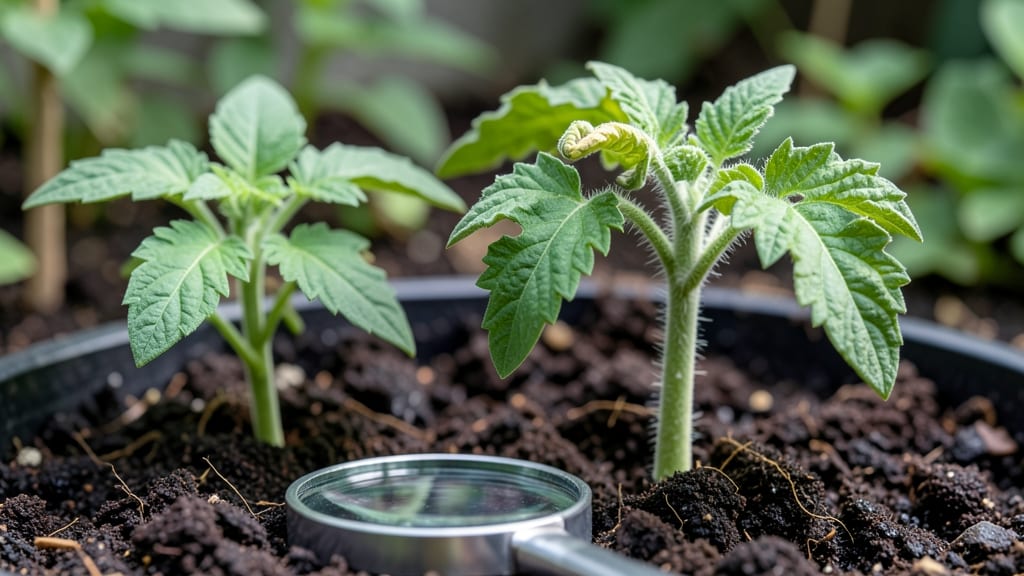
Your young tomato plants’ leaves curling could mean a viral attack—or just a simple fix. 🌱 I’ve seen this happen after a single night of windburn, or when aphids hitch a ride on new growth.
The key is acting fast, because what starts as a minor crinkle can spread like wildfire through your garden.
Most cases boil down to three culprits: pests (especially spider mites and aphids), environmental stress (too much sun, wind, or inconsistent watering), or nutrient imbalances (too much nitrogen, not enough calcium). Neem oil isn’t just a spray—it’s a barrier that disrupts pests’ life cycles while letting your plants breathe.
I’ve stopped entire infestations in their tracks with just two applications, spaced a week apart.
By the time you finish diagnosing, you’ll have a clear plan: prune damaged leaves, adjust watering, and apply neem oil at dusk when pests are most active. Within a week, new growth will push out straight and strong, and your plants will bounce back like nothing ever happened.
The secret? Catching it early—before the curl becomes permanent.
This works for seedlings, transplants, and established plants alike, whether you’re growing in pots or the ground. Once you master the fix, you’ll spot the early warning signs before they spiral. Let’s get those leaves flat and thriving again.
Root Causes Of Leaf Curl
When your young tomato plants start showing signs of curling leaves, it’s often their way of signaling distress. Understanding the specific triggers behind this issue is the first step toward restoring their health.
Below, we break down the most common culprits—each with a clear scientific explanation and actionable insights to help you diagnose the problem accurately.
Tomato plants are sensitive to extreme temperatures, and sudden shifts can cause leaves to curl as a protective response. When daytime temperatures soar above 90°F (32°C) or drop below 50°F (10°C), the plant’s cellular structure struggles to maintain turgor pressure—the internal water pressure that keeps leaves firm.
- Why it happens: High heat accelerates transpiration (water loss through leaves), while cold temperatures slow down metabolic processes, disrupting nutrient uptake. Both scenarios lead to wilting and curling as the plant conserves energy.
- Actionable fix:
- Provide shade cloth (30-50%) during peak afternoon heat.
- Use mulch (straw or wood chips) to regulate soil temperature.
- Avoid planting tomatoes in low-lying areas where cold air pools.
Watering problems—whether from overhead sprinklers or uneven soil moisture—are leading causes of leaf curl in young tomato plants. Unlike mature plants, seedlings have delicate root systems that can’t handle stress well.
- Why it happens:
- Overhead watering: Wet leaves + humidity = fungal diseases (like early blight) or bacterial spots, forcing leaves to curl to limit damage.
- Inconsistent watering: Alternating between drought and soggy soil disrupts the plant’s osmotic balance, causing cells to lose rigidity.
- Actionable fix:
- Water at the base of the plant (use a drip irrigation system or soaker hose).
- Maintain 1-2 inches of consistent moisture in the topsoil (check with your finger—if dry, water deeply).
- Avoid wetting foliage; water early in the morning to allow leaves to dry quickly.
Tiny pests like aphids, spider mites, or whiteflies thrive on tomato plants, piercing leaves to feed on sap. Their saliva contains toxins that trigger curling as the plant’s defense mechanism.
- Why it happens:
- Aphids: Cluster on new growth, injecting enzymes that distort leaf tissue.
- Spider mites: Create fine webbing and suck cell contents, leading to bronzing and curl.
- Whiteflies: Excrete honeydew, a sticky residue that attracts sooty mold, further stressing the plant.
- Actionable fix:
- Inspect leaves (use a magnifying glass) for pests or sticky residue.
- Blast off pests with a strong stream of water (early morning works best).
- Apply neem oil spray (1 tsp neem oil + 1 quart water + drop of dish soap) to disrupt their life cycle.
Tomatoes are heavy feeders, and young plants require a balanced diet to prevent leaf curl caused by deficiencies. The most critical nutrients for leaf health are nitrogen, potassium, and magnesium.
| Nutrient | Symptoms | Cause | Fix |
|---|---|---|---|
| Nitrogen (N) | Yellowing between leaf veins (older leaves first), stunted growth | Poor soil organic matter or overwatering leaching nutrients | Add compost or blood meal; use a balanced fertilizer (10-10-10) |
| Potassium (K) | Curling, yellowing edges (scorching), weak stems | Sandy soil or over-fertilizing with nitrogen-heavy feeds | Use potassium sulfate or wood ash; avoid excessive nitrogen |
| Magnesium (Mg) | Interveinal yellowing (older leaves), curling upward | Compacted or acidic soil (pH < 6.0) | Apply Epsom salt (1 tbsp/gallon water) as a foliar spray or soil drench |
💡 Pro Tip: Test your soil’s pH (ideal range: 6.0–6.8) using a home kit. Adjust with lime (to raise pH) or sulfur (to lower pH) if needed.
If leaf curl persists despite fixing environmental or pest issues, a viral or fungal infection may be the culprit. These are often spread by insects or contaminated tools.
- Why it happens:
- Tomato mosaic virus (ToMV): Causes puckering and curling, spread by aphids or infected seeds.
- Early blight (Alternaria solani): Dark concentric spots on lower leaves, leading to upward curl as the disease progresses.
- Verticillium or Fusarium wilt: Wilting and curling due to vascular blockages from soil-borne fungi.
- Actionable fix:
- Remove infected plants immediately to prevent spread.
- Rotate crops (avoid planting tomatoes in the same spot for 3+ years).
- Apply copper fungicide (for early blight) or neem oil (as a preventative barrier).
⚠️ Warning: Viral infections have no cure. Focus on prevention and replacing severely affected plants.
How to Fix Curling Leaves Fast
Curling leaves on your young tomato plants can feel like a crisis—but don’t panic! With the right approach, you can turn things around quickly. Below, we’ve mapped out practical, step-by-step solutions tailored to the most common causes, plus prevention tips to keep your plants thriving.
Let’s get those leaves flat and happy again!
If your soil is soggy or waterlogged, roots suffocate, leading to curled leaves. Act fast to save your plants:
👨🍳 Step 1: Check the Soil Moisture
- Stick your finger 1–2 inches deep into the soil. If it’s damp, hold off on watering.
- Pro Tip: 💡 Use a moisture meter for accuracy—overwatering is sneaky!
🥘 Step 2: Improve Drainage
- If your pots lack drainage holes, transfer your plants to containers with holes or amend the soil with:
- Perlite or vermiculite (20% mix)
- Coarse sand (1 part sand to 3 parts potting mix)
- For garden beds, raise mounds to prevent water pooling.
⏰ Step 3: Adjust Your Watering Routine
- Water deeply but less frequently—aim for 1–1.5 inches per week (adjust for rain).
- Morning watering is best—it reduces fungal risks and lets leaves dry quickly.
🌱 Prevention:
- Avoid mulch piles near stems (keep it 2–3 inches away).
- Test your soil’s drainage before planting—if water sits after 30 minutes, improve it!
Dry, crispy edges and curling? Your plants are thirsty or overheated. Here’s how to revive them:
🔥 Step 1: Water at the Base (Not the Leaves)
- Use a soaker hose or drip irrigation to deliver water slowly and directly to the roots.
- Avoid overhead watering—it can spread disease and evaporate too fast.
🌡️ Step 2: Provide Shade Cloth (If Needed)
- If temps hit above 90°F (32°C), drape 30–50% shade cloth over plants for a few hours.
- Mist leaves lightly in extreme heat (early morning only to prevent fungal growth).
🥗 Step 3: Boost Humidity (For Container Plants)
- Place a tray of pebbles + water under pots (ensure pots aren’t sitting in water).
- Group plants together to create a microclimate.
🎯 Prevention:
- Mulch with straw or grass clippings to retain moisture.
- Water deeply in the evening during heatwaves (but avoid soggy soil).
Tiny invaders like aphids, spider mites, or whiteflies suck sap, causing leaves to curl and distort. Neem oil is your secret weapon—but let’s break it down:
🔪 Step 1: Inspect & Identify Pests
- Flip leaves over—look for sticky residue (honeydew), webbing, or tiny bugs.
- Common culprits:
- Aphids (green/black clusters)
- Spider mites (tiny yellow dots, webbing)
- Whiteflies (tiny white moths when disturbed)
🍎 Step 2: Blast Off Pests (Non-Chemical First)
- Spray with water to knock off aphids/whiteflies (do this early morning).
- Introduce beneficial insects:
- Ladybugs (eat aphids)
- Lacewings (devour mites)
- Parasitic wasps (target whiteflies)
🌿 Step 3: Neem Oil Barrier (Viral-Spreading Fix!)
- Mix: 1 tbsp neem oil + 1 tsp mild soap (like Castile) + 1 quart water.
- Shake well and spray undersides of leaves (where pests hide).
- Reapply every 5–7 days until pests are gone.
- Why it works: 💡 Neem disrupts pests’ life cycles and repels future attacks.
✨ Prevention:
- Interplant with pest-repelling companions:
- Basil (deters whiteflies)
- Marigolds (confuse aphids)
- Nasturtiums (trap aphids away from tomatoes)
- Sticky traps (yellow cards) catch whiteflies before they multiply.
Curling leaves can signal nitrogen (N), potassium (K), or magnesium (Mg) deficiencies. Let’s diagnose and fix:
| Symptom | Likely Cause | Quick Fix | Prevention |
|---|---|---|---|
| Yellow lower leaves | Nitrogen deficiency | Side-dress with compost or use fish emulsion (2 tbsp/gallon). | Add compost at planting. |
| Brown edges, weak stems | Potassium deficiency | Epsom salt soak (1 tbsp/gallon) or banana peel tea. | Use potash-rich fertilizer (5-10-10). |
| Yellow between veins | Magnesium deficiency | Epsom salt spray (1 tbsp/gal) or dolomitic lime (for soil). | Test soil pH (aim for 6.0–6.8). |
💪 Pro Tip: 🌡️ Avoid over-fertilizing—young plants need half-strength solutions. Too much salt burns roots!
- Remove only the worst-affected leaves (never more than 20% of the plant).
- Use sterilized scissors to cut just above a leaf node (where new growth emerges).
- Dispose of pruned leaves (don’t compost if pests/disease are suspected).
Final Thought: Most curling issues are fixable with quick action—whether it’s adjusting water, hunting pests, or tweaking nutrients. Start with the most likely cause, then monitor your plants for 3–5 days. If problems persist, dig deeper (literally—check roots for rot or pests).
Now go rescue those tomatoes—your future sauces and salads are counting on you! 🍅🔥
Frequently asked questions
Why do my young tomato seedlings' leaves curl upward first?
Upward curling in seedlings usually signals underwatering or heat stress. Young plants have delicate root systems that can't absorb enough moisture during hot days or when soil dries out too quickly. Check the top 1-2 inches of soil—if it's dry, water deeply at the base. For container plants, ensure pots have drainage holes and use a moisture meter to avoid guesswork.
Can I save tomato plants if the curling is caused by spider mites?
Yes! Spider mites are treatable with neem oil or insecticidal soap. First, blast off visible mites with a strong water spray (early morning works best). Then apply a mix of 1 tablespoon neem oil + 1 teaspoon mild soap per quart of water, focusing on leaf undersides. Reapply every 5-7 days until you see new growth. For severe cases, introduce lacewings or predatory mites as natural predators.
How do I tell if my tomato plant's leaves are curling from disease vs. pests?
Check for these clues: Disease often shows yellow spots, dark concentric rings (early blight), or wilting stems, while pests leave sticky residue (honeydew), webbing, or tiny bugs. Viral infections like tomato mosaic virus cause puckering and stunted growth with no other visible pests. If you see fungal signs (white mold, dark spots), remove affected leaves immediately and apply copper fungicide. For pests, neem oil works for both prevention and treatment.
Will pruning curled leaves help my tomato plants recover?
Yes, but do it strategically! Remove only the most severely curled or diseased leaves (never more than 20% of the plant) to avoid shocking it. Use sterilized scissors and cut just above a leaf node where new growth emerges. This improves airflow and redirects energy to healthier leaves. For viral infections, dispose of pruned leaves in the trash—don't compost them to prevent spreading the disease.
How often should I check my tomato plants for early signs of leaf curl?
Inspect your plants every 2-3 days during warm weather or pest season. Focus on new growth and leaf undersides where pests hide. Early intervention is key—catching problems before leaves curl permanently gives your plants the best chance to recover. Keep a small notebook to track changes in moisture, temperature, and pest activity. This helps you spot patterns and adjust care routines quickly.